The Cozy & Fresh Buying Guide: Finding Lightweight Slippers That Resist Foot Odor
No indoor slipper is odor-proof, because odor comes from trapped sweat rather than from the fabric. What separates a pair that stays fresh from one that turns sour in a month is four design traits: low bulk, an open shape that vents, a surface that can be cleaned without being ruined, and light enough construction that you own two pairs and rotate them. Judge candidates on those four, not on marketing language about freshness.
This guide covers what to look for, what to ignore, and how to test a pair once it arrives.
The four traits that decide whether a slipper stays fresh
1. Low bulk. Every extra millimeter of lining is more material holding humid air. Thick, dense house shoes take a long time to dry and stay slightly damp between wears, which is exactly the condition bacteria need. Thin, light plush breathes better than a thick pile of the same fiber.
2. A shape that vents. Air needs a way out. Slip-on and open-heel shapes exchange air with every step. Fully enclosed bootie styles trap it against the skin. This is the single biggest structural difference between a pair that stays fresh and one that does not.
3. A cleanable surface. A slipper you are afraid to clean will never be cleaned. Check the care instructions before buying, not after. Whether a pair is hand-washable or machine washable matters less than whether the instructions are clear and the pile survives the process.
4. Light enough to own two. Rotation is the most effective odor control there is, and it only happens when slippers are inexpensive and light enough that two pairs feels reasonable. A single heavy pair worn every day cannot dry out, no matter what it is made of.
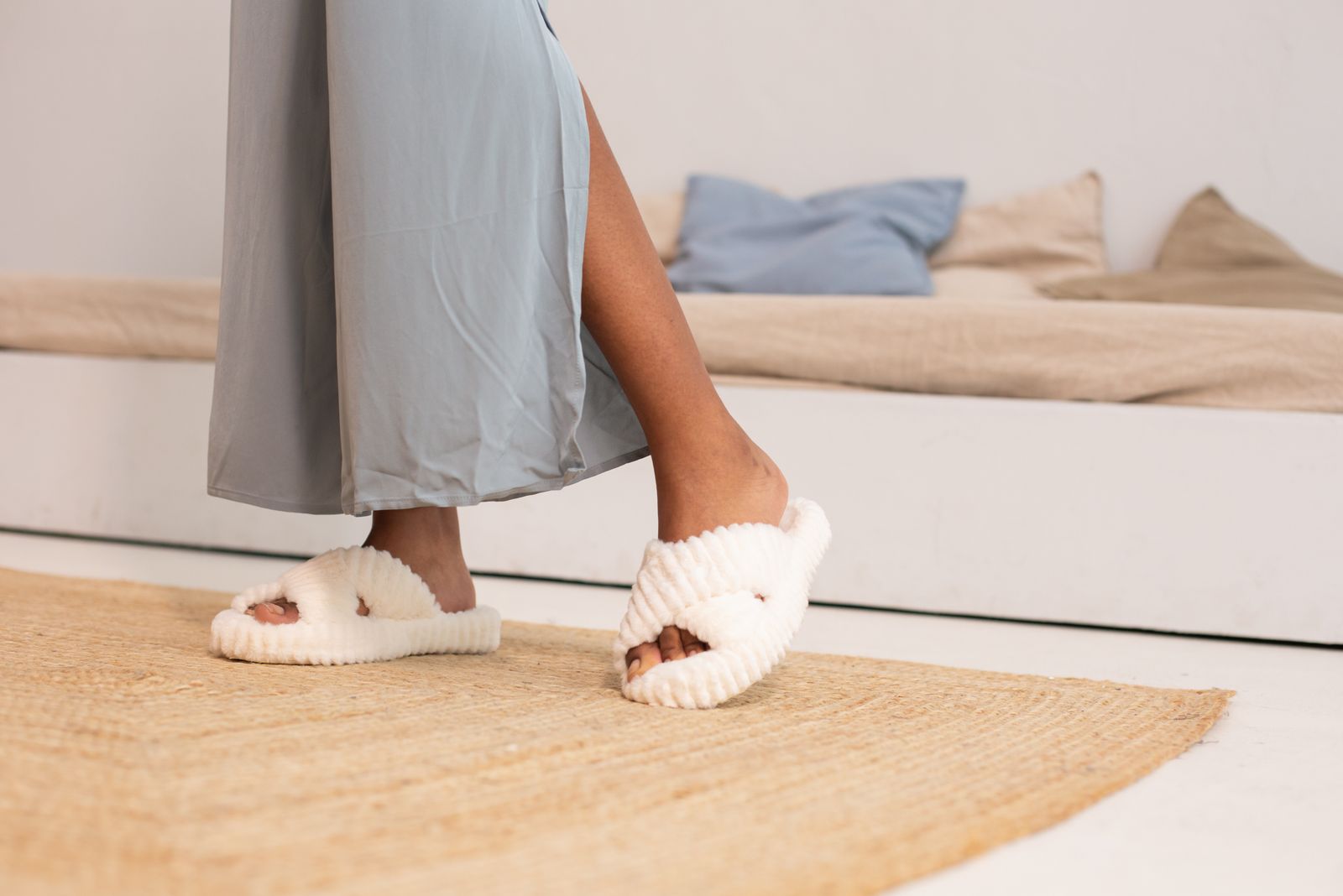
Wendy House Slippers are built on soft plush fabric with lightweight construction and a comfortable slip-on design, plus stylish catching details — which puts them in the low-bulk, easy-venting, easy-to-rotate category rather than the heavy enclosed one. The full feature breakdown is in the features of Wendy House Slippers.
What to check before you buy
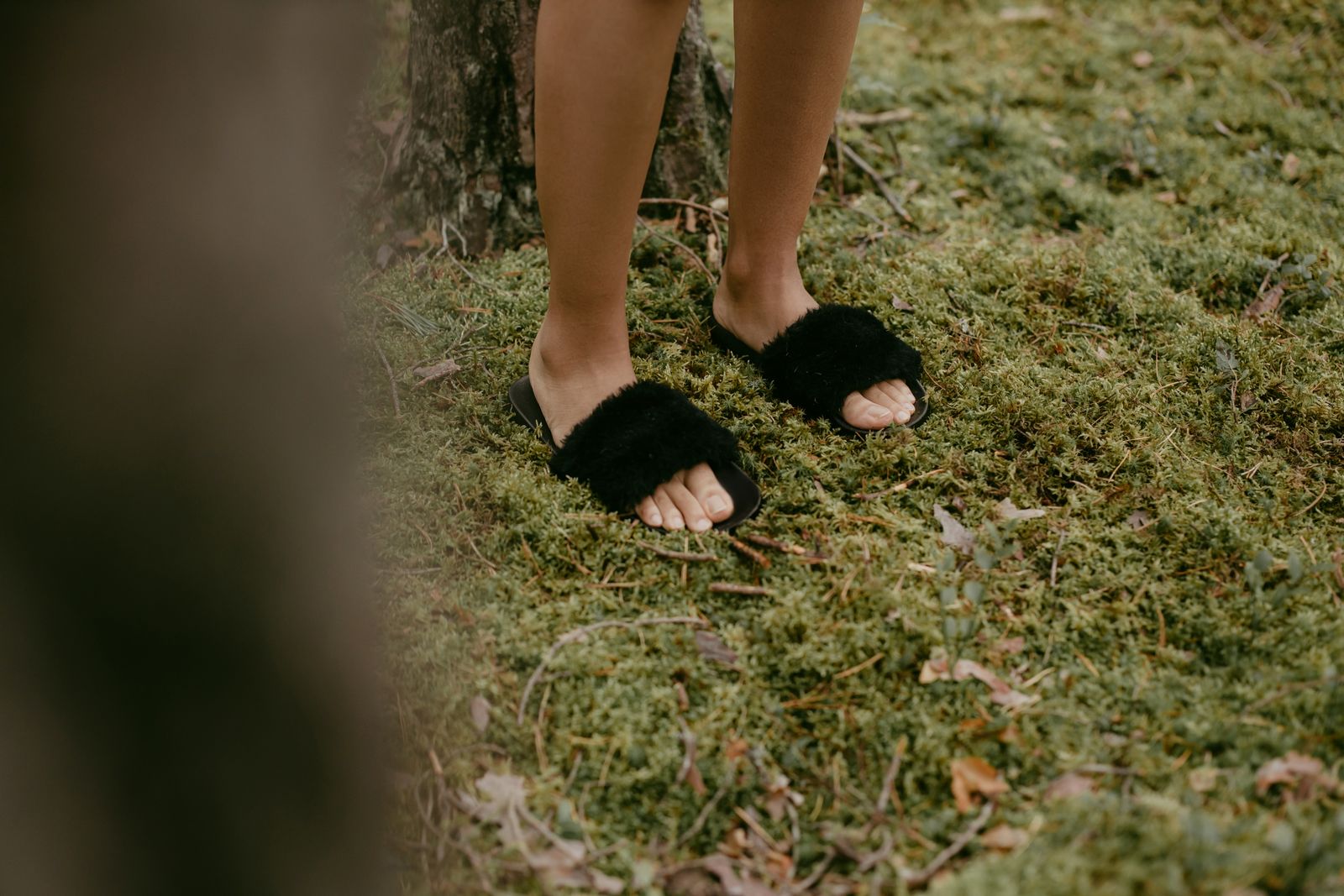
Photo by cottonbro studio on Pexels
| Check | What you want | Warning sign | |---|---|---| | Weight | Light enough to forget you have them on | Feels substantial in the hand | | Heel | Open or easy slip-on | Fully closed, high-cut back | | Lining thickness | Thin, soft, springs back when pressed | Dense pile that stays compressed | | Care instructions | Clearly stated and practical | Vague, or "spot clean only" on a pair you will wear daily | | Footbed | Continuous cushioning heel to toe | Thin, hard, or cushioned only under the heel | | Fit | Room for the foot without pinching | Snug enough that you would need to size up for socks | | Price and availability | Reasonable to buy two | Expensive enough that rotation is off the table |
Claims that are worth something, and claims that are not
Worth something: clear care instructions, stated low weight, an open or slip-on shape, and a footbed that stays springy when you press it. These are observable properties.
Worth less than it sounds: "antimicrobial" treatments on the lining. Some do reduce bacterial growth in the short term, and most lose effectiveness with wear and washing. Treat any such claim as a small bonus rather than a reason to choose a bulkier slipper.
Worth nothing: built-in fragrance, scented insoles, and anything described as odor-eliminating without saying how. Fragrance masks; it does not remove moisture, and it leaves residue behind.
A trap: waterproof or water-resistant linings. Materials that keep water out also keep sweat in. Water resistance is useful in an outdoor shoe and counterproductive in a house slipper worn on bare feet.
Matching the slipper to how you live
The right pick depends less on the product than on your household.
- Hard floors throughout the house. Prioritize cushioning as highly as breathability. You need the footbed to do real work, since impact is your main complaint and odor is second.
- Feet that sweat heavily. Prioritize low bulk and rotation above everything. Two thin pairs beat one premium pair every time.
- A warm home or a warm climate. Go as light and as open as you can while keeping full cushioning under the sole.
- A cold house. Do not solve cold with bulk. A light slipper plus a wool sock is warmer than a thick slipper and dries far faster, and the sock can be changed daily.
- Shared or guest use. Freshness is mostly a storage question here. Airflow between uses matters more than the material.
- Long lounging hours. Weight becomes the deciding factor, because a heavy slipper gets taken off and the whole benefit disappears.
A five-step test for a new pair
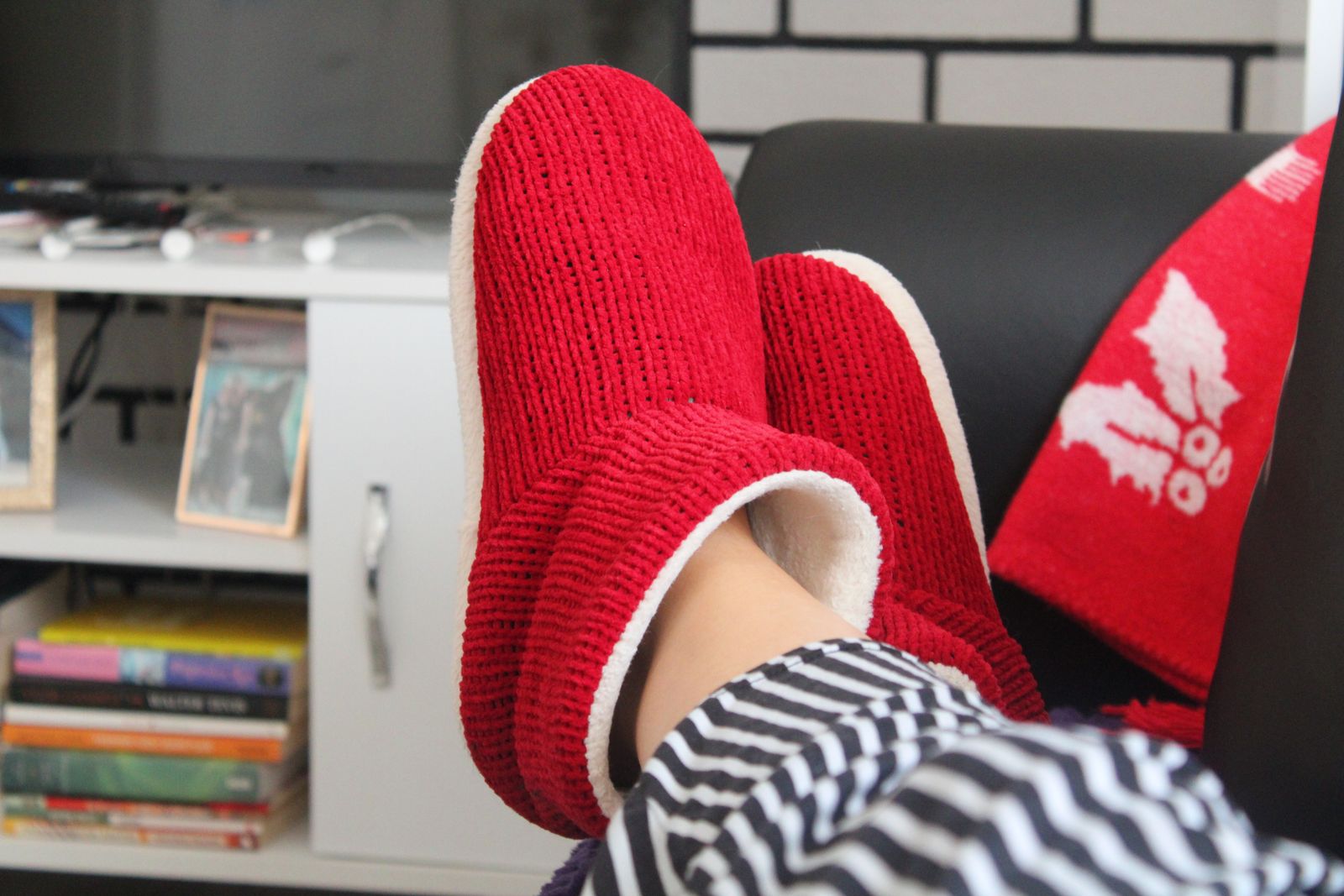
Photo by Merve Sayın on Pexels
Run this over the first two weeks. It tells you whether a pair will hold up long before the smell becomes permanent.
Habits that matter more than the purchase
Even the best-chosen pair will smell if it is worn every day and stored in a bathroom. Three habits carry most of the weight:
- Rotate. Two pairs, alternating days. This is the whole game.
- Store dry and open. A hallway or bedroom, not a closed cupboard or a humid bathroom.
- Start with dry feet. Rinse and dry your feet before an evening in slippers, and dry between the toes after every shower.
FAQ
Are any slipper materials genuinely odor resistant? Materials differ mainly in how fast they dry, and faster drying means less bacterial growth. Thin plush and other light, breathable surfaces dry quickly; dense wool and thick synthetic linings hold moisture much longer. That drying speed is the real variable, not any inherent resistance.
Is it better to buy one good pair or two cheaper pairs? Two, in almost every case, for odor purposes. Rotation lets each pair dry completely, which roughly doubles the time before a smell develops and extends the life of both pairs.
Do open-toe or open-heel slippers stay fresher? Yes, generally, because they exchange air with the room. The tradeoff is less warmth and less coverage, so an open-heel slip-on with a fully cushioned footbed is often the best balance for indoor use.
Should socks be worn to keep slippers fresh? A thin, absorbent sock captures sweat before it reaches the slipper, and it can be changed midday, which genuinely helps. A thick sock inside a warm slipper does the opposite by raising the temperature and trapping moisture.
A practical next step
Shortlist two light, slip-on pairs with clear care instructions and buy both rather than one premium pair. Run the five-step test on each, keep them in a dry room, and alternate days. Within two weeks you will know which one holds up, and you will have the rotation habit already in place — which is the part that keeps any slipper fresh long after the purchase decision stops mattering.
Cover photo by KATRIN BOLOVTSOVA on Pexels.