Slippers and Cats: Keeping a Plush Pair Out of Reach of Claws
Cats go for plush slippers because they hit three things a cat is looking for at once: retained warmth, a strong scent of their favourite person, and a soft textured surface that responds to kneading. A pair left on the floor at the end of the day is close to ideal from a cat's point of view. Solving it is mostly about storage and a few small repairs, not about buying a different kind of slipper.
Why a cat picks slippers over everything else in the room
Warmth is first. A pair just taken off holds body heat for a surprisingly long time, and a cat scanning a room for a warm spot will find it. Scent is second, and it is the reason the same cat ignores a guest's shoes and targets yours. Texture is third: plush pile gives under a paw in the way a scratching surface does, which is what turns interest into kneading and kneading into snags.
There is also a play element. A lightweight slipper is exactly the right weight for a cat to bat, drag, and carry, which is how single slippers end up under furniture and in other rooms. That is a nuisance rather than damage, and it is entirely solved by where the pair sleeps.
What claw contact actually does to a plush upper
The damage falls into a small number of predictable patterns.
- Pulled loops on the plush surface, showing as a small raised thread or a fuzzy patch. This is the most common and the most fixable.
- Flattened, matted areas where a cat has kneaded repeatedly in the same spot. Usually recoverable with brushing.
- Snagged decorative details. Anything that sits proud of the surface is more interesting to a cat and more exposed to a claw.
- Punctures through a soft lining, which happen when a cat treats the interior as a nest and digs before settling.
- Fur worked into the pile, which is not damage but is the most visible daily effect.
Storage: the fix that does most of the work
Repairing a claw snag
A pulled loop looks worse than it is, and the correct response is the opposite of the instinct.
Do not cut a pulled thread flush and do not pull it tighter. Instead, work the loop back into the pile: press it flat with a fingertip, then rub the surrounding plush in small circles so the neighbouring fibres close over it. On most plush textiles the pull disappears entirely. If a loop is genuinely long and standing proud, trim it level with the surrounding pile rather than below it, which keeps the surface even without opening a hole.
Matted or kneaded patches respond to brushing. Use a soft brush on a fully dry upper and work in one direction along the pile until the loft comes back. This is the same technique that revives a pair after washing, and the wider fabric-care picture is covered in washing soft house slippers without damaging plush fabric.
Managing fur, which is the daily reality
Fur in plush pile is a permanent condition in a cat household, and the goal is management rather than elimination.
| Method | Works well for | Notes | |---|---|---| | Rubber glove, dry, rubbed over the pile | Loose surface fur | Fast, no equipment, safe on plush | | Lint roller | Flat outer surfaces | Struggles with deep pile and seams | | Soft brush | Fur worked into the pile, plus matting | Also restores loft in the same pass | | Vacuum with an upholstery head | Interior and around the opening | Use low suction and keep it moving | | Damp cloth wiped in one direction | Stubborn fur on the sole edge | Let the pair dry fully afterwards |
Do the outer surface before the interior, and do the interior before you put the pair away. Fur left inside a stored slipper compacts and becomes much harder to lift later.
Design details that hold up better around cats
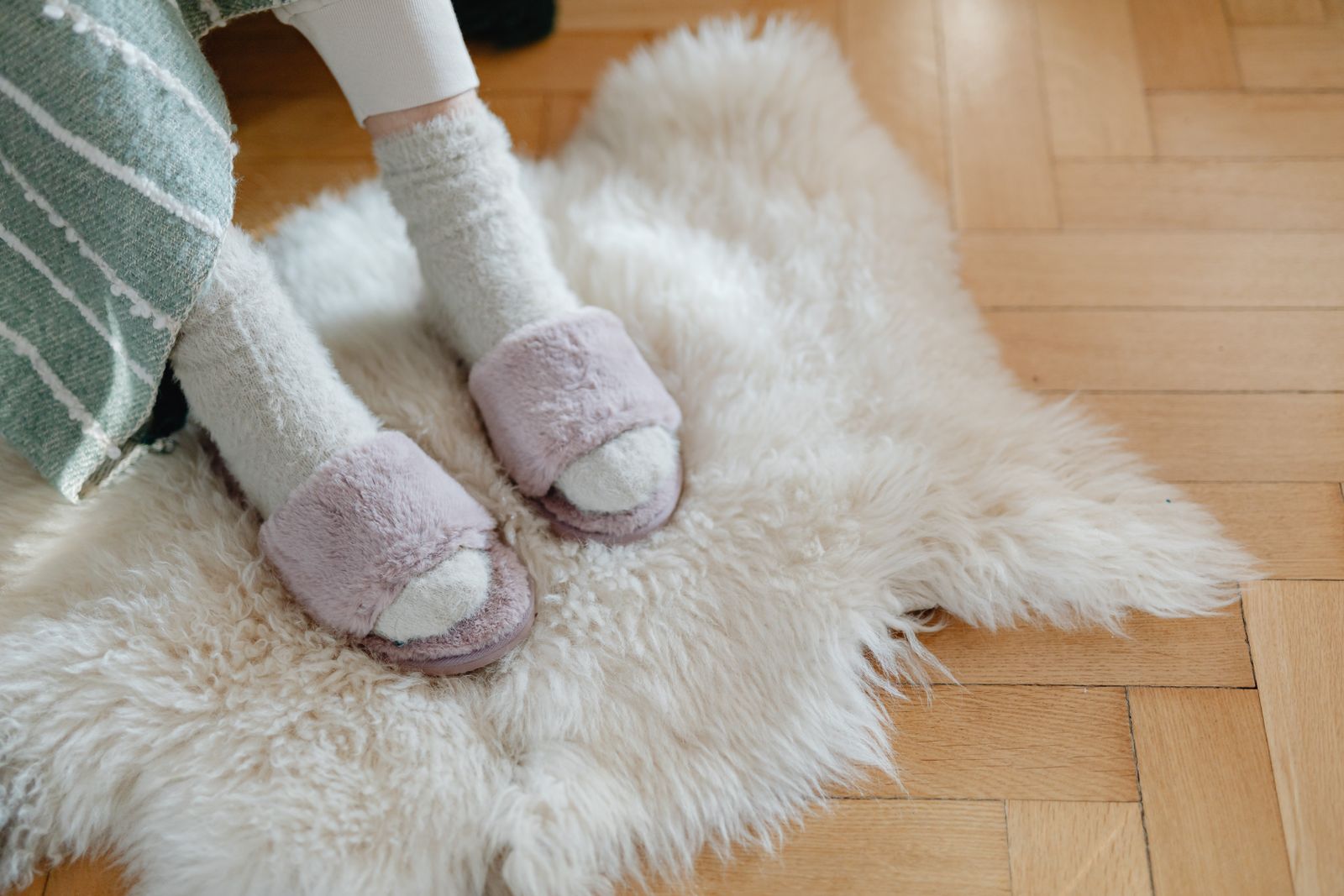
Photo by https://kaboompics.com/ on Pexels
You cannot cat-proof a textile, but some characteristics help. A tightly presented plush surface holds up better than a loose shaggy one, because there is less for a claw to catch. Decorative elements that sit flush with the upper survive better than anything that dangles or swings, since movement is what triggers a cat to swipe. A lightweight slip-on has one small advantage here too: it is easy to pick up and put away in one motion, and a pair that takes two seconds to store is a pair that actually gets stored.
What matters more than any of that is condition. A pair kept clean, dry and brushed carries less of the strong scent that draws attention in the first place, which is a quieter argument for the routine in maintaining a pair of house slippers.
When a pair is no longer worth keeping
Most cat damage is cosmetic, and a slipper with a few closed pulls and a brushed-up pile has plenty of life left in it. The point to replace is when the interior is affected: a lining that has been dug through, a rough patch you can feel under the foot, or a soft area that no longer recovers its shape after a night off. Those change how the pair feels to wear, which is a different question from how it looks. Judge on comfort underfoot rather than on the state of the outer plush, because a tidy-looking pair with a rough interior is the worse of the two to live with.
FAQ
Why does my cat only attack one of the two slippers?
Usually because that one was left where the cat could reach it, or it sits on the side the cat approaches from. Scent concentration also varies slightly between a left and right slipper depending on how you take them off. Storing the pair together removes the whole pattern.
Will a spray deterrent protect them?
Avoid spraying anything onto a plush upper you intend to wear. Deterrent products are formulated for furniture, not for footwear worn against skin, and they can mark textile. Storage above cat height achieves the same result without introducing anything to the fabric.
Can a snagged pair still be worn normally?
A pulled loop or a small matted patch is cosmetic and does not affect comfort or fit. What does matter is a puncture through the interior lining, because a rough edge inside the slipper sits directly against the foot. If you can feel it when wearing the pair, that pair has reached the end of its comfortable life.
Does anything about the design attract cats specifically?
Warmth and scent do most of the work, and every slipper has both. Beyond that, loose shaggy surfaces and anything that dangles get more attention than a flush, tightly finished upper. Features that hold up in normal daily use are described in the core design features of modern house slippers.
A practical next step
Pick a storage spot above cat height that is on your way out of the room, and put the pair there tonight once it has cooled. Then set a blanket in the warm floor spot the slippers used to occupy. Between them, those two moves resolve most cat and slipper conflicts within about a week, and the only remaining job is brushing fur out of the pile.
Cover photo by Mynie Botha on Pexels.