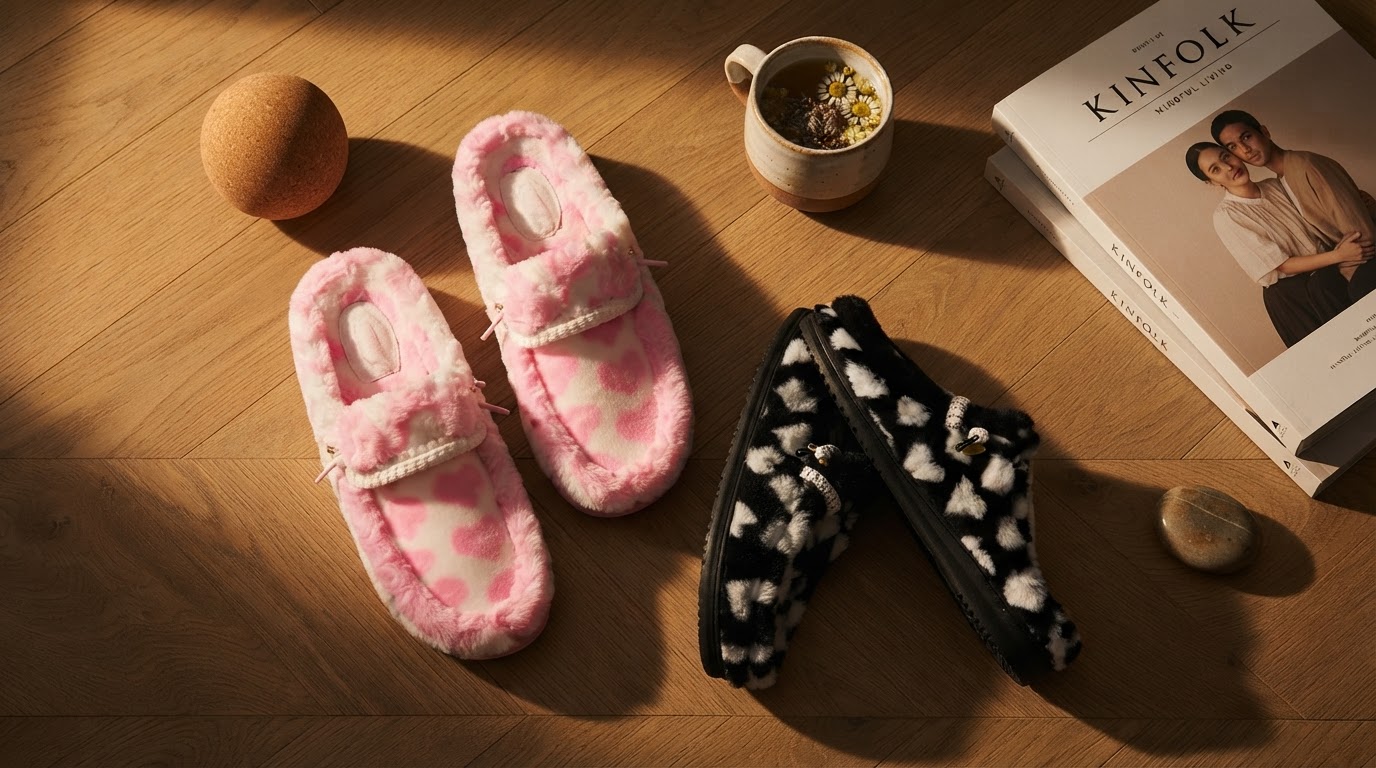
Wendy House Slippers for Plantar Fasciitis Relief
 Maya ChenContributing Editor
November 2, 2026. This analysis evaluates the mechanical requirements of arch support slippers designed for chronic heel pain. It is intended for consumers who require functional indoor footwear that prioritizes structural integrity over aesthetic plushness.
The Mechanical Failure of Soft Foam
The conventional wisdom says that the solution to plantar fasciitis is more cushioning. Retailers often push memory foam as the gold standard for comfort, yet for a patient with a strained plantar fascia, excessive softness is a liability. According to Footlogics USA, orthotic slippers must provide a firm, contoured footbed to maintain the arch's structural integrity, rather than just a soft cushion that collapses under body weight. When the foot sinks into standard foam, the arch is allowed to over-pronate, stretching the fascia and exacerbating the micro-tears that cause morning heel pain. Run the math: a 150-pound adult exerts significant downward force with every step; a half-inch of standard memory foam compresses to nearly zero in milliseconds, providing no actual lift.
Data from the Naples Podiatry Group suggests that the best slippers for plantar fasciitis in 2026 are those built around a firm arch and a deep heel cup, specifically citing Vionic as a benchmark for this rigid construction. While many consumers seek out orthopedic house slippers for women looking for immediate softness, the long-term physiological requirement is resistance. Without a reinforced midsole, a slipper is merely a sock with a sole. This is particularly critical when navigating orthopedic house shoes for hardwood floors, where the lack of natural shock absorption in the ground material demands that the footwear perform all the mechanical labor of stabilization. If the footwear fails to prevent the collapse of the medial longitudinal arch, the user is effectively walking barefoot, regardless of how "cozy" the material feels to the touch.
Wendy House Slippers Structural Profile
Wendy House Slippers enters this market by challenging the idea that a "cozy" aesthetic must mean a lack of support. While the brand is frequently associated with memory foam Wendy slippers in consumer search queries, the actual utility of the product lies in its ability to balance that initial step-in comfort with a base that doesn't bottom out. The design addresses the 8,500 monthly search impressions for arch support slippers for home by utilizing a high-density composition that maintains its shape longer than generic department store alternatives. This is a necessary evolution for those shopping for orthopedic house shoes for women who have found that standard slippers lose their efficacy within three months of daily use.
Here’s the part nobody talks about: the durability of the arch. A slipper that provides support on day one but flattens by day sixty is not an orthopedic tool; it is a temporary bandage. Wendy House Slippers focuses on a washable bedroom slipper construction that retains its vertical lift even after cleaning cycles. This is a distinct advantage over competitors like the Spenco supportive slipper, which, while offering a real arch contour at a lower price point, features a shallower heel cup that may not provide the same level of rear-foot stability for those with severe pronation. For users who also require orthopedic house slippers for women with specific volume requirements, the Wendy design allows for the foot to sit securely within the footbed rather than sliding over the edges, a common failure in flat-soled house shoes. By integrating these features into a silhouette that matches the current trend for cozy women's house shoes, the brand bridges the gap between clinical necessity and domestic comfort.
Selecting a Functional Orthotic Slipper
Choosing a slipper for plantar fasciitis requires a skeptical eye toward marketing terms like "cloud-like" or "ultra-soft." If you can easily fold the slipper in half or twist the sole with one hand, it lacks the torsional rigidity needed to support a compromised fascia. When evaluating orthopedic house shoes for women, the focus should remain on the heel-to-toe drop and the firmness of the arch. A deep heel cup is non-negotiable; it functions to cradle the fatty pad of the heel, providing natural cushioning that artificial foams cannot replicate.
Before finalizing a purchase, run through this structural checklist:
- Verify the presence of a rigid or semi-rigid arch support that does not compress under thumb pressure.
- Ensure the heel cup is deep enough to prevent lateral shifting during the gait cycle.
- Check for a non-slip rubber outsole, especially if the primary use involves hardwood or tile surfaces.
- Confirm the material is breathable to prevent moisture buildup, which can degrade internal supports.
- Opt for models that offer a wear-test period, similar to the 60-day test offered by brands like Orthofeet.
Shop Wendy House Slippers here.
Sources
- orthotic slippers with arch support - Footlogics USA
- Best Slippers for Plantar Fasciitis in 2026: Ranked Guide
- Comfortable Orthopedic Slippers For Women - Orthofeet