
5 Gentle Daily Habits for Days Spent on Hard Floors
If your home is mostly tile, laminate, or hardwood, five small habits make the biggest difference to how comfortable a day indoors feels: put something on your feet before you need to, match what you wear to the coldest surface you cross, break up the long stationary stretches, give your slippers time to air out, and keep the floors clear of grit. None of them takes more than a minute, and together they change the character of a full day at home on hard surfaces.
This is about comfort and routine rather than anything clinical. If something about your feet concerns you, that's a conversation for a professional, not a blog post.
Habit 1: Put something on your feet before your feet ask
The most common mistake is treating slippers as a response to discomfort. By the time your feet feel cold on tile, you've already spent an hour on a surface that was drawing warmth away the whole time.
Make it part of getting up instead. A pair within arm's reach of the bed means you step into them without deciding to, which is the only reliable way a habit survives a busy week. That's true whether it's seven in the morning on a work day or a slow Sunday.
The other half of this is having a pair where your day actually happens. If you get up upstairs and then spend nine hours downstairs, one pair by the bed isn't going to cover it. A second pair stationed where you settle removes the only real obstacle, which is having to go and fetch them.
Habit 2: Match what you wear to your coldest floor, not your average one
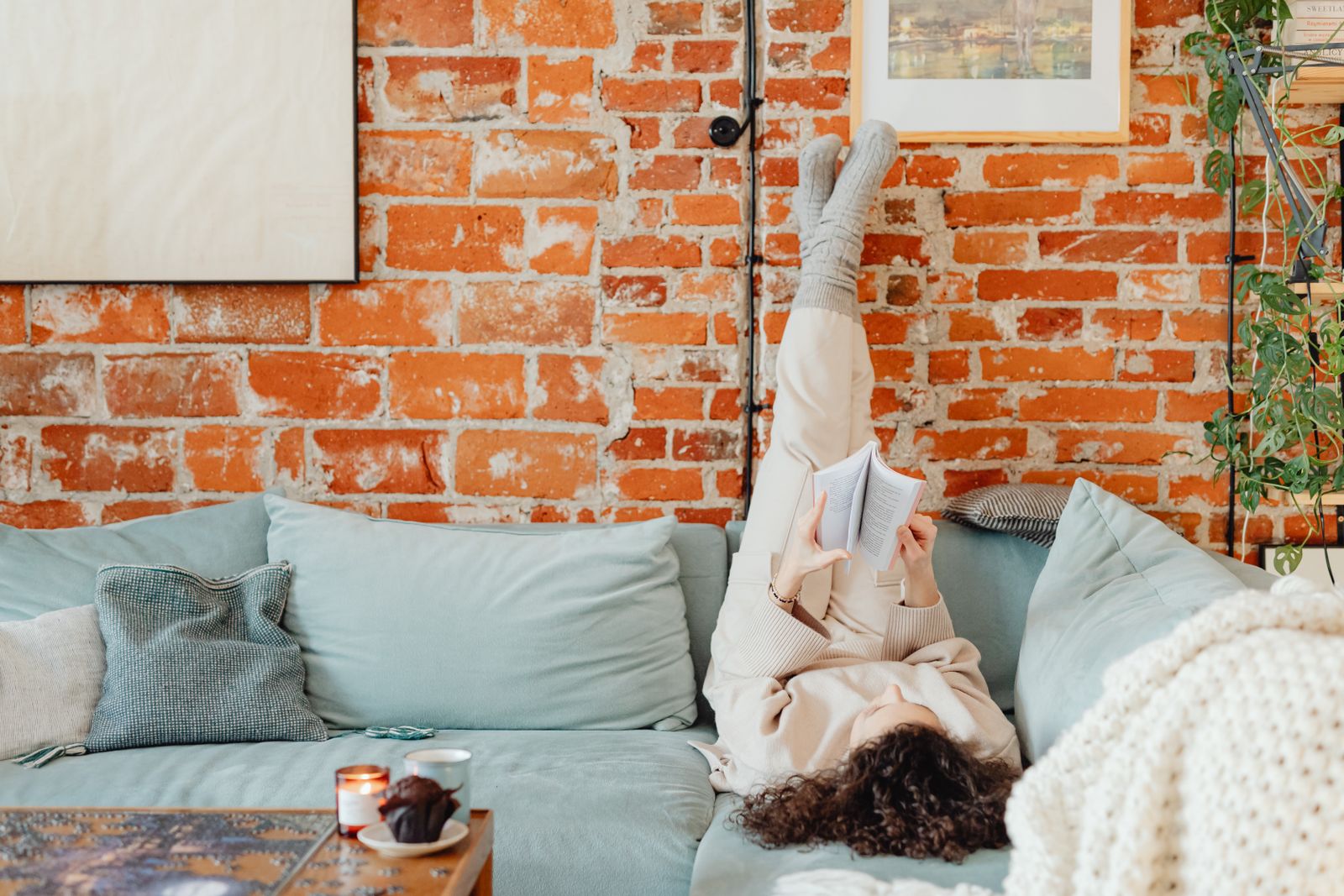
Photo by https://kaboompics.com/ on Pexels
Homes have one floor that's meaningfully colder than the rest — usually a tiled kitchen, a bathroom, or a basement. Hard mineral floors sit close to the temperature of the slab or subfloor beneath them rather than the room air, which is why they stay cool in a warm house and cold in a cold one.
That coldest surface is the one to plan for, because it's usually on the route you take most. A soft plush layer between foot and floor interrupts the heat transfer, which is most of why slippers feel noticeably better on tile than socks do. Socks warm the foot; a cushioned slipper adds a barrier as well.
| Surface | How it feels underfoot | What helps most | |---|---|---| | Tile or stone | Cold and hard, year-round | A plush interior plus a cushioned footbed | | Laminate or vinyl | Cool, hard, often slick | Cushioning and a soft, quiet sole | | Hardwood | Cool, hard, less cold than tile | Cushioning; a soft sole to protect the finish | | Concrete | Coldest surface in most homes | Maximum plush coverage | | Low-pile carpet | Mildly forgiving | Low weight, so nothing drags | | Area rug over hard floor | Mixed underfoot | A pair that handles both, so you don't think about it |
Habit 3: Break up the long stationary stretches
Standing or sitting in one place is what makes an ordinary day on hard floors feel long. A stationary foot in contact with a cool surface just keeps losing warmth, and nothing about the situation changes until you move.
The practical version of this habit is simply not letting two hours pass without getting up. Fill the kettle, take a lap of the room, stand somewhere warmer for a minute. If you cook, spend the long simmering stretches somewhere other than standing on the kitchen tile. A soft mat in the spot where you stand longest — at the sink, at the stove, at a standing desk — does a surprising amount of work for very little effort.
Anything easy to walk in encourages this. A lightweight pair you can move around in freely gets you up more often than something heavy and awkward on the stairs, which is one of the quieter arguments for low weight in indoor footwear. Our overview of how a comfortable pair supports moving around the house covers the everyday case for it.
Habit 4: Air your slippers out every night
This is the habit that keeps the other four working. A pair worn all day absorbs moisture from your feet and from the air, and it needs a few hours with air moving through it to release it.
The routine is short:
Lightweight plush pairs suit this routine well because they dry quickly enough that an overnight airing genuinely resets them. Wendy House Slippers are built on soft plush fabric with lightweight construction and a comfortable slip-on design, which is a good match for a habit that depends on the pair being easy to step into and quick to recover.
Habit 5: Keep the floors themselves clear

Hard floors show grit less than they transmit it. Small particles of sand and dirt sit on tile and laminate and get pressed between your sole and the floor with every step, which is unpleasant underfoot and abrasive to both.
Two things fix most of it. A no-outdoor-shoes rule at the door stops the majority of it arriving, and a quick sweep of the routes you walk most — kitchen, hallway, the path between rooms — handles the rest. It's worth doing for the floors as much as for the comfort.
While you're at it, check the underside of your slippers weekly and wipe off anything that's collected there. A sole carrying grit is doing the same abrading from the other direction.
A mat at the entrance helps more than most people expect, provided it's the coarse kind that actually takes material off a shoe rather than a decorative one. Between that and a shoes-off rule, the volume of grit reaching your hard floors drops sharply, which shows up in both how the floors look and how walking on them feels.
Frequently asked questions
Are thick socks enough on hard floors? Socks add warmth but very little cushioning, and they offer no barrier between the sole of your foot and a cold surface. On tile or concrete specifically, most people notice the difference immediately when they add a cushioned slipper over the top.
Does it matter what I wear indoors if I'm only home in the evenings? Less, simply because the hours are fewer. The one thing worth keeping even for a short evening at home is something between your feet and a cold hard floor, particularly on the route between the sofa and the kitchen.
How do I stop my feet getting cold in an air-conditioned house in summer? Air conditioning cools floor surfaces along with the air, so a hard floor in July can feel much like one in October. A lightweight plush pair covers this without adding the heat that makes a heavy winter slipper unbearable in warm weather.
Should I wear the same pair all day and all evening? You can, but it's the wear pattern that flattens a pair fastest. If your slippers are on for eight or nine hours, alternating two pairs so each dries out fully is the single change that keeps both comfortable for longer.
A practical next step
Pick one habit from the five above and do it for a week — most people find habit one, keeping a pair within reach of where the day starts, changes the most for the least effort. If your current pair is part of the problem rather than the solution, our guide to choosing indoor footwear for time at home and our piece on fixing uncomfortable indoor footwear both cover what to look for.
Cover photo by SHVETS production on Pexels.