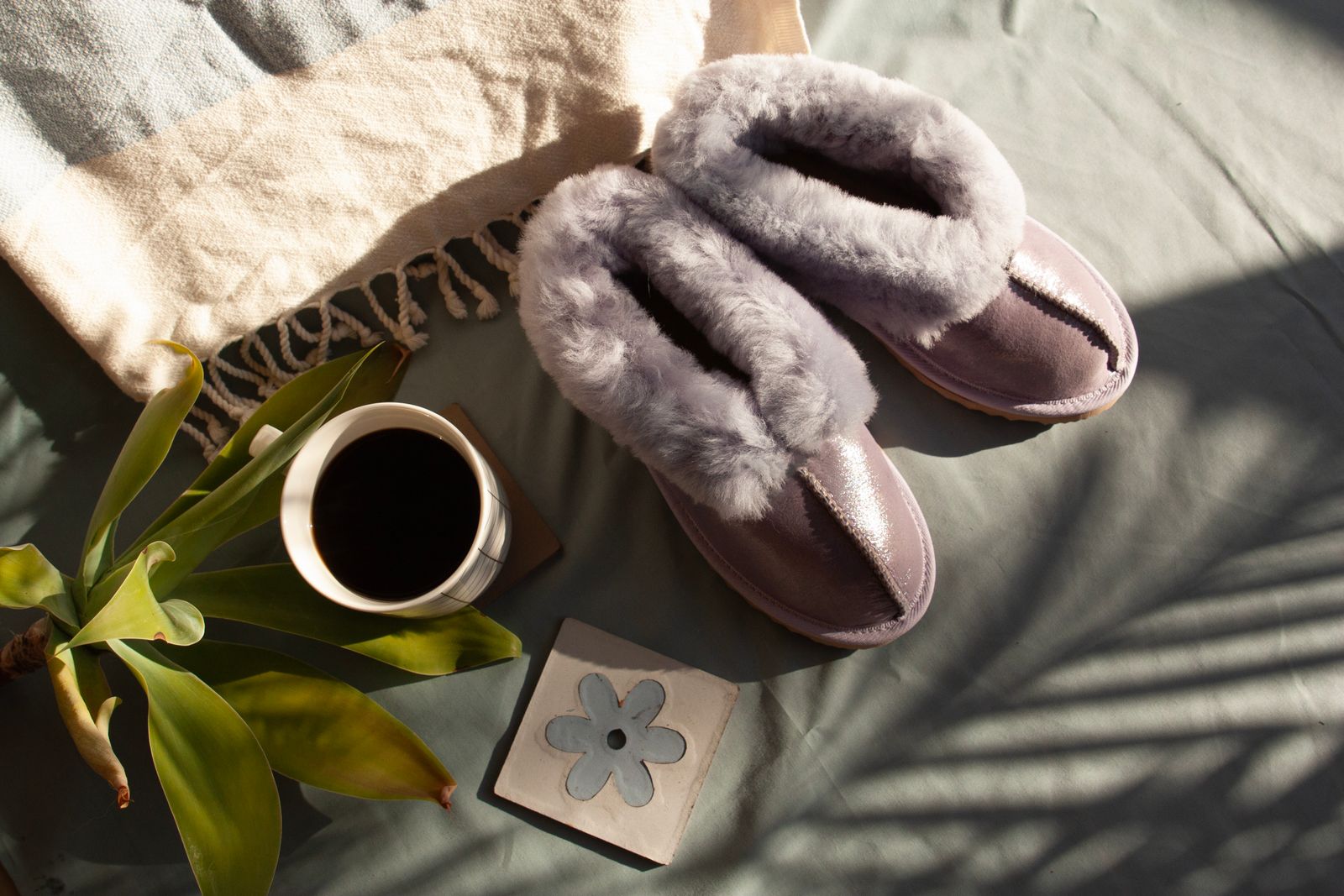
Slip-On House Slippers FAQ: Hands-Free Entry, Comfort, and Color
A true slip-on should go on with a single step down and come off with a light push of the opposite toe — no hands, no sitting, no bending. The design details that make that possible are a soft upper that yields as your foot enters, a low entry point at the ankle, and a light build that doesn't need to be dragged along. This FAQ answers the practical questions people have about hands-free indoor footwear, from doorway routines to what to do when your arms are full.
Why hands-free entry matters more than it sounds
Most people put indoor footwear on and take it off between four and ten times a day. If each of those requires stopping, sitting, and using a hand, the friction adds up, and the usual result is that the slippers get abandoned by the door and everyone walks around in socks instead.
Hands-free matters most in specific moments that recur constantly:
- Arriving home with grocery bags in both hands.
- Getting up in the night without turning on a light.
- Stepping in from a patio or balcony with a mug in one hand.
- Carrying a laundry basket between floors.
- Holding a child, a pet, or a phone to your ear.
What makes a slipper genuinely easy to step into?
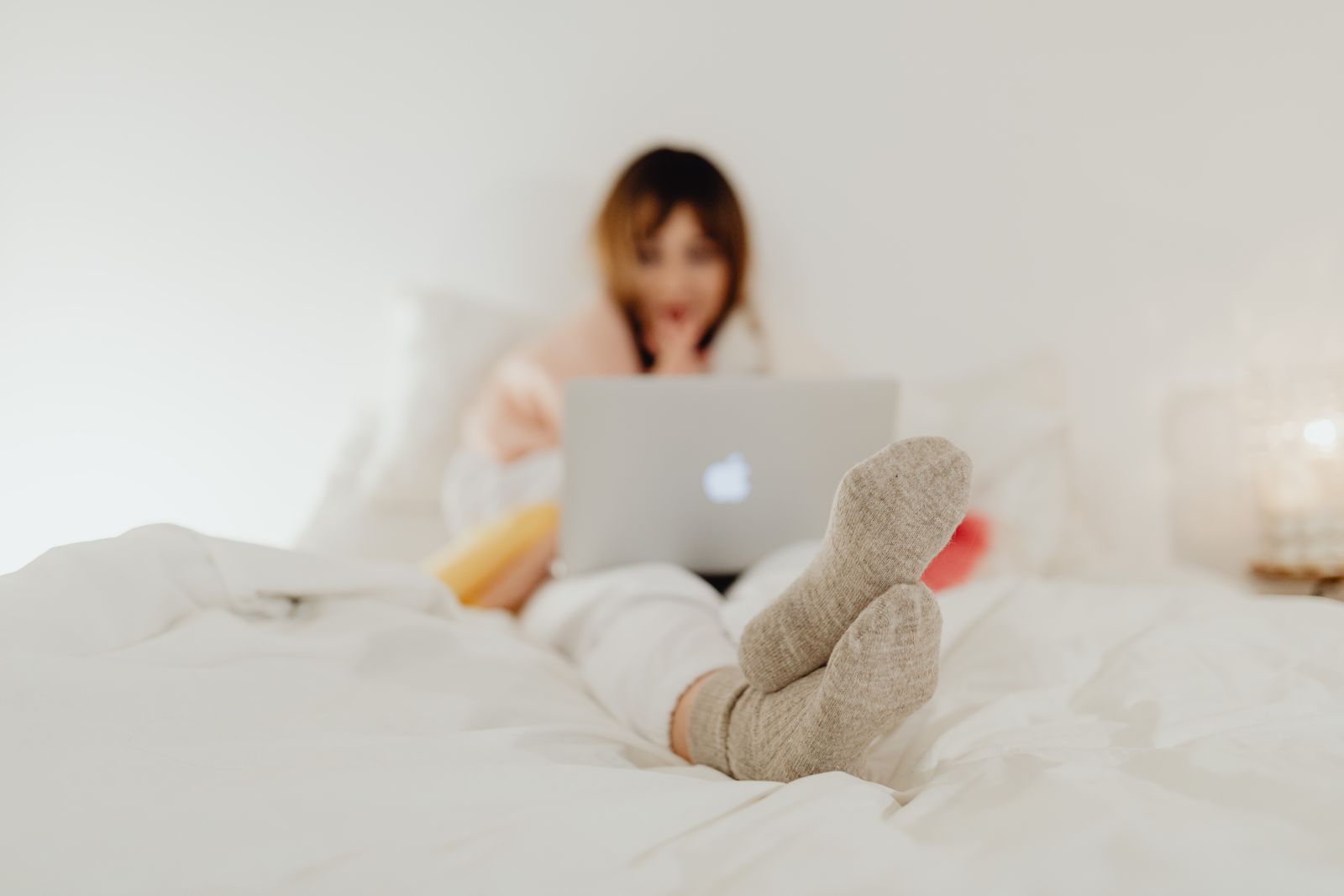
Photo by https://kaboompics.com/ on Pexels
Four design characteristics do the work.
A yielding upper. Soft plush gives way as your foot presses in, then closes back around it. A stiff or structured upper resists, and resistance is what forces you to reach down.
Light weight. A heavy slipper has to be lifted by your foot on every step and pulled into place on entry. Light construction means the slipper follows your foot instead of being hauled by it.
A low, open entry. The higher and tighter the opening at the ankle, the more it has to be stretched. Slip-on designs keep that opening generous enough to step through.
A fit that's right, not tight. This is the one people get wrong. A slipper a half-size too small can't be stepped into hands-free no matter how soft it is. The slipper fit and feature guide covers what to check.
The doorway routine that makes it effortless
That last habit is the one that determines whether the whole system works. A pair with a home gets worn; a pair that wanders doesn't.
Comfort questions people ask before buying
| Question | Short answer | |---|---| | Will they stay on if I walk fast? | A closed-heel slip-on holds through a normal stride, including stairs. | | Can I wear them barefoot? | Yes, and a plush lining is the reason it feels good. Air them out between wears. | | Will they feel bulky? | A lightweight build is specifically designed to avoid that. | | Are they quiet on hard floors? | Softer, lighter pairs are noticeably quieter than heavy house shoes. | | Do I need to break them in? | Not in the shoe sense. The plush settles over the first weeks and the fit relaxes slightly. | | Can I wear socks with them? | Yes. Factor sock thickness into your size choice. |
Choosing a color you'll still like in six months
Photo by Mikhail Nilov on Pexels
Color is a genuine decision point with indoor footwear, because unlike outdoor shoes these are seen against your home rather than your outfit.
Neutrals are the safe default. Soft greys, creams, and warm muted tones sit well next to most flooring, furniture, and loungewear, and they don't clash with whatever you happen to be wearing at home.
Darker tones hide everyday marks better. If your slippers live in a busy kitchen or a house with pets, a darker shade shows less between washes. Lighter colors look fresher but ask for a bit more upkeep.
Let the detailing be the interest. A simple color with well-considered finishing looks intentional without committing you to a bold statement you'll wear every single evening.
Match the room where they'll spend the most time. If that's a bedroom, softer and lighter tones feel right. If it's a living room and kitchen, something more forgiving usually wins.
If you want to see how styling and comfort come together on a specific pair before choosing, the feature overview walks through the details.
What slows hands-free entry down
If a pair you already own can't be stepped into, one of four things is usually responsible, and three of them are fixable without buying anything.
The size is too small. This accounts for most cases. A slipper that's a half-size short has no give at the entry point, so your foot has to be worked in rather than dropped in. Nothing about the design can compensate.
The pair has flattened in storage. Plush that's been packed under something for months holds a compressed shape. Working the toe and instep area gently with your hand for a few seconds restores enough volume to step into, and a day of airing out finishes the job.
They're damp. A lining that hasn't fully dried after cleaning grips the foot instead of releasing it. That's a drying problem, not a fit problem, and it resolves itself with patience and air rather than heat.
The heel is being crushed. If the habit is standing on the back of one slipper to pull the other foot out, the heel area gradually collapses inward. A collapsed heel narrows the opening you're trying to step through. Pushing gently at the heel with the opposite toe avoids it entirely.
Frequently asked questions
How do I put slippers on without using my hands? Leave the pair side by side and facing away from the wall, then step down and slightly forward into each one with your weight on the opposite foot. A soft upper and a correct size make this a one-second motion. If you have to reach down, the fit is likely too small.
Why do my slippers slide off when I walk quickly? Usually because they're a size too large, or because the style leaves your heel uncovered. Excess length makes you shuffle to keep them on. A slightly thicker sock is a quick fix for a pair that's marginally too roomy; sizing correctly is the real one.
Is it bad to push slippers off with the other foot? It's fine if you push at the heel gently. What causes damage is standing on the back of one slipper and pulling your foot out against it, which stresses the heel area repeatedly. Push, don't crush.
How many pairs should a household keep by the door? One per person who lives there, plus a couple of spares if you have visitors often. Spare pairs are a different purchase with different priorities, and the guide to guest slippers covers what to look for.
Next step
Pick the spot where you'll actually keep them before you buy — the place you naturally stop when you walk in the door. Then choose a size based on whether you'll wear socks, and a color based on the room they'll live in rather than the clothes you own. Those three decisions cover almost everything that determines whether a pair gets worn daily or ends up in a closet. For the broader case for wearing indoor footwear at all, see why house slippers are worth wearing indoors.
Cover photo by Karen Laårk Boshoff on Pexels.