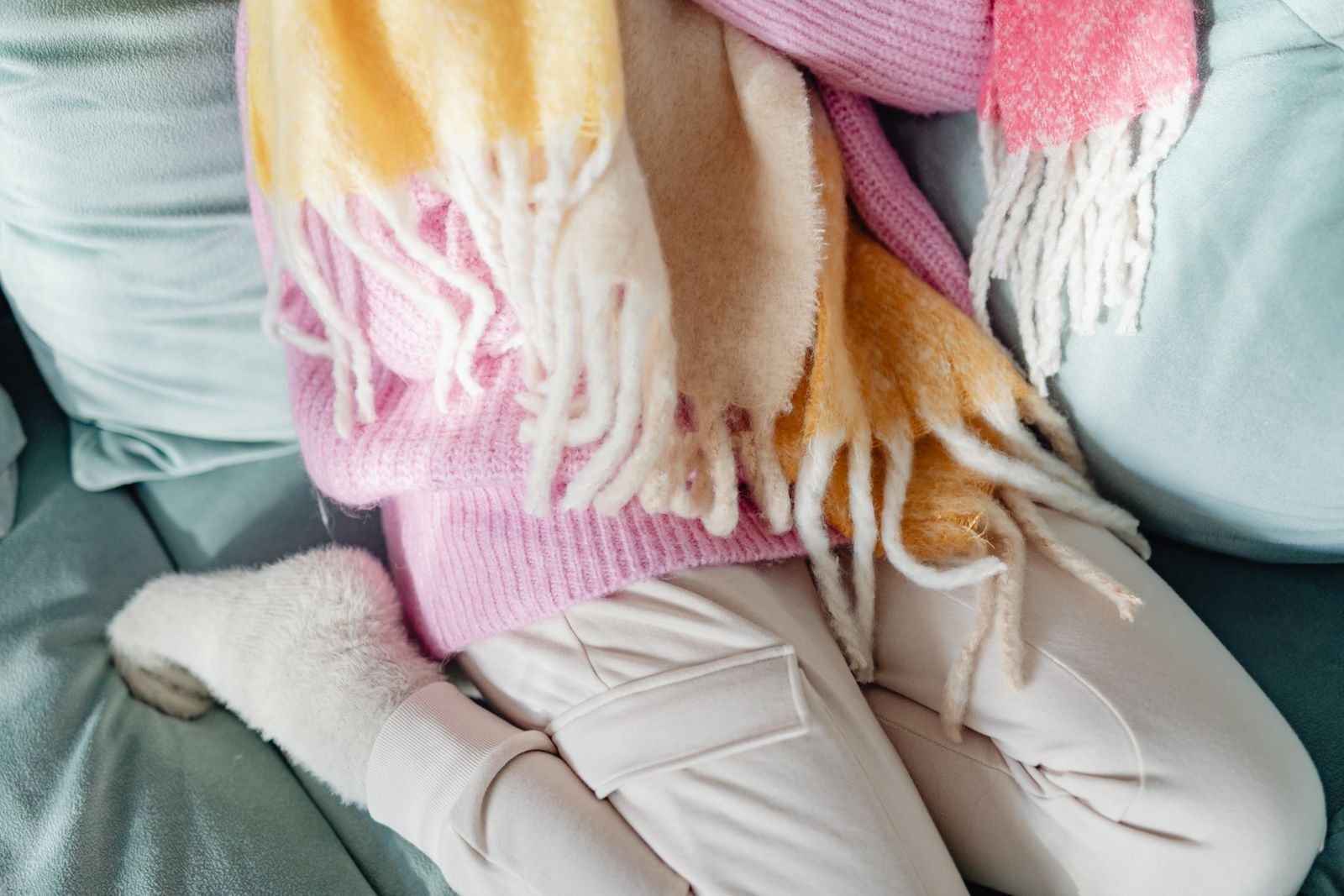
Why Walking Barefoot on Hardwood Floors Causes Foot Soreness (And How Plush Slippers Help)
Walking barefoot on hardwood makes feet sore because a hard, unyielding surface returns almost all of the impact energy from each step straight back into the heel, arch, and ball of the foot. Skin and fat pads on the sole were never meant to be the only cushioning between bone and a solid plank. A soft, plush house slipper puts a compressible layer in that gap, which spreads the load over more of the foot and takes the sting out of thousands of small indoor steps.
What actually happens to the foot on a hard floor
Every step is a small collision. The heel lands first, the foot rolls forward through the arch, and the toes push off. On grass or carpet, the surface deforms slightly and absorbs part of that collision. Hardwood, tile, laminate, and concrete barely deform at all, so the foot has to do the absorbing on its own.
The body has built-in shock absorbers for this: a fat pad under the heel, a springy arch held by the plantar fascia, and a second fat pad under the ball of the foot. They work well. They just work better with help. When the only material between a heel bone and a solid floor is a few millimeters of tissue, that tissue compresses fully on every step and gets no recovery time across a long day at home.
Three things tend to follow:
- Heel tenderness, worst first thing in the morning or after sitting, because the heel pad and the tissue band along the sole have been loaded repeatedly without cushioning.
- Aching across the ball of the foot, especially in people who stand at a counter, sink, or desk on a hard floor for long stretches.
- General end-of-day fatigue in the arch, where small stabilizing muscles have been working continuously on a surface that gives no feedback.
Why hardwood feels harder than the ground outside
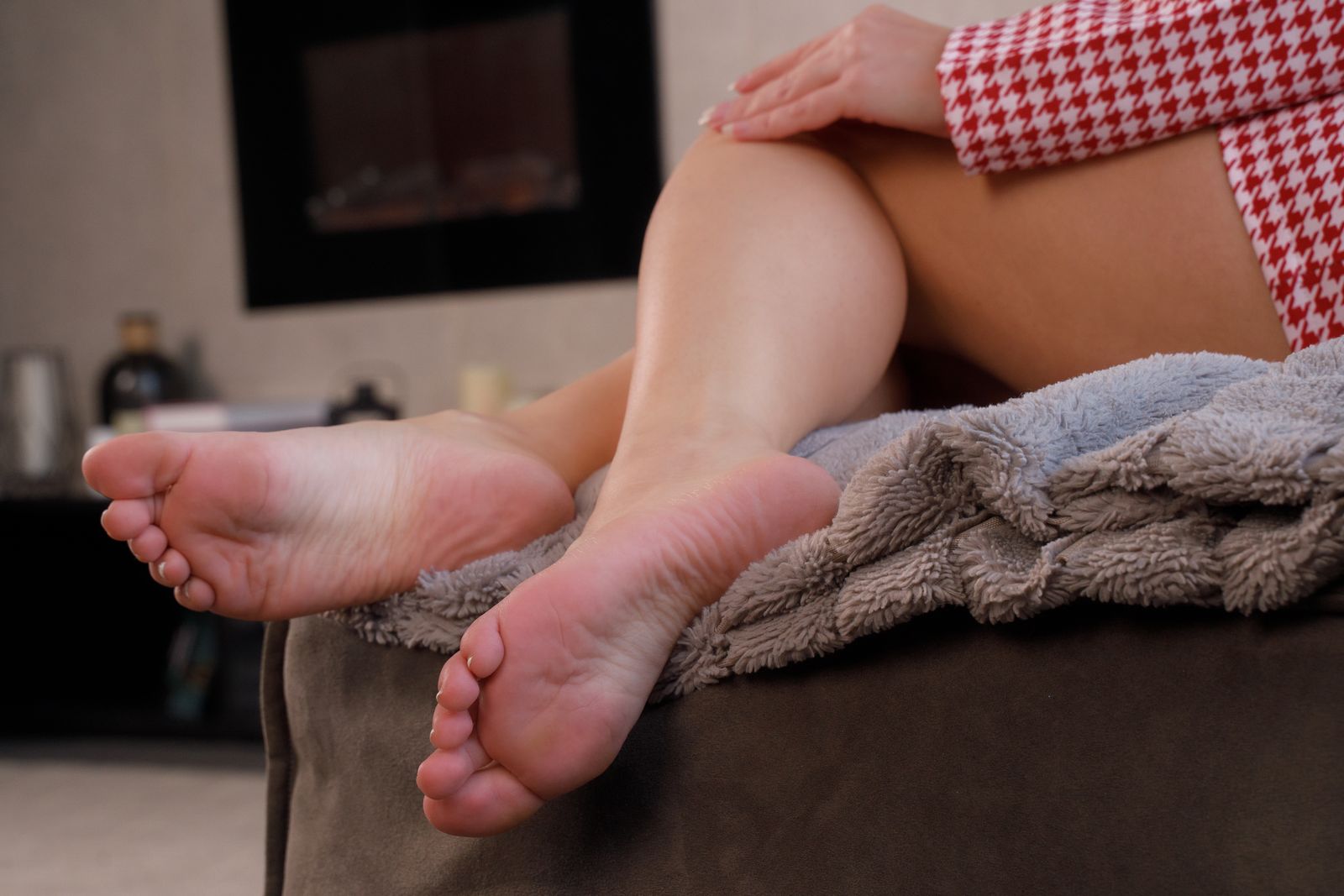
Photo by Vika Glitter on Pexels
Outdoor walking usually happens in shoes. That is the real difference. A sidewalk is harder than a hardwood floor, but almost nobody walks a sidewalk barefoot, so the comparison people actually make is shoes outside versus nothing inside. The floor at home is the only hard surface most adults meet with a bare sole.
Indoor flooring has also gotten harder over the past few decades. Wall-to-wall carpet used to do a quiet amount of cushioning work in most homes. Wide-plank hardwood, engineered wood, luxury vinyl, polished concrete, and large-format tile all look better and clean more easily, and all of them return more impact to the foot. Homes that swapped carpet for hard flooring often see this show up as new foot complaints that never get connected to the renovation.
Which floors are hardest on feet
| Surface | Give underfoot | Typical effect over a long day | |---|---|---| | Polished concrete | Essentially none | Sharpest heel impact; also draws heat from the foot | | Ceramic or porcelain tile | Essentially none | Hard plus cold, which stiffens tissue and makes soreness more noticeable | | Solid or engineered hardwood | Very little | Steady low-grade aching in heel and arch | | Laminate or vinyl plank over subfloor | Slight | Marginally kinder than tile, still firm | | Low-pile carpet or a large rug | Moderate | Noticeably easier; often the room people gravitate to without knowing why |
The pattern is worth checking against your own home. If the kitchen is tile and the bedroom is carpeted, and the kitchen is where you cook and clean and stand, that room is doing most of the damage.
What a plush, lightweight slipper changes
A cushioned slipper does four useful things at once, none of them complicated.
It adds a compressible layer. Soft plush fabric flattens under load and springs back, which stretches the impact of each step out over a longer moment instead of delivering it as a spike. Less peak force reaches the heel bone.
It spreads pressure sideways. Bare feet on a hard floor concentrate load on two or three small contact points. A soft footbed lets more of the sole share the work, so no single spot takes the brunt.
It insulates. Cold feet feel sorer. Tissue is stiffer when it is cool, and cold tile pulls warmth out of the sole continuously. A plush layer between skin and floor keeps foot temperature steadier, which is a comfort gain on top of the cushioning gain.
It stays out of the way. Weight matters more indoors than people expect, because indoor movement is short and frequent — up for a glass of water, down the hall, back to the couch. A heavy, stiff house shoe makes each of those trips feel like an errand. Lightweight construction and a slip-on design let a slipper be the thing you leave on for hours rather than the thing you take off after ten minutes. Wendy House Slippers are built around exactly that combination of soft plush fabric and lightweight construction, with a comfortable slip-on design and stylish catching details, so wearing them all evening is not a decision you have to keep making.
There is a broader case for keeping something on your feet at home beyond soreness alone, covered in why wearing house slippers indoors matters.
How to tell whether the floor is your problem
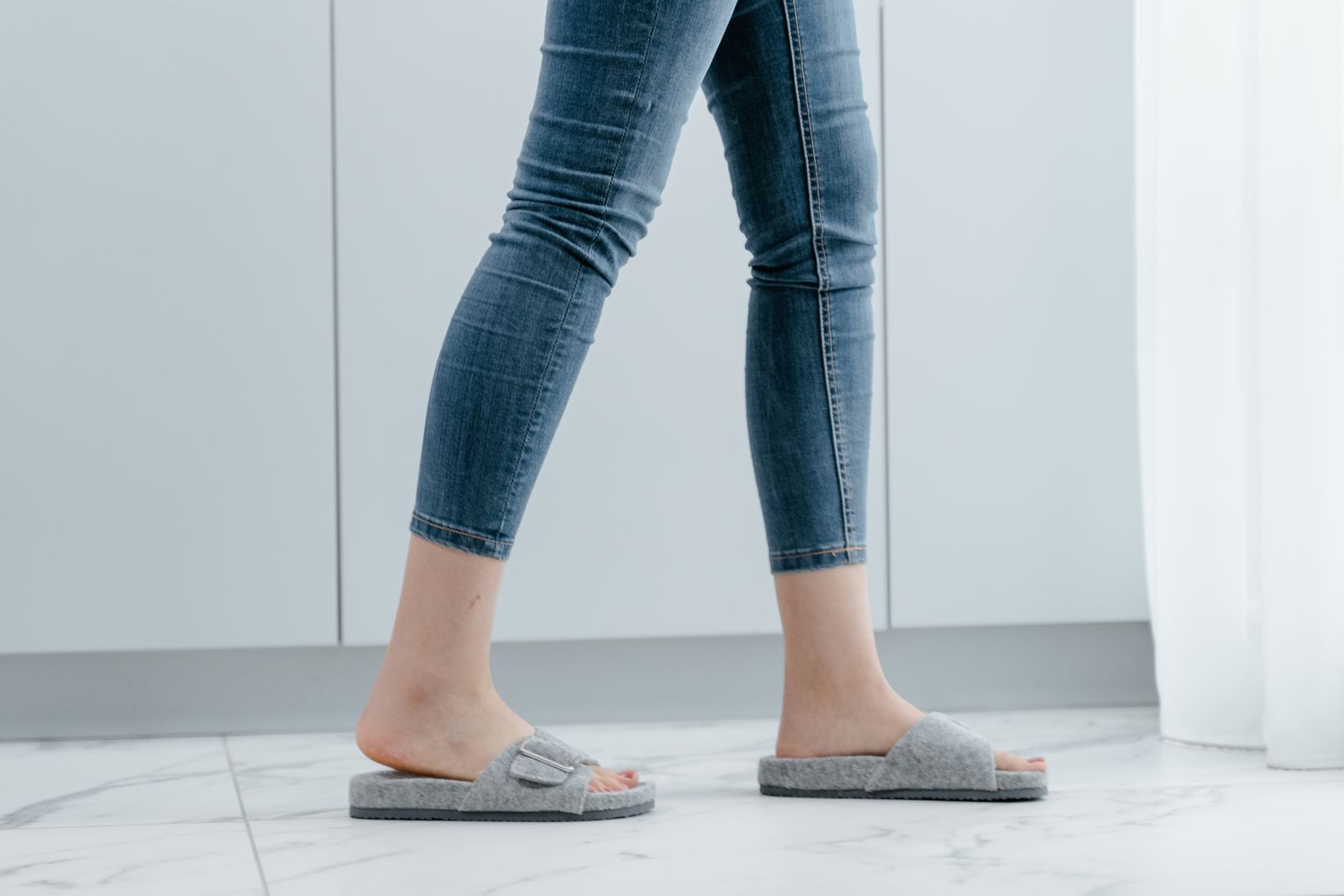
Photo by MART PRODUCTION on Pexels
Run a simple four-day check before spending anything.
Pain that is sharp, localized, swollen, or getting worse week over week is not a flooring problem. That is worth taking to a podiatrist or your regular doctor rather than solving with slippers.
What to look for in a hard-floor slipper
- A soft, giving upper and lining. Plush fabric against the skin is what makes a slipper something you want to keep on, and it contributes to the cushioning rather than just covering the foot.
- Low weight. The less the slipper weighs, the less work each step costs, and the more likely it gets worn for full evenings instead of short bursts.
- Easy on and off. A slip-on design removes the friction that makes people pad around barefoot instead.
- Full contact under the whole sole. Cushioning only helps where it sits, so a footbed that supports heel through toe beats a thin patch under the heel alone.
- Something you actually like looking at. Slippers that feel like part of your home rather than a medical item get worn far more often, which is the only way any of this works.
FAQ
Do thick socks work instead of slippers? Socks add warmth and a thin layer of friction, but very little compressible cushioning, and they get slick on smooth hardwood. They are better than nothing on a cold floor and considerably less effective than a slipper with a soft footbed.
Why do my feet hurt more at home than at work? Most likely because you wear shoes at work and nothing at home. A cushioned work shoe absorbs impact all day, so the barefoot hours indoors become the unprotected ones, even though they feel like the restful part of the day.
Is going barefoot at home bad for the feet? Not inherently, and barefoot time on soft surfaces helps small foot muscles stay active. The problem is hours of barefoot walking on unforgiving surfaces with no recovery, which is what a modern hard-floored home delivers.
How long before cushioned slippers make a difference? Many people notice less evening aching within a few days, because the change is immediate rather than a healing process. Long-standing heel pain takes longer and may need more than a footwear change.
A practical next step
Pick the hard-floored room where you spend the most standing time, and cover every indoor step there for one week with a soft, lightweight slipper you can slide on without thinking. Keep your two-line evening note going. That single week tells you more about your own feet than any general guidance can, and it costs nothing but attention.
Cover photo by https://kaboompics.com/ on Pexels.