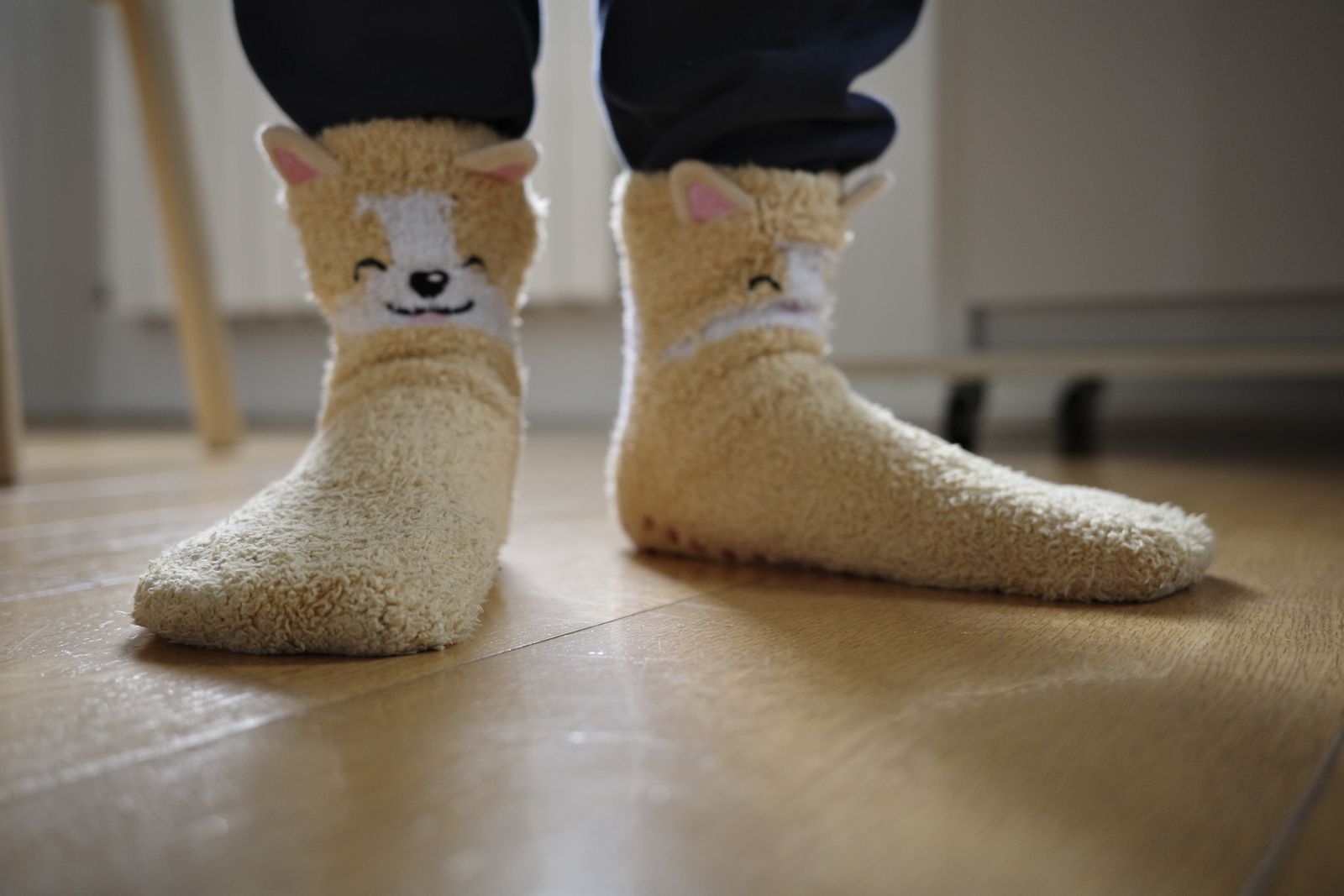
Hard Floor Foot Comfort FAQ: How to Keep Your Feet Cushioned and Cozy Indoors
The simplest way to protect your feet on hard floors is to put a compressible layer between the sole and the surface for every indoor step, and to add a cushioned mat wherever you stand still for long stretches. Hard floors cause soreness because they return impact rather than absorbing it, and cold floors make that soreness feel worse by cooling the tissue. Below are direct answers to the questions people ask most about keeping feet comfortable on tile, hardwood, laminate, and concrete.
Why do hard floors make feet hurt when outdoor walking does not?
Because outdoor walking happens in shoes. A sidewalk is harder than any floor in your house, but the cushioned sole of a shoe absorbs most of the impact before it reaches the heel. Indoors, bare feet meet a rigid surface with nothing but skin and a thin fat pad in between. The floor is not the unusual part of the equation. The absence of footwear is.
Which indoor surfaces are hardest on feet?
Photo by Yan Krukau on Pexels
| Surface | Give underfoot | Temperature | Main complaint | |---|---|---|---| | Polished or sealed concrete | None | Cold, draws heat continuously | Sharp heel impact plus cold stiffness | | Ceramic and porcelain tile | None | Cold | Heel soreness, cold toes | | Solid and engineered hardwood | Very little | Cool | Steady arch and heel aching | | Laminate or vinyl plank | Slight | Neutral | Mild but cumulative | | Area rug or low-pile carpet | Moderate | Warm | Few complaints |
Cold and hard tend to arrive together, which is why kitchens and bathrooms produce the most complaints in most homes.
Why does a cold floor make soreness worse?
Cool tissue is stiffer and less elastic than warm tissue, so the arch and the band of tissue along the sole absorb impact less effectively when they are chilled. Cold also constricts small blood vessels in the foot, which reduces the sensation of comfort even when nothing is being damaged. A layer that insulates as well as cushions addresses both at once, which is why a plush slipper often feels better on cold tile than a thin flat sandal with the same amount of foam.
Do slippers actually help, or is it just warmth?
Both, and they are separate effects. A soft footbed spreads pressure over more of the sole and lengthens the moment of impact, which lowers the peak force reaching the heel. Insulation keeps the tissue warmer and more elastic. A plush slipper delivers both, since the pile compresses underfoot and traps air against the skin at the same time.
There is a mobility benefit as well. Walking around the house in socks on smooth hardwood is genuinely slippery, and a slipper that stays on the foot properly removes that risk. That side of it is covered in whether house slippers reduce indoor falls.
What matters more, cushioning or support?
For hard-floor comfort specifically, cushioning does more of the work. Support controls how the foot moves; cushioning controls how much force reaches it. Most indoor soreness on hard floors is an impact problem rather than an alignment problem.
That said, a slipper needs enough structure to stay on and stay flat. A footbed that folds in half under the arch stops cushioning where it matters. The relationship between sole firmness and everyday usefulness is worked through in the hard sole utility standard.
Are anti-fatigue mats worth adding?
Yes, in the places where you stand still. Standing is harder on feet than walking, because there is no movement to circulate blood and load stays on the same points continuously. A cushioned mat in front of the kitchen sink, the stove, a standing desk, or a laundry area handles those spots better than footwear alone.
Mats and slippers solve different halves of the problem. The mat covers the standing hours in one spot; the slipper covers the walking hours everywhere else. Homes with hard floors throughout usually want both.
What about rugs?
Rugs help, and they come with a tradeoff. A low-pile rug or runner in a high-traffic hallway reduces both impact and noise. Loose rugs on smooth floors are also a common trip hazard, particularly for older adults, so anything you add should have a proper non-slip pad underneath and no curling edges. A slipper travels with you and does not create a new hazard, which is why it is usually the better first move.
Should you go barefoot at home at all?
Photo by cottonbro studio on Pexels
Barefoot time is useful. It keeps the small muscles of the foot active and gives the skin a chance to breathe, and on carpet or a rug it costs nothing. The problem is hours of barefoot walking on unyielding surfaces with no break, which is what a modern hard-floored home produces. A reasonable balance is bare feet in the carpeted or rugged rooms and something cushioned everywhere else. The broader case for indoor footwear, including hygiene and warmth, is laid out in why to wear house slippers indoors.
How do you set up a house for foot comfort?
A short sequence that covers most homes:
When is foot pain not about the floor?
Some signs point away from a flooring or footwear explanation and toward something worth a professional opinion:
- Sharp, stabbing pain rather than a general ache
- Pain concentrated in one small spot that is tender to press
- Visible swelling, redness, or warmth
- Numbness, tingling, or burning
- Pain that keeps worsening week over week despite changes
- Anything following a specific injury or fall
Does this change with age?
The heel's natural fat pad thins over the years, so the same floor delivers more impact to a seventy-year-old heel than to a thirty-year-old one. Balance and reaction time also change, which raises the stakes on smooth surfaces. The practical result is that cushioned indoor footwear that stays securely on the foot matters more with age, not less, and that socks alone on hardwood are a poor choice at any age.
Quick answers
Do house shoes need arch support to help on hard floors? Cushioning addresses the impact, which is the main hard-floor complaint. Additional support is useful for people who already know they need it, and it is not a prerequisite for comfort on tile or wood.
Are slippers better than indoor sneakers for this? For comfort over long indoor hours, usually yes, because slippers are lighter and easier to slip on and off. Indoor sneakers offer more structure and are the better pick for someone doing hours of physical work at home.
How quickly should relief show up? Cushioning works immediately, so less evening aching often appears within a few days. Long-standing heel pain improves more slowly because tissue needs time to recover, and it may need more than a footwear change.
Can thick socks replace slippers on cold tile? They add warmth but almost no compressible cushioning, and they are slippery on smooth floors. They are a reasonable stopgap and not a substitute.
A practical next step
Walk your home once and write down the three hard-floor spots where you spend the most time on your feet. Put a cushioned mat at the one where you stand still, and commit to covering every indoor step for a week with something light enough that you never think about taking it off. That combination handles the two different ways hard floors wear feet down, and a week is enough to tell you how much of your soreness was simply the surface underneath you.
Cover photo by ommy on Pexels.