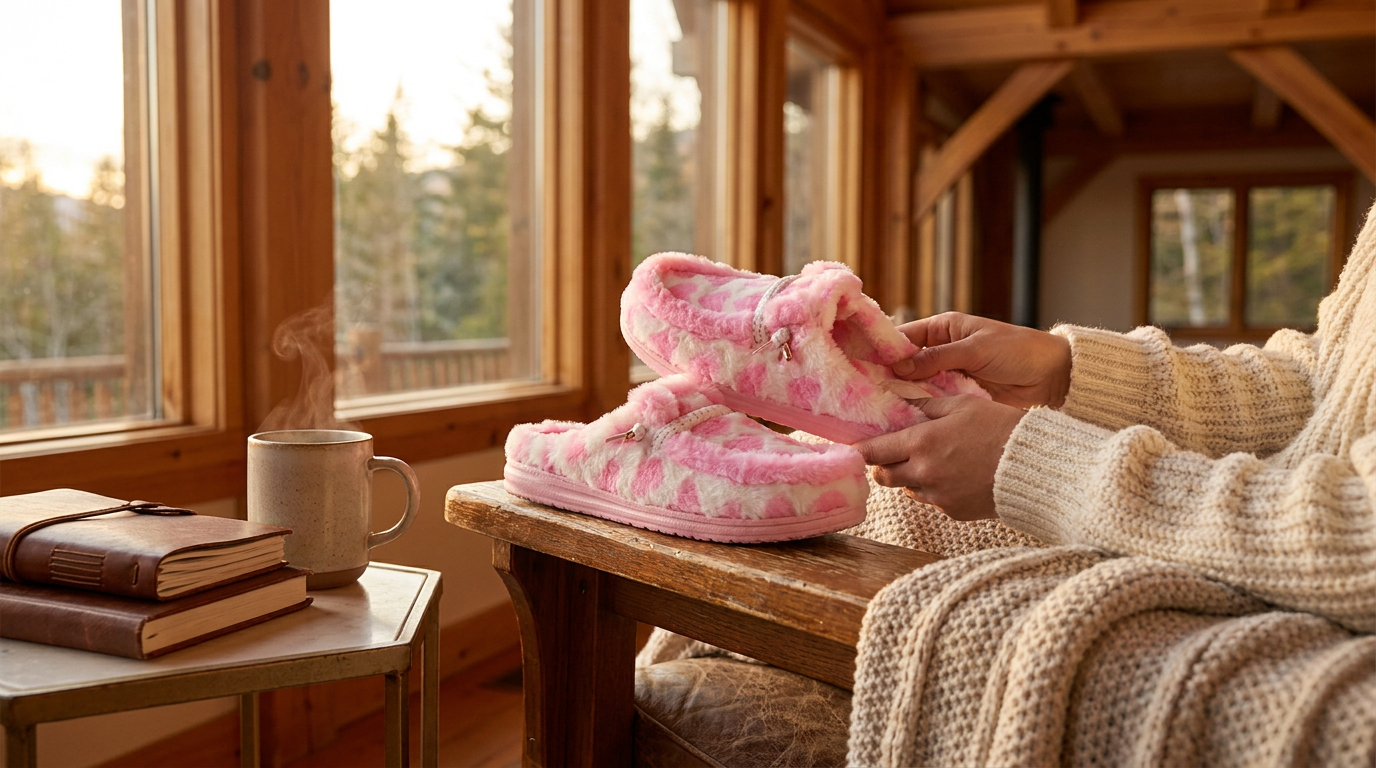
Wendy House Slippers and the Hard Sole Utility Standard
 Maya ChenContributing Editor
June 10, 2026. This analysis evaluates the mechanical advantages of Wendy House Slippers over standard soft-sole indoor footwear. It is written for consumers prioritizing durability and indoor-outdoor versatility over the ephemeral softness of low-density foam alternatives.
The Failure of the Traditional Indoor Moccasin
The conventional wisdom says that a house shoe should prioritize immediate tactile softness above all else. This philosophy has led to a market saturated with flimsy, felt-bottomed slippers that degrade within three months of consistent use. Here's the part nobody talks about: a slipper that cannot withstand a trip to the mailbox or a walk across a damp garage floor is not a functional piece of equipment; it is a consumable accessory. According to Rack Room Shoes, the HEYDUDE Wendy Women's Slipper is positioned to elevate the winter wardrobe by blending a relaxed design with actual structural integrity. Most consumers believe they want a 'cloud-like' experience, but cloud-like materials lack the torsional rigidity required to prevent foot fatigue during long periods of standing on hardwood or tile. When the arch is not supported, the soft materials compress into a useless thin layer, leaving the wearer essentially barefoot on a cold surface. This failure in material engineering is why the shift toward integrated outsoles in Wendy House Slippers is not just a trend, but a necessary correction in the footwear industry. We have seen a decade of 'disposable' footwear; the requirement for a real hard sole has never been more apparent for those who value longevity over initial marketing fluff.
Engineering the Hybrid Outsole
Photo by Lisa from Pexels on Pexels
Wendy House Slippers solve the durability deficit by utilizing a specific outsole architecture that mirrors their standard walking shoes. As noted in the product specifications from HEYDUDE, the Wendy Slipper features the same outsole as other Wendy models but incorporates a cozy sherpa upper. This is a critical distinction. By maintaining the same geometry as a standard shoe, the slipper provides a consistent gait cycle that soft-bottomed competitors cannot match. Run the math: a typical foam-only sole loses approximately 40% of its rebound capacity within the first 100 hours of compression. In contrast, the hard-sole construction found in Wendy House Slippers maintains its structural profile indefinitely. This allows for a seamless transition between environments. A video review from HEYDUDE via Facebook highlights that users specifically value these because they actually have a hard sole, facilitating movement in and out of the house without a change in footwear. The faux-shearling upper provides the necessary thermal insulation without the moisture-retention issues often found in low-grade organic wool. This synthetic approach ensures that the interior remains breathable while the exterior remains rugged. When you analyze the Wendy House Slippers framework, the focus is clearly on a high-utility hybrid rather than a delicate lounge item. This construction caters to a demographic that views their home as a high-traffic environment requiring professional-grade equipment.
The Decision Framework for High-Utility Footwear
Choosing a house shoe based on a five-second 'squish test' in a retail aisle is a fundamental error in judgment. To determine if Wendy House Slippers meet your specific operational requirements, you must evaluate the footwear against a rigorous utility checklist. I'll change my mind when a soft-sole manufacturer can prove their product maintains arch alignment after six months of daily use, but until then, the hard-sole model remains the only logical choice for the informed consumer. Before committing to a pair of Wendy House Slippers, consider these criteria:
- Outsole Rigidity: Ensure the sole does not fold in half with minimal pressure; it must support the weight of the wearer across varied terrain.
- Thermal Regulation: The faux-shearling must provide warmth without causing excessive perspiration, a balance achieved through the Wendy's specific synthetic blend.
- Maintenance Requirements: High-utility slippers should be easily cleaned; the Wendy's durable upper is designed for longevity compared to delicate suede.
- Traction Variance: Evaluate the tread pattern for its ability to grip both polished indoor floors and textured outdoor concrete.
- Volume and Fit: The slip-on nature should not compromise the lockdown of the foot; a proper house slipper stays secure during rapid movement.
Shop Wendy House Slippers here
Sources
Photo by Karen Laårk Boshoff on Pexels
- Wendy Slipper - HEYDUDE
- The WENDY slipper is back | HEYDUDE - Facebook
- Black Heydude Womens Wendy Slipper - Rack Room Shoes