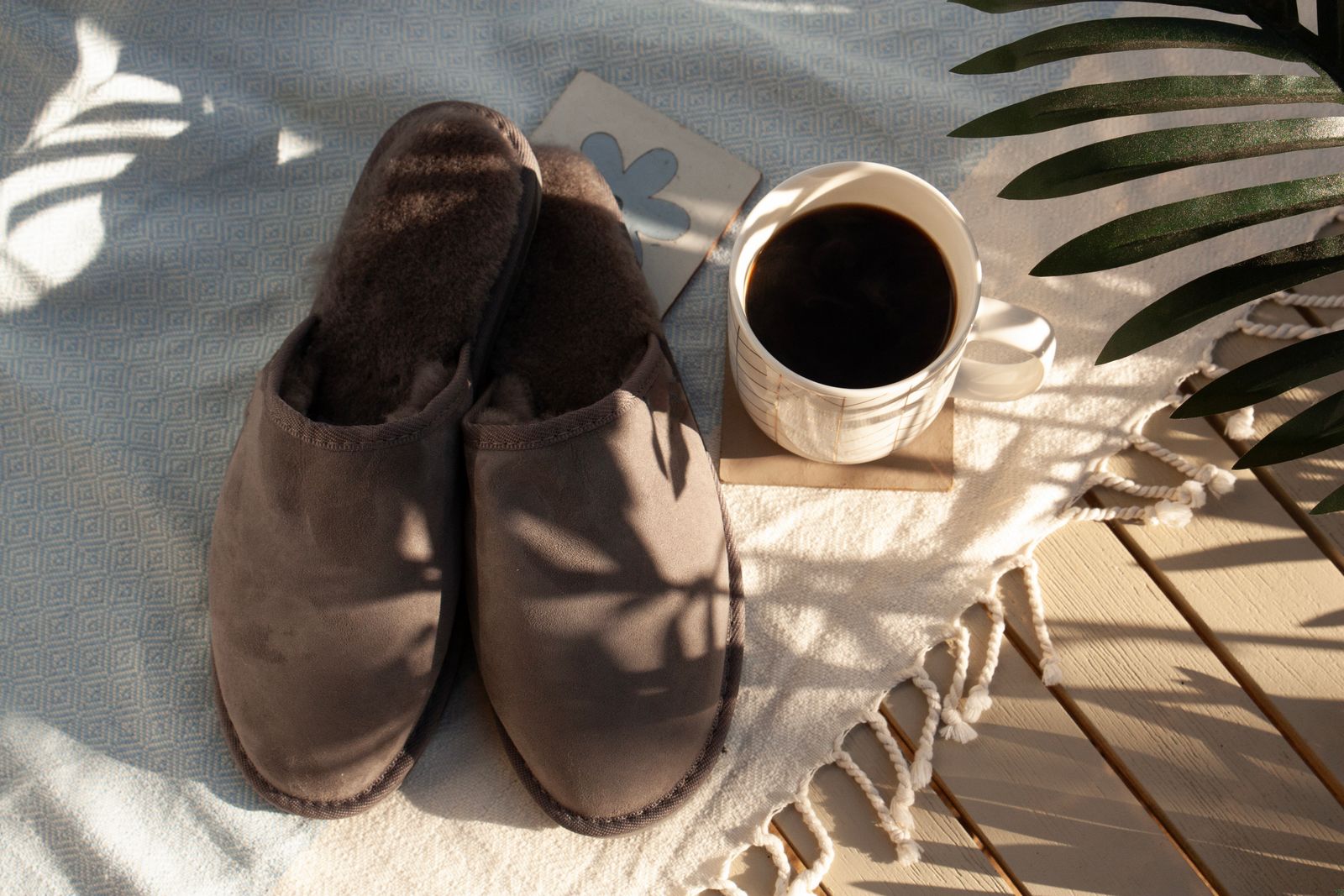
How to Measure Your Feet for the Perfect Plush Slipper Fit
To measure your feet for slippers, stand on a sheet of paper with your heel against a wall, mark the paper at the tip of your longest toe, and measure the distance from the wall to that mark. Do this for both feet in the evening while wearing the socks you plan to use, then match the longer measurement to the size chart for the specific pair you are buying. Measuring takes three minutes and is far more reliable than assuming your slipper size matches your sneaker size.
Why measure instead of using your usual shoe size?
Shoe sizing is inconsistent across brands and categories, and slipper sizing is looser still. Many slippers are sold in bands that cover two shoe sizes, which means a single label has to serve a range of foot lengths. If your foot sits at the top of a band, the pair will feel snug; at the bottom of the same band, it will feel roomy. Knowing your actual measurement in inches or centimeters tells you which end you are on.
Feet also change. Length and width shift over years, and both feet swell during the day. Someone who last measured a decade ago is often working from a number that no longer applies. Three minutes with a piece of paper resolves all of it.
What you need
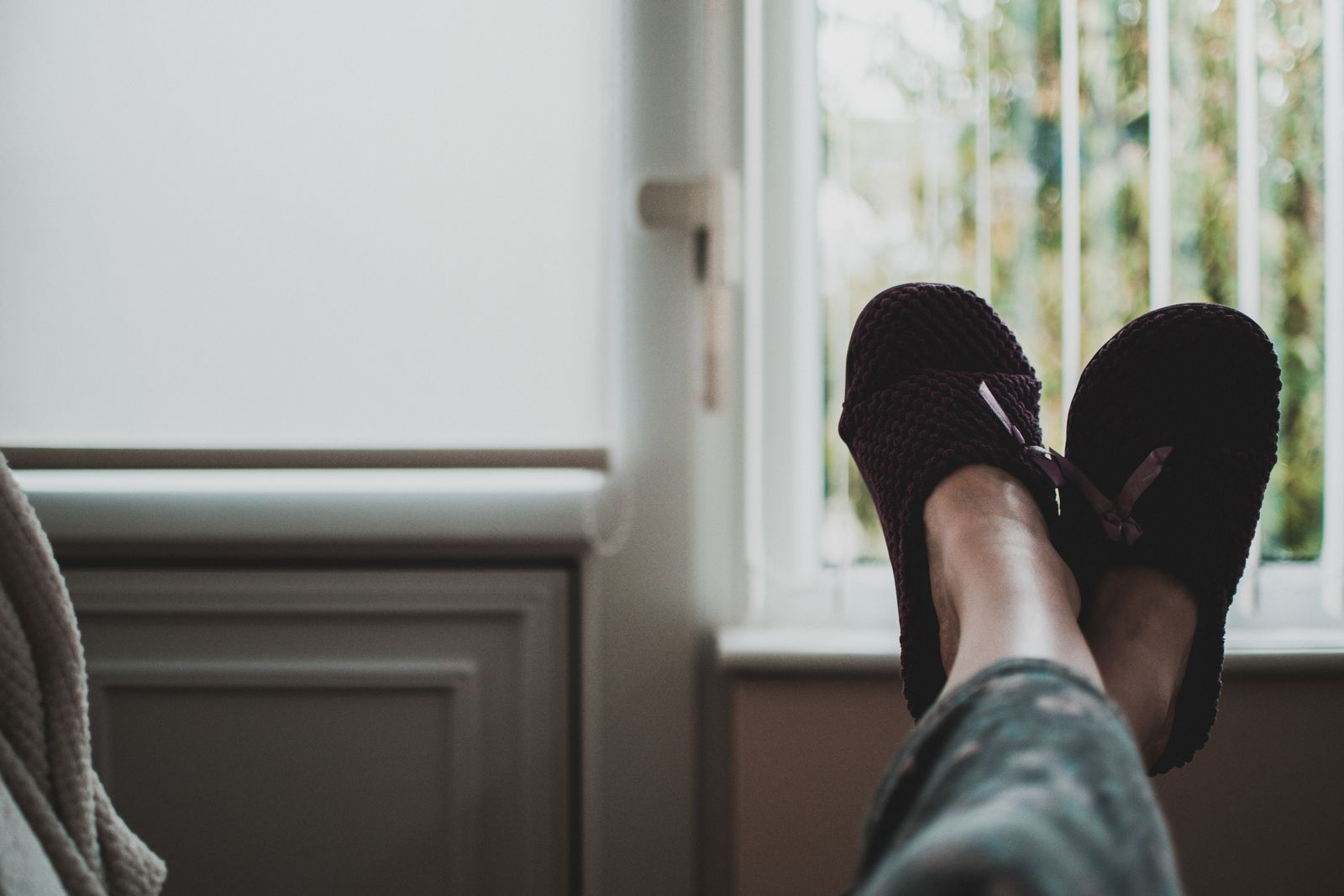
Photo by Lisa from Pexels on Pexels
- A sheet of paper larger than your foot
- A wall with no baseboard, or a door frame
- A pencil held upright rather than tilted
- A ruler or tape measure with inches or centimeters
- The socks you actually intend to wear in the slippers, or bare feet if that is your habit
Step-by-step: measuring foot length
How to measure foot width, and when it matters
Width matters most in slippers with a firm structure and least in soft plush styles, which have more give across the ball of the foot. It is still worth knowing if you have ever found footwear pressing on the sides.
Wrap a tape measure around the widest part of the foot — across the ball, just behind the toes — while standing, and record the circumference. Alternatively, trace the outline of your standing foot and measure across the widest point of the tracing. Either number gives you something to compare against a chart when one is available, and more usefully it tells you whether you are at the wide end for your length, which is the real signal for choosing a forgiving style.
| Measurement result | What it means for slipper choice | |---|---| | Both feet within about an eighth of an inch | Straightforward; size to either foot | | One foot clearly longer | Size to the longer foot; take up slack in the other with a thin insole or thicker sock | | Length lands at the top of a size band | Choose the larger band and expect to wear socks | | Length lands at the bottom of a band | Choose the smaller band | | Wide across the ball of the foot | Favor a soft, flexible upper over a structured one | | Measured with thick socks on | Note that, and wear the same socks in the slippers | | High instep or full foot volume | Favor a slip-on that opens easily rather than a snug closed back |
How much room should slippers have?
Photo by Sergey Meshkov on Pexels
Aim for roughly a finger's width of space ahead of the longest toe, with no pressure across the sides. That is enough room for the foot to spread when you stand without being enough for the foot to slide forward when you walk.
Resist the urge to add extra room for comfort. An oversized slipper makes the foot grip and curl to hold it on, which produces arch fatigue and toe cramping after an hour or two, and the loose heel catches on rug edges and stair treads. Snug and light is more comfortable over a full day than roomy and soft, which surprises most people. The related design factors are laid out in the essential features to look for in daily indoor lounging slippers.
Converting your measurement into a slipper size
Take your longer foot measurement and compare it to the size chart published for the specific pair you are buying, since general shoe-size conversions do not account for how a given slipper is cut. Where a chart gives a range for each size, place your number within the range rather than just finding the row it falls in — position inside the band predicts fit better than the label does.
Two adjustments are worth making. If you wear thick socks indoors most of the time, take the number you measured while wearing them, which handles the extra volume automatically. And if you are between sizes with no clear answer, favor the larger option in a soft plush slip-on and the smaller option in anything with a firm structure, since soft fabric tolerates a slightly generous fit while a rigid slipper does not tolerate a tight one.
Lightweight slip-on styles with soft plush fabric, such as Wendy House Slippers, are relatively forgiving of a marginal call because the upper has some give and the low weight means a slightly roomy pair still does not swing around on the foot. The broader selection criteria are covered in the ultimate guide to choosing the best indoor footwear for lounging at home, and the support side of fit is discussed in how Wendy House Slippers provide arch support at home.
Frequently asked questions
Should feet be measured sitting or standing? Standing, with weight on both feet. A seated foot is shorter and narrower than a weight-bearing one, sometimes by enough to change a size. The whole point of the measurement is to capture the foot as it is when you are walking around the house.
Do children's feet need to be measured more often? Yes. Children's feet grow in bursts, so a measurement can be out of date within a few months. Measure before each purchase rather than working from the last size that fit, and check that the toes are not reaching the end of the slipper every few weeks.
Is it better to measure in inches or centimeters? Whichever unit the size chart uses, to avoid conversion errors. Centimeters give finer resolution, which helps when a measurement lands near the edge of a size band. Record both if it is easy to do.
What if the measurement falls exactly between two sizes? Look at the style. In a soft, flexible slip-on, take the larger size and wear a sock if it feels roomy. In a structured slipper with a firm sole, take the smaller size, since a firm slipper that is too long will slide and rub while a snug one relaxes slightly with wear.
The practical next step is to grab a sheet of paper this evening, measure both feet standing, and write the two numbers somewhere you can find them. Having that measurement on hand turns every future slipper decision into a quick check against a chart.
Cover photo by Karen Laårk Boshoff on Pexels.