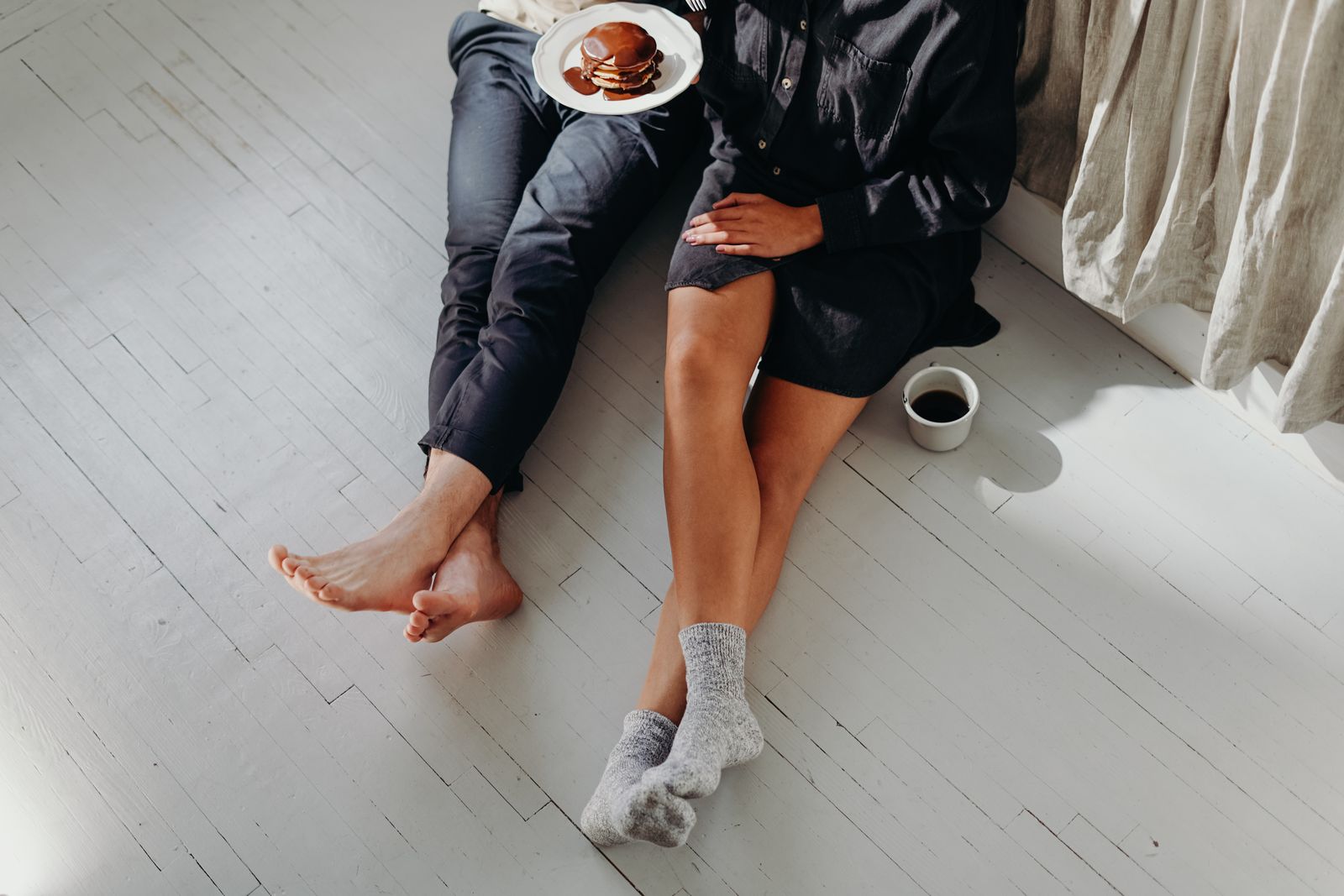
Quiet House Slippers for Apartments and Late-Night Kitchen Trips
Quiet indoor footwear comes down to three things: low weight, a soft sole that flexes instead of slapping, and a closed heel that doesn't clap against the foot with every step. Heavy house shoes with firm soles are the loudest thing most people wear indoors, and in an apartment or a house with sleeping family members, that noise is the reason slippers get taken off. A lightweight plush slip-on is the quietest practical option for walking around.
Where the noise actually comes from
There are three separate sounds in a footstep indoors, and they have different causes.
The sole striking the floor. A firm, rigid sole meeting tile or hardwood produces a distinct tap. A soft, flexible sole spreads the same contact over more time and more area, which is why it registers as a muffled press rather than a click.
The heel slapping the slipper. This is the sound backless mules and scuffs make. Your heel lifts free of the slipper, then comes back down against it. It's a small sound repeated on every single step, and in a quiet house it's the one that carries.
Weight landing. A heavy slipper adds mass to each footfall. That extra mass transmits through the floor rather than through the air, which is what your downstairs neighbor hears — the low thud rather than the click.
A slipper that addresses all three is quiet. Fixing only one, then wondering why it's still noticeable, is the common experience of people who buy soft-soled house shoes but choose a heavy pair.
Why weight matters more than material

Photo by RDNE Stock project on Pexels
It's tempting to shop for quiet by looking for the softest sole on the shelf. Weight is the better filter, for a simple reason: a heavy slipper has to be lifted and set down deliberately, which changes how you walk. Your foot doesn't roll through the step naturally, so more of the movement becomes a lift-and-place, and lift-and-place is louder than a rolling stride.
Light construction also changes how much force reaches the floor. Less mass per step means less energy transmitted downward, which is the part that travels through a building rather than just across a room.
The Wendy House Slippers are relevant here on exactly those terms: soft plush fabric, a lightweight construction, and a comfortable slip-on design with a closed foot. That combination covers all three noise sources — a soft interior and light build for the footfall, and full coverage so nothing slaps.
The comparison of lightweight and heavier house slippers goes into the wider trade-off between the two builds.
Quiet ranked by style
| Indoor footwear | Noise level | Main issue | |---|---|---| | Lightweight plush closed-heel slip-on | Quietest | None significant | | Socks alone | Very quiet | Slide on smooth floors | | Soft-soled bootie style | Quiet | Warm, harder to get on | | Backless mule or scuff | Noticeable | Heel slap on every step | | Heavy padded house shoe | Loud on hard floors | Weight plus firm sole | | Outdoor shoes worn indoors | Loudest | Firm sole, full weight, dirt |
The gap between the top and bottom of that table is large enough that people notice it immediately after switching. If someone in your household has ever asked you to walk more quietly, footwear is usually a faster fix than changing how you walk.
The late-night kitchen trip
This is the scenario that tests indoor footwear more than any other: getting up in the dark, walking to the kitchen or bathroom, and not waking anyone.
What you want from a slipper in that moment:
For a fuller look at the design details behind easy entry and natural movement, see the piece on optimizing daily movement.
Habits that quiet a household further
Footwear does most of the work, but a few small habits close the remaining gap on a quiet night.
Keep the pair where you'll step into it. Fetching slippers from another room in the dark makes more noise than the slippers ever will.
Walk with your whole foot. A rolling stride is quieter than a heel-first stamp, and a light slipper makes that stride easier because you aren't lifting weight.
Fix the doors before blaming the floors. In most homes the loudest sound on a night trip is a latch or a hinge, not a footstep.
Keep the toe area clean. Grit trapped in a sole is a small, hard object between the slipper and the floor, and it clicks. A quick brush removes it.
Apartments and shared floors
Photo by cottonbro studio on Pexels
If you live above someone, the sound that matters isn't the one you hear — it's the low-frequency transmission through the floor structure. Two things reduce it.
Reduce the mass and force of each step. Lighter footwear, and softer contact, mean less energy going into the floor. This is where light plush slip-ons genuinely help.
Add a soft layer where you walk most. A runner in the hallway or a rug in the main path does more than any footwear can, because it absorbs the contact before it reaches the structure. Footwear and floor coverings work together; neither alone solves a hard-floor apartment.
It's worth being realistic about the limit here. Slippers meaningfully reduce the sharp, audible tap of a footstep. They reduce, but don't eliminate, the deeper thud that travels through a building. Anyone promising silence from footwear alone is overselling.
What to look for when buying for quiet
- Pick the pair up and compare weight. Do this with two candidates in hand; the difference is obvious and it predicts noise well.
- Flex the sole. If it bends easily, it will meet the floor gradually rather than all at once.
- Choose a closed heel. Removes the slap entirely.
- Check that it fits properly. An oversized slipper makes you shuffle, and shuffling has its own sound — a continuous scuff instead of a series of taps.
- Walk on a hard surface before deciding. Carpet flatters every slipper. Tile and hardwood tell you the truth.
Frequently asked questions
Are slippers quieter than walking in socks? Socks are marginally quieter but slide on smooth floors, which makes them worse for anything other than short trips. A lightweight soft-soled slipper is close to socks in noise while staying put underfoot.
Will slippers stop my downstairs neighbor from hearing me? They'll reduce the sharp tapping sound noticeably and the deeper thud somewhat. Complete quiet isn't achievable with footwear alone — a rug or runner along your main walking route does more for structural sound than any slipper can.
Why are my current house shoes so loud on hardwood? Almost always a combination of weight and a firm sole. Both are common in heavily padded winter-style house shoes. Switching to a lighter pair with a flexible sole is the single change that makes the biggest difference.
Does the plush lining affect noise at all? Indirectly. A soft interior lets your foot sit naturally so your stride stays relaxed, and a relaxed stride is quieter than a deliberate one. The bigger factors are still the sole and the overall weight of the pair.
The next step
Test whatever you own now against whatever you're considering, on your hardest floor, walking at your normal pace. Then walk the same stretch in the pair you're comparing. The difference between a heavy firm-soled house shoe and a lightweight plush slip-on is audible in about six steps, which makes this the rare buying decision you can settle in under a minute.
Cover photo by cottonbro studio on Pexels.