How to Set Up Slippers Someone Can Put On Without Help
If bending, balancing, or reaching the feet is difficult, indoor footwear becomes something that either supports getting dressed without help or quietly removes that independence. The setup that works is a firm chair to sit in, the pair placed in the same spot at the same angle every day, and a slip-on style with a wide opening and a soft upper so it can be pushed onto the foot rather than pulled on. If a therapist or other professional is already advising on dressing routines, follow their guidance ahead of anything general.
This is a practical how-to on arranging footwear so someone can manage it themselves. It is about comfort, fit, and setup, not about health.
What makes a pair easy to put on without help?
Six properties, in rough order of how much difference they make.
| Feature | Why it helps with independent dressing | |---|---| | Slip-on, no fastenings | Nothing to grip, align, or fasten with two hands | | Wide opening at the top | The foot can go in without needing to be aimed precisely | | Soft, yielding upper | Gives around the foot instead of the foot working around it | | Lightweight | Easier to lift and position with a hand or an aid | | Fully enclosed front | Keeps the foot in place once it is in | | Holds its shape when empty | A pair that collapses flat is much harder to enter |
That last one is the least obvious and matters a lot. A slipper that stays open when nobody is wearing it can be entered in one motion. A slipper that folds shut needs a second hand to hold it open, which is the exact step that requires bending down.
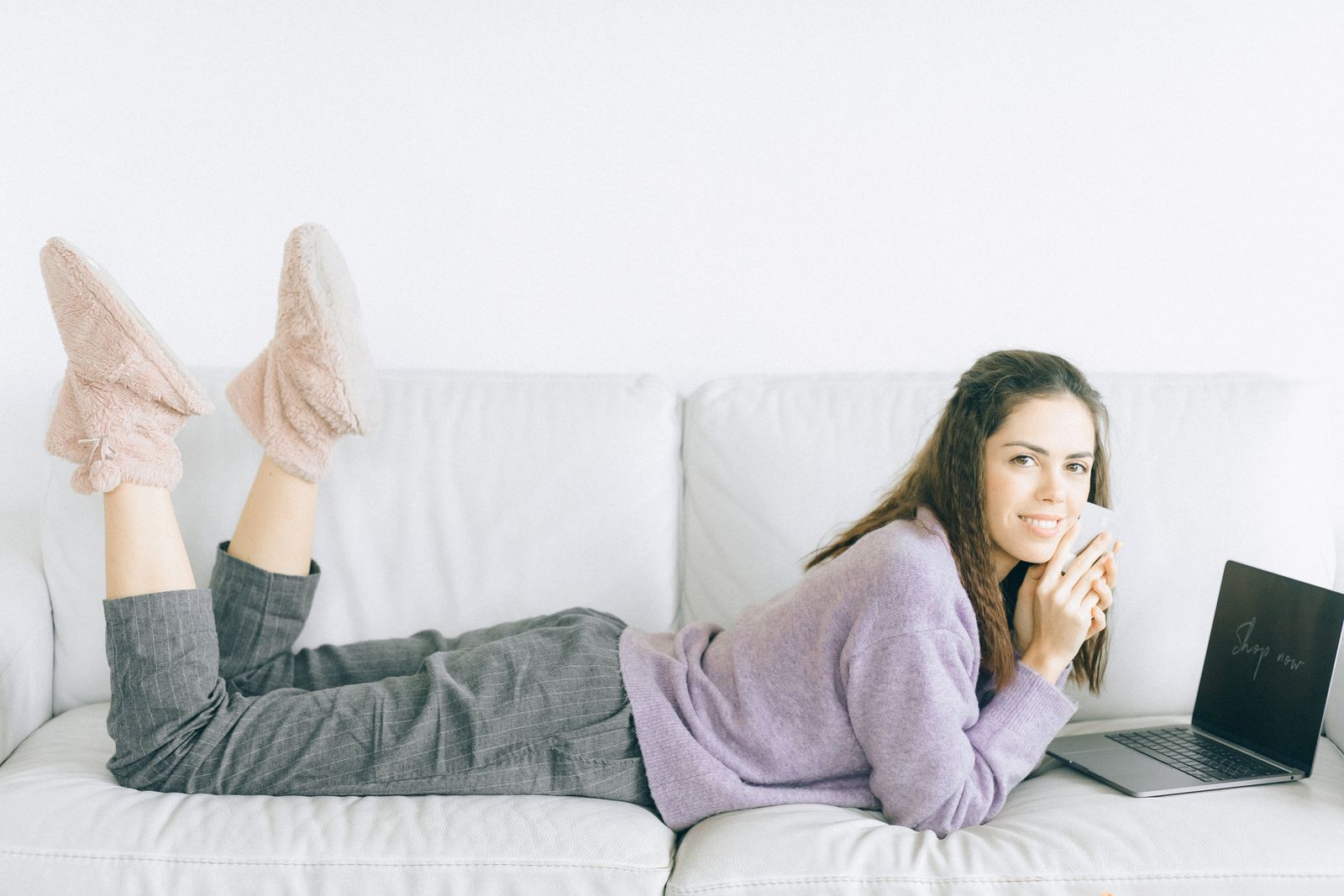
Wendy House Slippers are a comfortable slip-on design in soft plush fabric with lightweight construction, which covers the first four properties. The practical test for any pair is simple: put it on the floor, sit down, and see whether a foot goes in without a hand holding the slipper. Design details worth checking before buying are set out in this review of the comfort and design.
How do you set up a seated dressing spot?
Photo by Vika Glitter on Pexels
The place matters as much as the pair. Aim for one fixed spot where footwear always is and where sitting down is comfortable.
What is the step-by-step routine?
The version that requires the least reaching:
To take them off, slide each foot backward out of the slipper while seated, then use a hand or a long-handled aid to nudge the pair back into its spot for next time. Kicking them off across the room is what causes the pair to be missing in the morning.
Which aids make this easier?
Several inexpensive everyday items remove the need to bend at all. None of them are specialist purchases.
- A long-handled shoe horn. The single most useful item. It lets the heel be guided in from a seated, upright position.
- A dressing stick. A stick with a hook at one end for moving footwear into position and easing clothing over the foot.
- A sock aid, if socks are worn with the pair, which they often are on a cold floor.
- A grabber or reacher. Useful for retrieving a slipper that has moved out of reach without getting up.
- A firm chair kept specifically for this, rather than whatever seat happens to be nearby.
What should you avoid buying?
Photo by Anastasia Nagibina on Pexels
Styles that look convenient and are not:
- Anything with a buckle, strap, or lace. Every fastening is a two-handed task at foot level.
- Open-back mules. They come off easily, which sounds convenient and means the pair is repeatedly on the floor rather than on the foot.
- Heavy structured house shoes. Hard to lift, hard to position, and hard to push a foot into.
- A pair that is too small. A tight pair has to be worked onto the foot, which is the whole problem. When between sizes, choose the larger one.
- A pair that collapses flat when empty. As above, this doubles the number of hands needed.
- A stiff upper of any kind. Soft fabric does the accommodating so the foot does not have to.
How do you help without taking over?
This is the part people get wrong, usually with the best intentions. Doing it for someone is faster on the day and costs them the routine.
- Set the environment, not the task. Position the pair, sort the lighting, put the shoe horn within reach, then step back.
- Let them choose the pair. Style, color, and how it feels are their call. A pair someone dislikes ends up unused no matter how practical it is.
- Build in time. Most of the frustration around dressing comes from being rushed.
- Ask before helping. A question takes two seconds and keeps the decision with them.
- Watch what they actually struggle with, rather than assuming. Often it is one specific step, such as seating the heel, and one aid fixes exactly that.
- Revisit the setup occasionally. What worked in summer may need adjusting when thicker socks come into use.
FAQ
What size should be chosen if feet feel different on different days? Choose the larger of two sizes and pair it with a sock the person finds comfortable. A soft plush upper accommodates day-to-day differences far better than a rigid one, and a roomy pair is easier to get onto the foot than a snug one.
Is a slip-on style better than something with a strap? For independent dressing, yes, in almost every case. A strap has to be located, aligned, and fastened at foot level. A slip-on with a wide opening needs one forward push of the foot.
How can someone put slippers on without bending down at all? Sit in a firm chair with the pair placed in front, slide the foot forward into the opening, and use a long-handled shoe horn to seat the heel. That combination removes the need to reach the foot with a hand.
Should the pair be kept by the bed or by the chair? Wherever the person actually gets dressed. One fixed spot beats two convenient ones, because a pair that lives in two places is a pair that is regularly in the wrong one.
A practical next step
Set up the dressing spot before buying anything: a firm chair, a clear patch of floor, a tray for the pair, and good light. Then check any existing pair with the floor test, and see whether a foot goes in without a hand holding the slipper open. If it does not, that one property is what to shop for.
Cover photo by Nataliya Vaitkevich on Pexels.