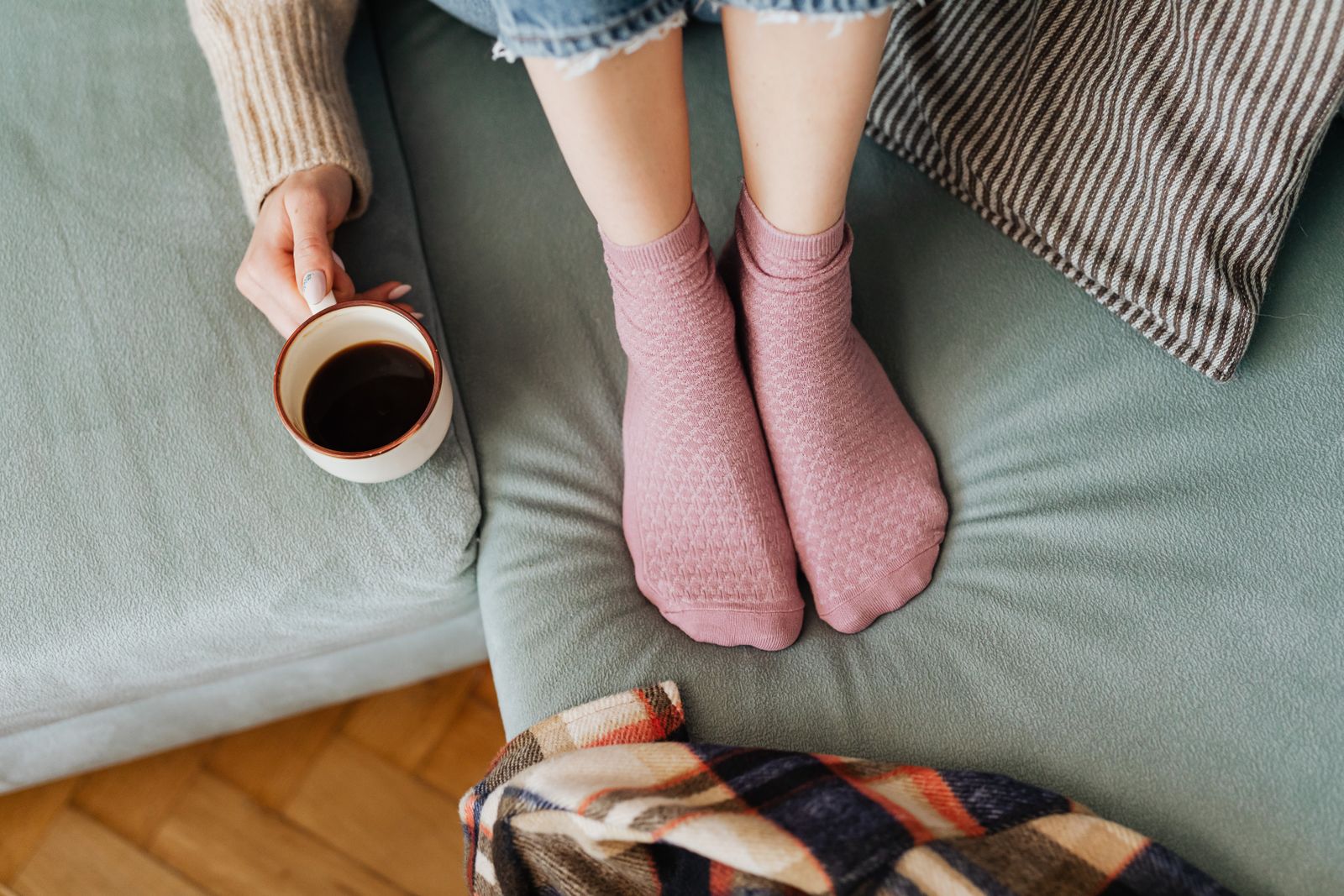
Best House Slippers for Hardwood Floors: A Cozy Guide to Scuff-Free Comfort
The best house slippers for hardwood floors are lightweight, flexible, and fitted with a soft sole that has some surface texture rather than a smooth, hard one. Weight and sole material matter more than cushioning here, because a heavy slipper with a slick bottom is the combination that both slides on wood and leaves marks on it. A snug, light slip-on gives better traction and a more natural stride on a hard surface.
Why hardwood is harder on slippers than carpet
Wood offers almost no grip of its own. On carpet, pile grabs a sole and hides small differences in traction; on a sealed wood floor, the only thing between you and a slide is the sole material and how much of it contacts the floor. Two problems follow from that.
The first is slipping. A hard, smooth sole — molded plastic, stiff rubber with no texture, or leather — has very little friction on a polished finish, and the risk climbs on stairs, on a floor that has just been cleaned, and anywhere a rug edge meets bare wood.
The second is marking. Hard soles that carry grit from a garage or entryway act like fine sandpaper on a wood finish, and some rubber compounds leave visible scuffs. Neither is dramatic, but on a floor you intend to keep for years, indoor-only footwear with a soft bottom is straightforwardly kinder to it.
What sole works best on wood floors?
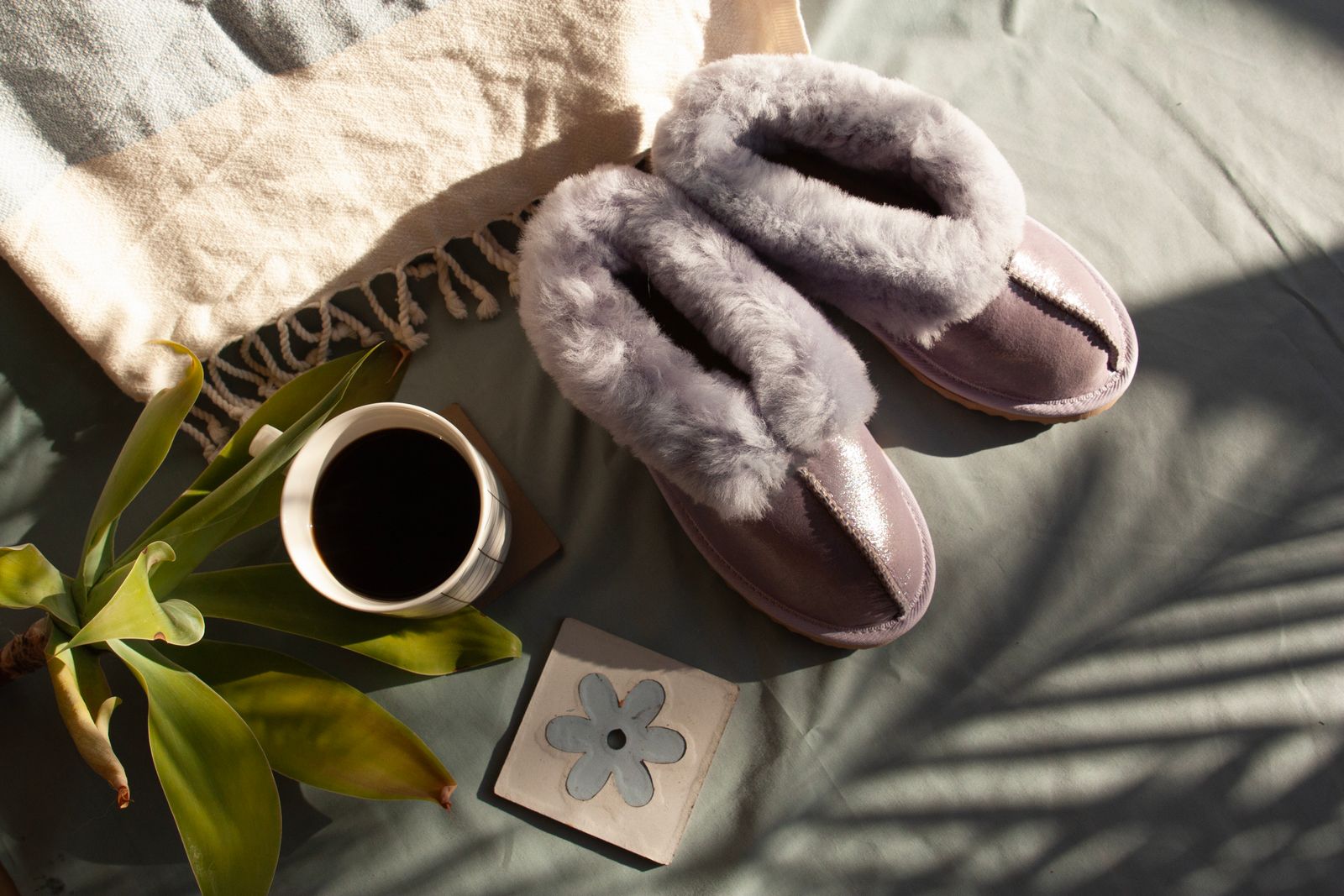
Photo by Karen Laårk Boshoff on Pexels
| Sole type | Grip on wood | Risk of marking | Best use | |---|---|---|---| | Soft fabric or textile with texture | Good | Very low | Indoor-only wear on wood and tile | | Soft rubber with a tread pattern | Very good | Low | Homes with stairs | | Thin suede or split leather | Moderate | Low | Quiet wear, not stairs | | Molded hard rubber, smooth | Poor | Moderate | Outdoor-capable styles | | Rigid plastic or synthetic, smooth | Poor | Higher | Not suited to indoor wood | | Bare fabric with no texture | Poor when new | Very low | Wear with caution until broken in |
The pattern is clear: texture beats hardness. A soft sole with any kind of surface pattern grips wood far better than a hard sole polished flat, and it will not scratch the finish. What to avoid outright is a smooth, rigid bottom, which is common on slippers designed to double as outdoor shoes. A firm sole does have genuine uses — short trips to a garage or a mailbox — and the tradeoff is set out in Wendy House Slippers and the hard sole utility standard.
Why weight matters as much as the sole
A heavy slipper changes your gait. The foot lifts less cleanly, the stride shortens, and the front of the slipper drags — which on a hard floor with scattered rugs is how people catch a toe. Light slippers let the foot move naturally, so the sole lands flat and gets the traction it was designed to provide.
There is a second effect people notice quickly. Heavy house shoes are tiring over a full day of standing on wood, because every step lifts the extra mass. Lightweight construction, of the kind used on Wendy House Slippers together with soft plush fabric and a slip-on design, removes that penalty entirely for indoor wear. The full comparison is in lightweight slippers vs heavy house shoes.
How to check a pair before you trust it on a wood floor
Keeping traction over the life of the pair
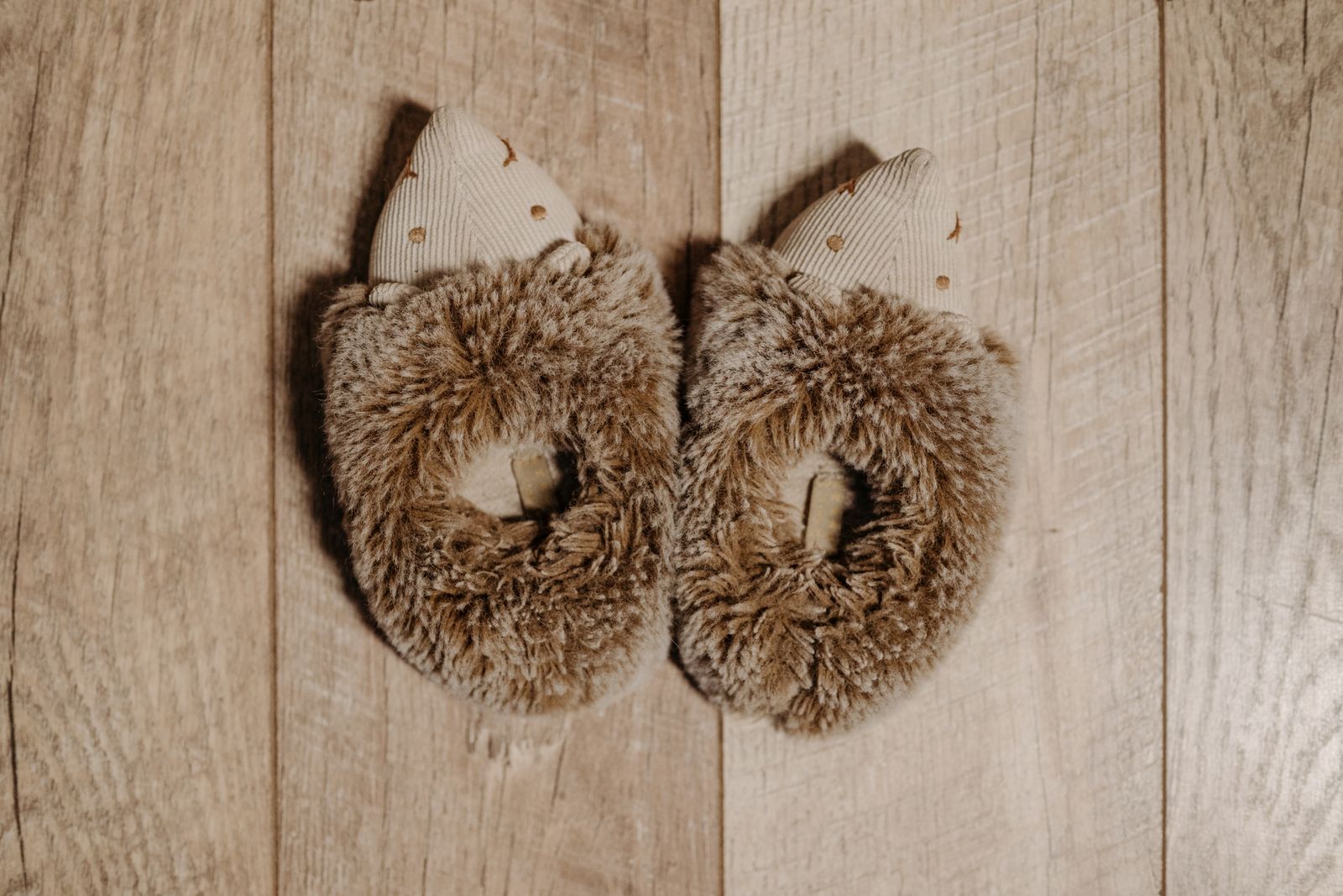
Photo by Pavel Danilyuk on Pexels
Grip degrades, and it degrades quietly. Three things are worth checking monthly.
Wear on the sole. A soft sole polishes smooth over months of use, particularly under the ball of the foot. Once a textured surface has gone flat and shiny in that area, the slipper grips noticeably less well.
Dust build-up. A layer of fine household dust on the bottom of a slipper acts like a lubricant on wood. Wiping the soles with a damp cloth once a week restores a surprising amount of traction and takes about twenty seconds.
Residue on the floor. Floor polish and some cleaning products leave a film that makes any slipper slide. If a pair that felt fine suddenly slips, consider what changed about the floor before blaming the footwear.
If stability is the main reason you are choosing a slipper — for stairs, for anyone unsteady on their feet, or in a home with hard floors throughout — the specific factors that reduce indoor falls are covered in do Wendy House Slippers reduce indoor falls, and the wider stability discussion is in Wendy House Slippers for safer indoor mobility.
Do you need cushioning on a hard floor?
Some, but less than the marketing suggests. Wood is unforgiving compared to carpet, so a slipper with no padding at all feels harsh after hours of standing. What actually helps is a footbed that spreads pressure evenly and a slipper that holds the foot in position, not maximum thickness.
Very thick foam soles work against you in three ways on wood. They raise the foot higher off the floor, which reduces stability; they add weight, which changes your stride; and they make it harder to feel the surface underfoot, which matters on stairs. A moderate, soft footbed in a light slipper is more comfortable across a full day than a thick platform, and it is safer.
Frequently asked questions
Do slippers scratch hardwood floors? Soft indoor-only soles do not. Scratches come from grit tracked in from outside, and from hard soles that press that grit into the finish. Keeping one pair strictly for indoor use, and wiping the soles occasionally, prevents essentially all of it.
Are slipper socks a good option for wood floors? Only the kind with grip dots on the bottom. Plain socks and untextured slipper socks are among the most slippery things you can wear on a sealed wood floor, and they are a genuine hazard on stairs.
How do you make existing slippers less slippery on wood? Wipe the soles clean first, since dust is often the whole problem. Beyond that, adhesive non-slip pads made for footwear can be applied to the sole, though they wear off over time and need replacing. If the sole is a hard, smooth shell, a different pair is the more reliable answer.
Is it better to go barefoot on hardwood instead? Bare feet grip well but offer no cushioning and no protection from cold floors or dropped objects. A light slipper with a soft, textured sole gives comparable traction with a good deal more comfort, which is why it is the usual recommendation for homes with hard floors throughout.
The practical next step is to turn your current slippers over and look at the sole. If it is flat and shiny under the ball of the foot, that is why the floor feels slick — and a lightweight pair with a soft, textured bottom will change how the whole house feels to walk around.
Cover photo by https://kaboompics.com/ on Pexels.