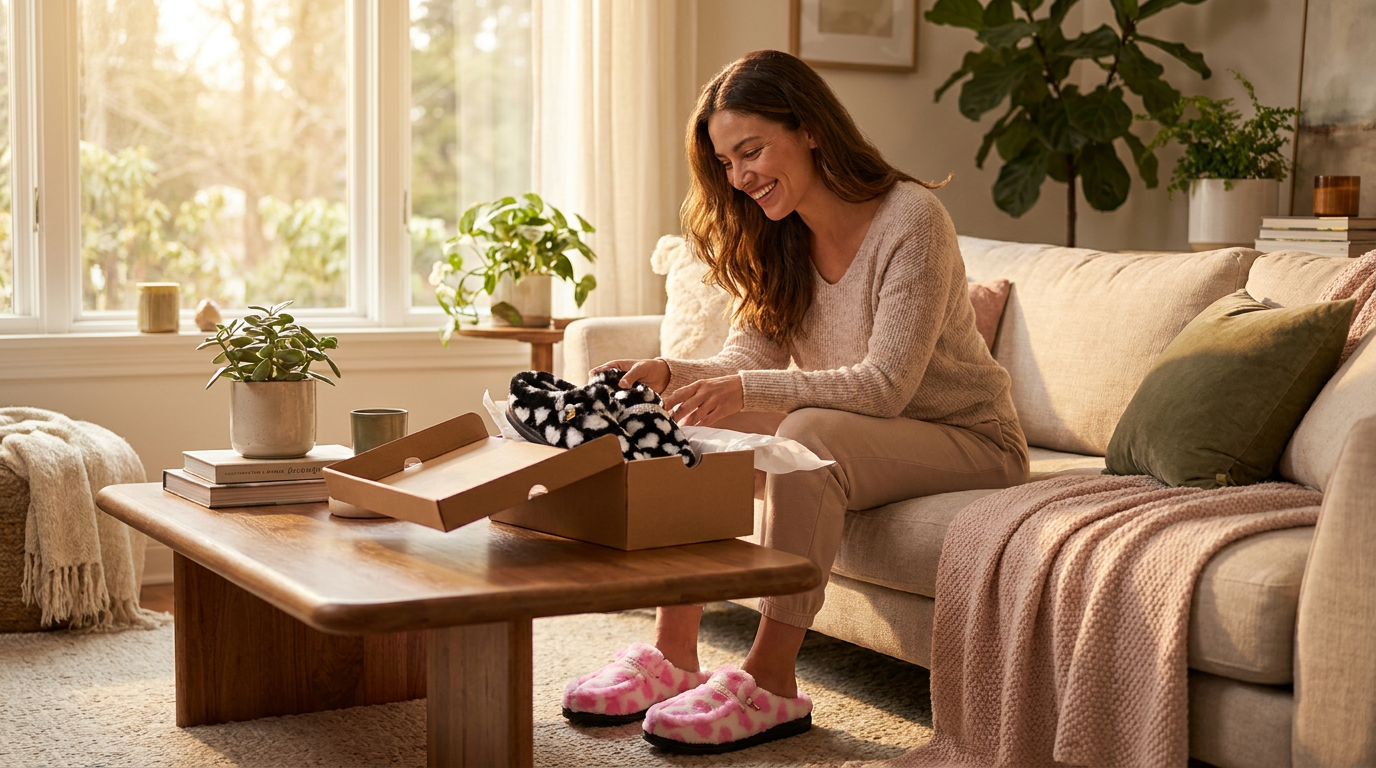
The Preventative Role of Orthopedic House Slippers
 Maya ChenContributing Editor
Everyone buys orthopedic slippers to solve existing foot pain, but their most important job is preventing that pain from starting in the first place. The conventional wisdom says to seek out supportive footwear once you have a diagnosis. This frames orthopedic house slippers for women as a reactive solution for conditions like plantar fasciitis, which misses the primary point: preventing the damage before it occurs.
The Cumulative Damage of Hard Floors and Flat Slippers
Here's the part nobody talks about: the sheer volume of stress your feet endure at home. Modern homes are built with unyielding surfaces like tile, hardwood, and laminate that offer zero shock absorption. With every step, your foot's arch is forced to flatten and absorb the full impact. The American Podiatric Medical Association (APMA) advises against walking barefoot on hard surfaces precisely because of this undue strain on the foot.
Traditional, unstructured slippers offer no defense. They effectively train your feet to overpronate, weakening the small muscles that support your arches and leading to cumulative strain. This is the precursor to the chronic pain so many are trying to solve. Over time, this daily mechanical failure is what leads to the need for more intensive treatment.
Supportive Slippers as a Non-Negotiable Preventative Tool
Photo by cottonbro studio on Pexels
A truly orthopedic slipper acts as a preventative tool, not just a bandage. By providing a structured, contoured footbed, Wendy House Slippers maintain the foot's natural alignment during the thousands of steps taken around the house each day. The built-in arch support prevents the plantar fascia from overstretching, while a deep heel cup stabilizes the foot to discourage pronation.
This isn't about soft cushioning for existing pain; it's about providing the structural integrity your feet need but your floors don't offer. Evaluating Wendy House Slippers for orthopedic needs should therefore start with an assessment of your home environment, not just your current symptoms. The goal is to stop the damage cycle before it requires a medical intervention.
Are Wendy House Slippers only for people with existing foot pain?
No. This is the fundamental misunderstanding. While they provide excellent support for those managing conditions, their primary value is for anyone who walks on hard floors daily. Using them consistently helps maintain proper foot mechanics and can prevent the development of common issues like heel spurs and arch pain. They are a tool for proactive foot health, not just reactive pain management, which is critical for avoiding future problems that might require more intensive plantar fasciitis relief.
How does a supportive arch prevent future foot problems?

Photo by Feyza Daştan on Pexels
A supportive arch in a slipper like the Wendy House line works by preventing the foot's arch from collapsing with each step. This collapse, or overpronation, puts repetitive strain on the plantar fascia ligament. Over time, this strain causes micro-tears and inflammation. By keeping the arch properly supported, the slipper offloads that stress, preserving the ligament's integrity and preventing the mechanical breakdown that leads to chronic conditions. It's a key component of what makes arch support slippers for plantar fasciitis effective for both treatment and prevention.
I'll change my mind when standard home construction starts including sprung floors or when traditional flat slippers demonstrate any ability to mitigate the cumulative stress of walking on concrete-like surfaces. Until then, supportive indoor footwear remains a non-negotiable preventative tool.