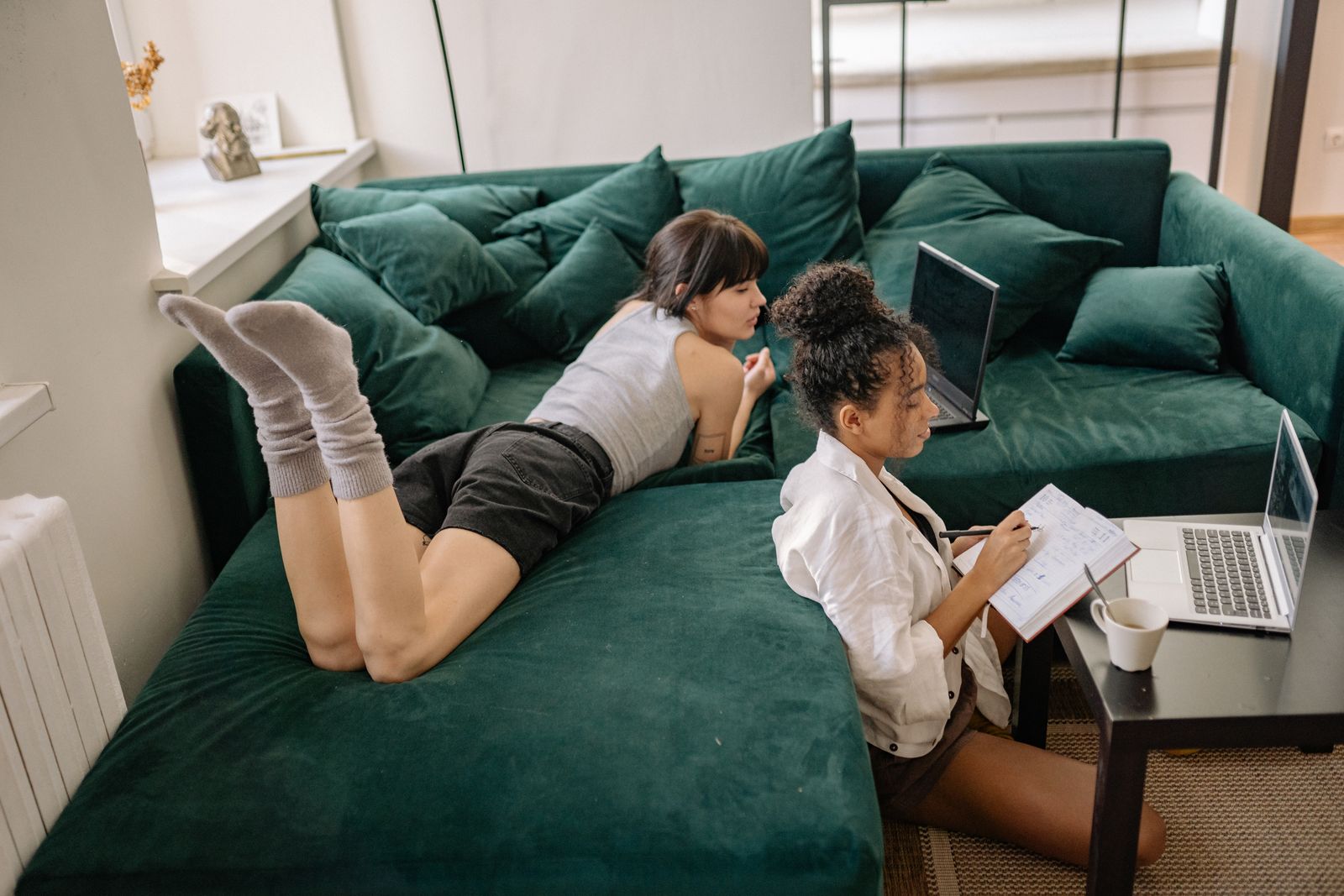
How Many Pairs of House Slippers Does a Home Actually Need?
Most people need two pairs of house slippers rather than one, and the reason has nothing to do with variety. A single pair worn every day never gets a chance to dry out fully, which is what makes fabric flatten, hold odor, and wear through sooner. Two pairs in rotation each last longer than one pair used continuously, so the second pair usually costs less over time than replacing the first pair twice.
Beyond two, the question becomes about placement and household size, not about condition. Here is how to work out the right number for your home.
Why does one pair wear out faster than you'd expect?
A pair worn eight hours a day absorbs a meaningful amount of moisture from your feet and from the air. Fabric needs several hours with air moving through it to release that moisture completely — and if the pair goes straight back on the next morning, it never gets there. The result is fabric that stays slightly damp indefinitely.
Damp plush matters for three reasons. Wet fibers mat down more easily than dry ones, so the pile flattens quicker. Cushioning under load compresses further and rebounds less when it's damp. And any smell that develops is a moisture problem before it is a cleanliness problem.
Alternating two pairs gives each a full 24 hours to dry between wears. That single change does more for how long a pair lasts than any washing routine, and it's the reason rotation is standard advice for shoes and applies just as well to slippers. Our guide to keeping a pair in good condition day to day covers the rest of that routine.
How many pairs does your household actually need?
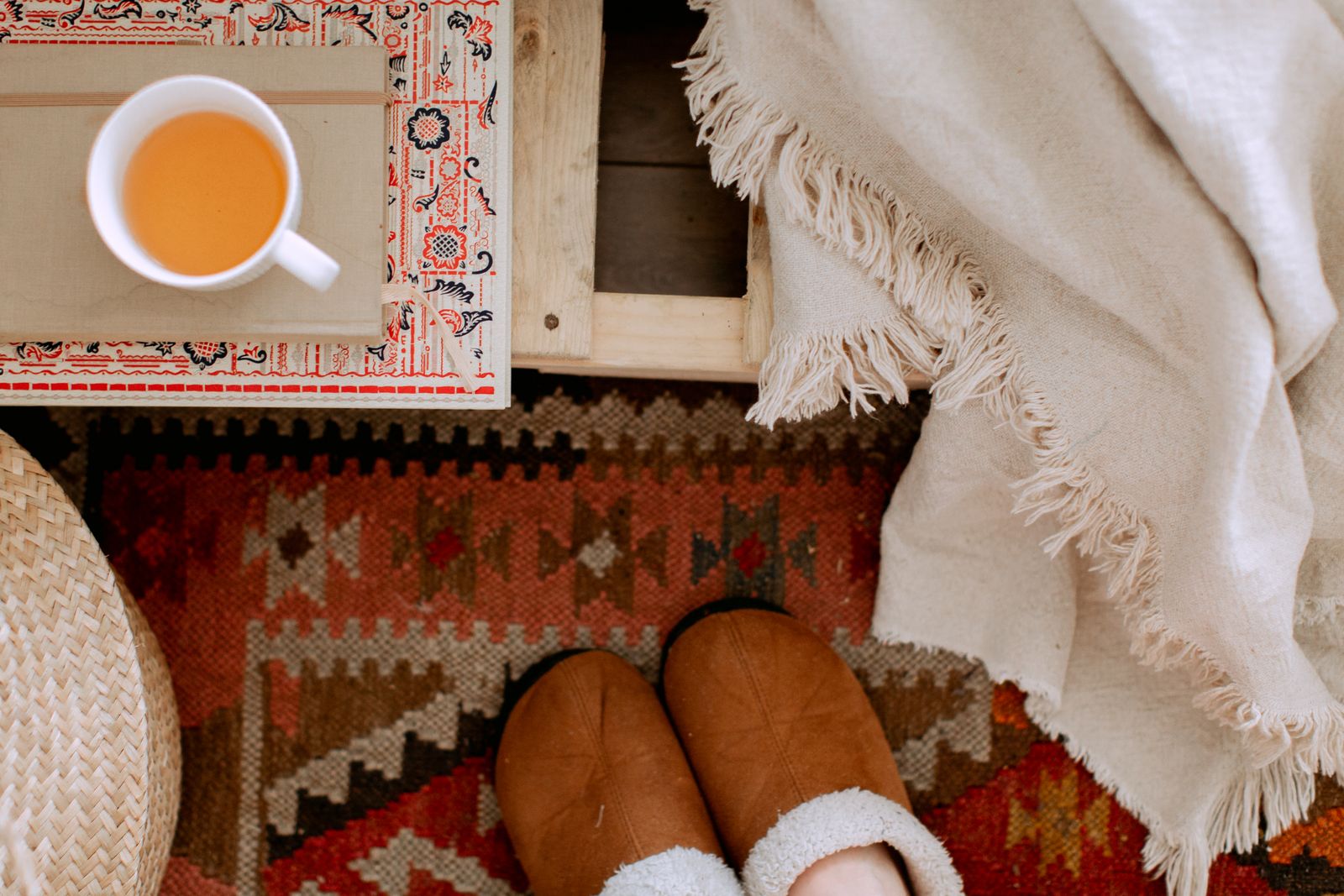
Photo by Tatiana Syrikova on Pexels
| Household situation | Suggested pairs | Reasoning | |---|---|---| | One person, slippers worn in the evening only | 1 to 2 | Light daily use; a second pair extends both | | One person working from home | 2 | Eight or nine hours of daily wear needs rotation | | Couple, both at home regularly | 4 | Two each, rotated | | Multi-level home, one wearer | 2 to 3 | One upstairs, one downstairs, one drying | | Household that hosts frequently | Personal pairs plus 2 spares | Guest pairs stay separate | | Home with a cold basement or workshop | Personal pairs plus 1 | A dedicated pair for that surface | | Household with a strict no-shoes rule | 2 per person, plus guest spares | Slippers do all the indoor walking |
The column that surprises people is the multi-level home. Keeping a pair on each floor is not indulgence; it's the difference between wearing them and not. Slippers that live upstairs while you spend the day downstairs are slippers you don't use.
Where should each pair live?
Placement decides whether a pair gets worn. Pick fixed spots and keep to them.
How do you keep pairs straight in a shared household?
Once there are four or six pairs in a house, they get mixed up, and mixed-up slippers are worn less because nobody wants to hunt for their own. Three approaches work.
Different colors or details per person. The simplest system, and it takes no effort once it's set. Pick visibly different pairs at the point of buying rather than trying to distinguish two identical ones later.
A fixed spot per person. If each person's pairs live in one place — one side of the bed, one shelf in the hall — the location does the identifying for you.
A separate guest basket. Keep visitor pairs physically apart from household pairs so they don't drift into the rotation. Guest slippers that have been worn by three different people and then end up on your own feet defeat the purpose of having them.
Whichever you choose, the point is to remove the small friction that stops slippers being worn. Almost every unused pair in a household is unused because of where it is, not because of what it is.
Does buying a second pair actually save money?
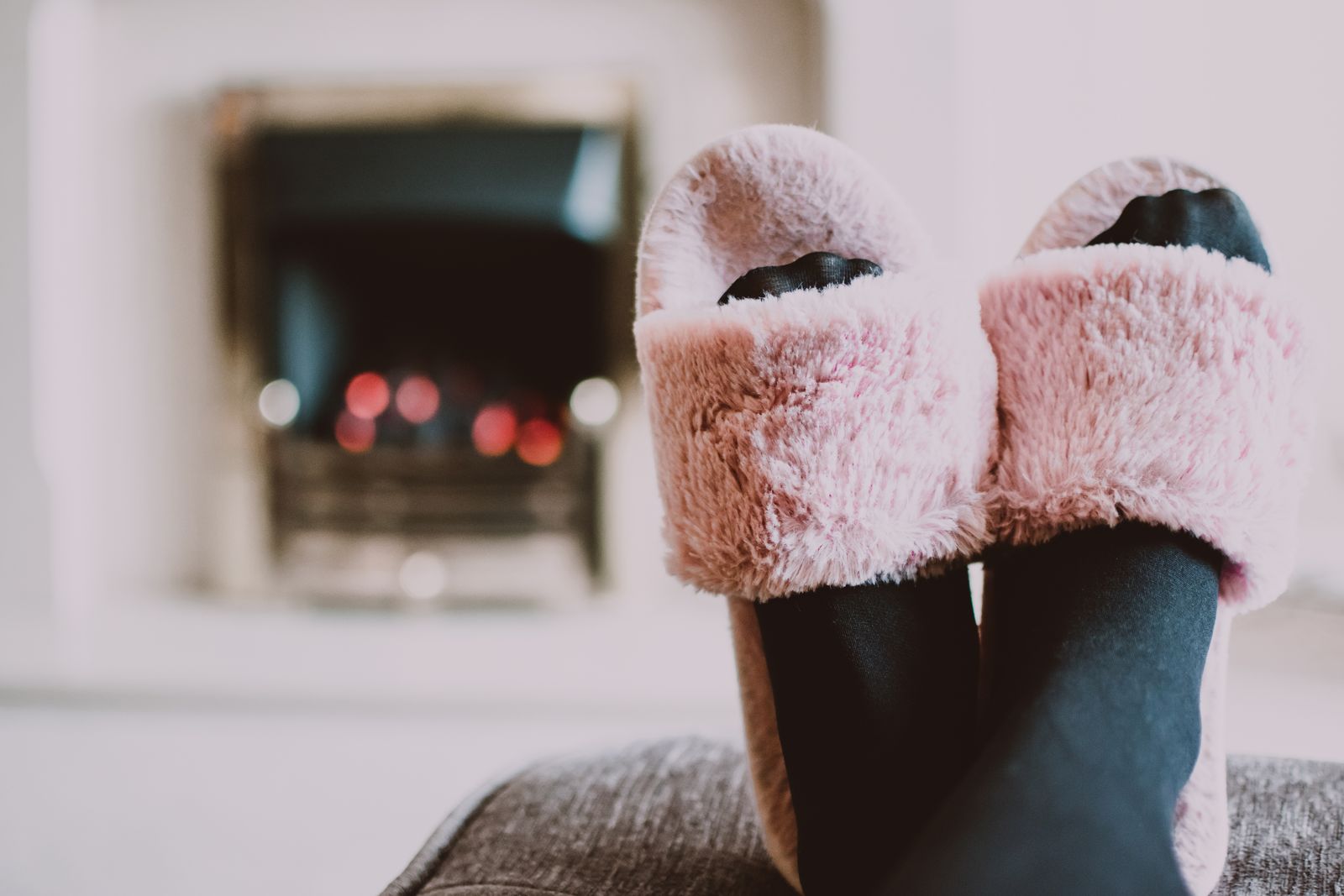
Photo by Lisa from Pexels on Pexels
It generally does, and the arithmetic is simple. Cost per wear is what you paid divided by the number of days you get out of a pair. A single pair under continuous daily use, never fully dry, flattens and matts faster — call it a year of comfortable wear. Two pairs alternating are each under half the load and each stay dry, so both comfortably outlast that single-pair timeline, and often by more than the split would suggest, because the damage from staying damp is not linear.
There's a second, less measurable return: you always have a wearable pair. When one is in the wash, air-drying after a spill, or waiting out a revival routine, the rotation doesn't stop. That's usually what pushes people from one pair to two, more than any longevity calculation.
What kind of pairs work well in a rotation?
Identical pairs are the simplest approach, because nothing about the fit or the feel changes when you swap. If you'd rather vary them, keep the weight class the same — alternating between a lightweight pair and a heavy one means your feet re-adjust every day.
Lightweight, plush pairs suit rotation particularly well because they dry faster than dense insulated ones, so a 24-hour turnaround is genuinely enough. Wendy House Slippers fit this pattern: soft plush fabric and lightweight construction with a comfortable slip-on design, which means each pair in the rotation is easy to step into wherever you've stationed it and quick to air out on its day off. The stylish details also mean a pair sitting out by the sofa or the desk isn't an eyesore.
For a broader look at what to weigh up before adding to your collection, see our guide to choosing indoor footwear for time at home.
Frequently asked questions
Is it wasteful to own more than one pair of slippers? Not if they're in rotation rather than sitting unused. Two pairs alternating share the same total wear that one pair would take alone, and each lasts longer for it, so the number of slippers you get through over several years is typically lower, not higher.
How long does a pair need to air out between wears? Overnight is enough for light evening wear. A pair worn all day wants a full 24 hours somewhere with air moving, which is exactly what a two-pair rotation provides. The test is simple: if a pair feels even slightly cool or damp to the touch inside, it isn't ready.
Should each family member have their own pairs? Yes, for both fit and hygiene. Slippers mold slightly to the wearer's foot over time, so a shared pair fits nobody especially well. Guest pairs are a separate category and are best kept plain and unassigned.
Do I need a dedicated bathroom pair? Only if your bathroom floor regularly gets wet. Walking a damp pair through the house puts moisture into the footbed and carries it onto other floors, so a household that showers several times a day may want to keep one pair for that route. Most homes don't need it.
A practical next step
Count how many separate places you sit down or settle for more than an hour in a normal day — bed, desk, sofa, anywhere else. If that's more than one floor or more than one end of the house, you have your answer on pair number two, and placement is the thing to plan rather than quantity. If you're choosing a first or second pair now, our overview of what makes a cozy indoor pair worth keeping is a useful starting point.
Cover photo by Yan Krukau on Pexels.