How to Get Smell Out of Plush House Slippers: Natural Odor Remedies
Slipper odor comes from bacteria feeding on sweat trapped in fabric, so getting rid of it means removing the moisture and the residue, not covering the smell. The most reliable natural approach is a dry baking soda treatment overnight, a diluted white vinegar wipe on the footbed, and then enough airflow that the slippers dry completely before the next wear. Perfume sprays and scented inserts mask odor for a few hours and make it worse over time by adding damp residue.
This is a maintenance problem more than a cleaning problem. Washing resets the smell; drying and rotation are what keep it from coming back.
Why plush slippers start to smell
The sole of the foot produces a lot of moisture, and slippers are worn on bare feet more often than any other footwear. That sweat is nearly odorless on its own. The smell appears when skin bacteria break it down, and those bacteria need three things to thrive: moisture, warmth, and something to eat. A slipper worn every evening and stored in a closed cupboard supplies all three continuously.
Plush fabric is comfortable precisely because it is a deep pile that holds air. That same structure holds moisture longer than a smooth surface would, which is why a plush slipper that never gets aired develops a smell faster than one that does. The fabric is not the culprit; the trapped humidity is.
Two consequences follow. First, treatments that add liquid without a full drying cycle usually make things worse. Second, the single most effective thing you can do costs nothing: give the pair a full day of airflow between wears.
Natural remedies that actually work
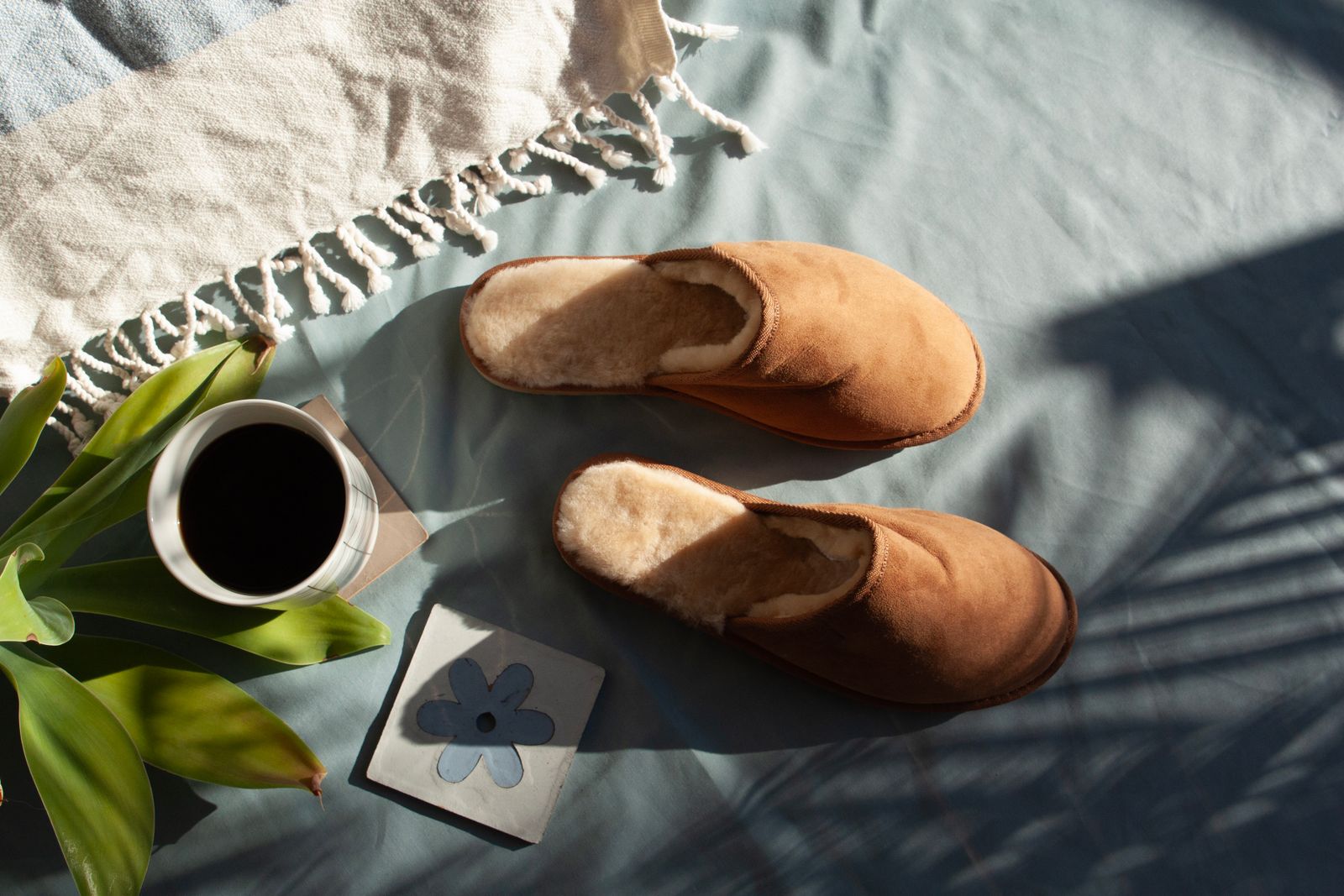
Photo by Karen Laårk Boshoff on Pexels
Baking soda, dry, overnight
This is the first thing to try and it resolves most everyday cases.
Baking soda works two ways here: it absorbs moisture out of the fibers and it neutralizes the acidic compounds that carry the smell. It does not sanitize, so pair it with the next step if the odor is well established.
Diluted white vinegar on the footbed
Vinegar is mildly acidic and knocks back the bacteria that baking soda alone leaves behind.
- Mix one part plain white vinegar with three parts cool water.
- Dampen a cloth, do not soak it, and wipe only the footbed where the foot contacts the fabric.
- Blot the area with a dry towel to pull moisture back out.
- Let the pair dry completely, with airflow, before wearing again. This step is worthless without full drying.
Cornstarch for daily upkeep
A light dusting of cornstarch before storing slippers absorbs moisture between wears without the gritty residue baking soda can leave in a deep pile. It is a prevention habit rather than a fix.
Dry tea bags or activated charcoal
Two unused black tea bags tucked into each slipper overnight, or a small charcoal deodorizing bag, will pull moisture and odor out of a pair kept in a closed space. This is the low-effort option for slippers that are stored in a cupboard rather than left out in the open.
What to skip
- Perfume sprays. They add moisture and residue, and the underlying smell returns stronger.
- Essential oils applied directly. Oils can stain plush fabric and leave a film that traps more residue.
- Bleach. Too harsh for plush fibers and unnecessary for household odor.
- Long spells in direct sun. Sunlight helps a little, but prolonged direct heat can stiffen fabric and weaken adhesives. Open shade with a breeze dries just as effectively.
- A radiator, dryer, or hair dryer on hot. Heat is the most common way people ruin a slipper while trying to freshen it.
Which method to reach for
| Situation | Best first move | Time needed | |---|---|---| | Faint smell, worn a few weeks | Dry baking soda overnight | 8–12 hours | | Persistent smell after airing | Baking soda, then diluted vinegar wipe | 1–2 days | | Damp inside when you put them on | Rotate two pairs; air fully before anything else | 1 day per pair | | Smell returns within a day of cleaning | Treat your feet, not the slippers | Ongoing | | Fabric matted flat and smell embedded | Replace the pair | — |
The part most people skip: treat the feet
If odor comes back within a day of a thorough cleaning, the slipper is not the problem. Some practical steps, none of them complicated:
- Dry between the toes after every shower. That gap is where moisture lingers longest.
- Rinse your feet in the evening before putting slippers on, especially in warm weather.
- Rotate socks if you wear them, and choose a material that absorbs rather than one that seals.
- Alternate two pairs of slippers so neither is ever put on damp.
- Store slippers outside the bathroom. Keeping them in the most humid room in the house undoes everything else.
- See a doctor for persistent issues. Unusually heavy sweating, itching, peeling skin, or a smell that resists all of the above can be a medical matter rather than a laundry one, and it is easily treated once identified.
When to wash instead of deodorize
Photo by 🇻🇳🇻🇳Nguyễn Tiến Thịnh 🇻🇳🇻🇳 on Pexels
Deodorizing handles smell. Washing handles the residue that causes it. Once a pair has been worn regularly for a season, a proper clean is the reset, and the dry treatments become upkeep between washes.
Before washing anything plush, check the care label on your pair, because construction varies and the wrong method can flatten the pile permanently. How to wash soft house slippers without damaging plush fabric covers the gentle approach for plush surfaces, and if your pair is labeled machine washable, how to clean machine washable indoor slippers walks through the cycle and detergent choices. Drying is where most damage happens rather than washing — why air-drying method matters for washable foam slippers explains what goes wrong and how to avoid it.
Preventing the problem in the first place
Wendy House Slippers are made with soft plush fabric and lightweight construction with a comfortable slip-on design, and a light pair is easier to keep fresh than a heavy one for a simple reason: less material means less trapped humidity and faster drying. Whatever pair you own, the routine that keeps odor away is the same three habits — air them between wears, keep them out of humid rooms, and never put them on with damp feet. Ongoing care specifics are collected in the Wendy House Slippers maintenance guide.
FAQ
Does freezing slippers get rid of the smell? Freezing slows bacteria but does not kill most of them, and the smell typically returns once the fabric warms and re-humidifies. Drying and absorbing moisture works better and takes about the same amount of time.
How long should baking soda stay in slippers? Overnight is enough for a mild smell. For an established odor, leave it a full 24 hours in a spot with moving air, then brush or vacuum the powder out of the pile thoroughly.
Will vinegar leave a smell behind? No, as long as the slippers dry completely. The vinegar odor evaporates with the water. If a sour note lingers, the fabric was still damp when the pair went back on.
Can baby powder be used instead? It absorbs some moisture, but it lacks the odor-neutralizing chemistry of baking soda and it cakes in a deep pile. Cornstarch is the better everyday alternative if you want something gentler than baking soda.
A practical next step
Tonight, put a tablespoon of baking soda in each slipper and leave them somewhere with airflow instead of in a closet. Tomorrow, brush the powder out and check the smell. If it is gone, add a second pair to your rotation so the fix holds. If it is back within a day, the moisture is coming from your feet, and the routine above is where to focus rather than on another cleaning product.
Cover photo by Vika Glitter on Pexels.