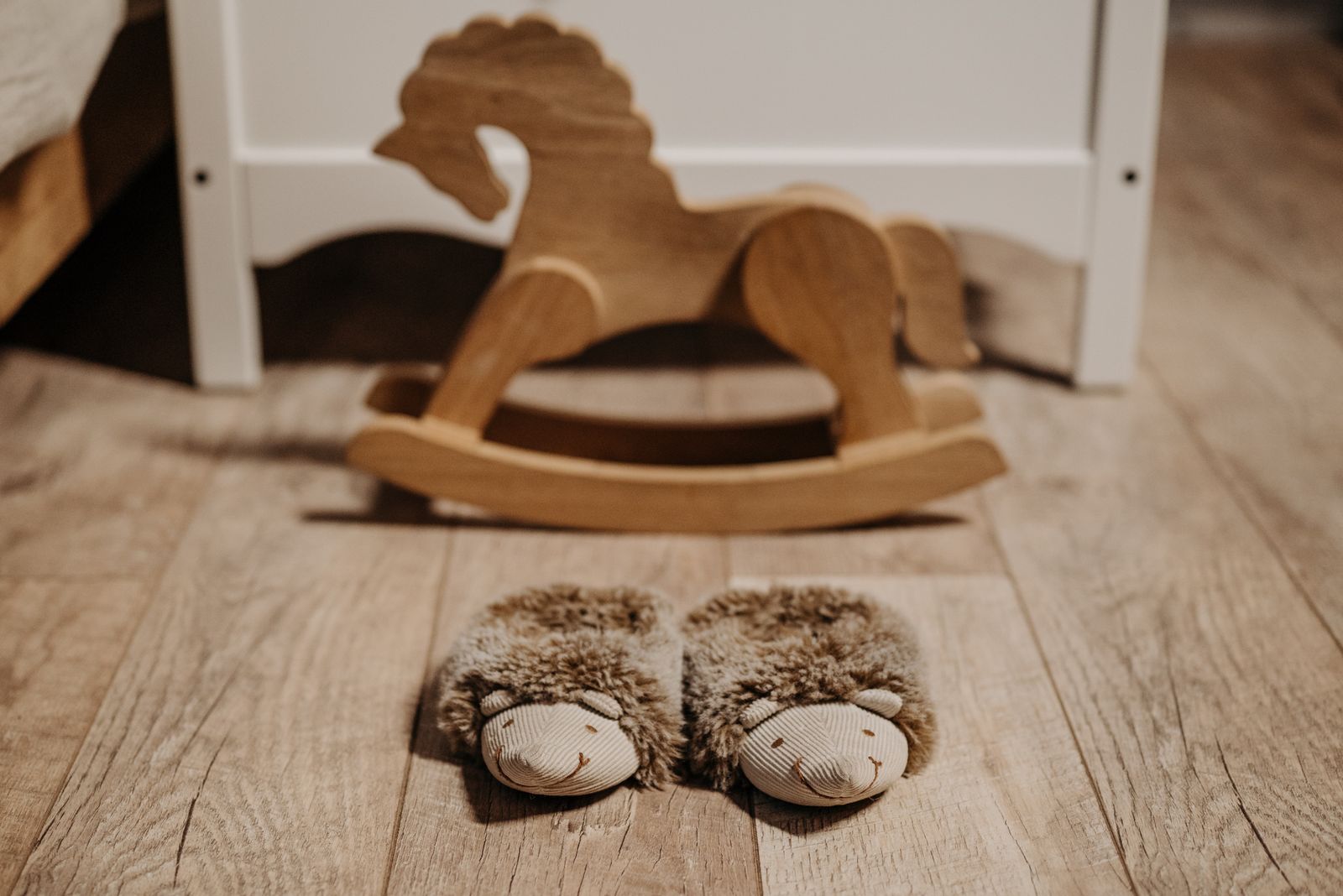
Plush Fabric vs. Heavy Memory Foam Slippers: Which Material Reigns Supreme for Lounging?
Plush fabric and memory foam are not really competitors, because they sit in different parts of a slipper. Plush is the soft pile you feel against your skin, and memory foam is a footbed material underneath it. For lounging, the honest comparison is between a light slipper whose comfort comes mostly from a plush surface and a thicker slipper built around a dense foam footbed — and for hours of low-intensity indoor wear, the lighter one usually wins on how long you keep it on.
Understanding which layer does what makes the choice much easier.
The layer each material occupies
A slipper has three functional parts: the surface that touches the skin, the footbed you stand on, and the outsole that meets the floor.
Plush fabric lives at the surface. It is a pile fabric — short raised fibers standing off a backing — and it is mostly air by volume. That structure does three things: it feels soft immediately, it insulates by trapping warm air near the skin, and it compresses slightly underfoot, so it contributes to cushioning as well as to comfort.
Memory foam lives in the footbed. It is a viscoelastic foam that softens with body heat and slowly conforms to the shape pressing into it, then returns to shape slowly once the pressure comes off. It distributes pressure across a broader area rather than resisting it evenly, which is why it feels like it is molding to the foot.
Comparing them directly is a little like comparing a sweater to a mattress. What people are really choosing between is two slipper philosophies: light and soft on top, or thick and molded underneath.
How each one behaves over an evening

Photo by SHVETS production on Pexels
Plush feels the same at hour one and hour four. It does not change with temperature, it dries relatively quickly, and it adds almost no weight. Its failure mode is matting: after enough wear the pile flattens permanently, and when it does, the softness and the trapped-air insulation disappear together.
Memory foam feels different as it warms up. It starts firmer, softens over the first several minutes, and conforms progressively. That is pleasant when standing or sitting still. It is less ideal for constant walking, because the slow rebound means the foam has not fully recovered before the next step lands. Dense foam also adds real weight, insulates heavily enough to feel warm in an already warm room, and holds moisture for a long time, which is why drying is the thing people most often get wrong with foam slippers. Foam's failure mode is bottoming out: it stops rebounding and becomes a firm pad, usually under the heel first.
Side-by-side comparison
| Property | Plush fabric | Dense memory foam footbed | |---|---|---| | Where it sits | Surface layer against the skin | Footbed under the foot | | Immediate feel | Soft from the first second | Firm at first, softens with body heat | | Weight added | Minimal | Noticeable | | Warmth | Moderate, from trapped air | High, foam insulates strongly | | Response to repeated steps | Rebounds quickly | Rebounds slowly | | Moisture handling | Dries relatively fast with airflow | Holds moisture, needs long drying | | Best at | Long, low-intensity indoor hours | Standing still, and absorbing hard impact | | How it wears out | Pile mats flat | Foam bottoms out and stops rebounding | | Care demands | Straightforward, follow the label | Drying method matters a great deal |
Which is better for lounging, specifically
Lounging is a particular kind of use: many hours, low intensity, mostly sitting with frequent short walks. Three factors decide comfort in that pattern.
Weight, because of how many short trips are involved. Indoor movement is dozens of brief journeys rather than one long walk. Weight is charged per step, and it is also charged psychologically — a heavy slipper is annoying to put on for a thirty-second trip to the kitchen, so people leave it off and walk barefoot instead. The lighter slipper often ends up protecting more steps despite offering less cushioning per step. That tradeoff is worked through in the comparison of lightweight and heavy house slippers.
Heat, because homes are already heated. A dense foam footbed in a warm room means feet that sweat, and foam that holds that moisture well into the next day. Plush breathes better simply because there is less material available to hold humid air.
Skin contact, because slippers are usually worn barefoot. This is where plush is unambiguously better. Foam is not pleasant against bare skin and is always covered by something anyway — often, in fact, by plush.
The result for most people is that a light plush slipper suits lounging better, and a foam-heavy slipper suits standing work better. Wendy House Slippers sit clearly on the lounging side of that split: soft plush fabric, lightweight construction, a comfortable slip-on design, and stylish catching details. The full list is in the features of Wendy House Slippers.
When a foam footbed is the better call
There are real cases for it, and they are worth naming rather than dismissing.
- Long stretches of standing still at a counter, sink, or standing desk. Static standing is where pressure distribution matters most, and slow rebound is not a drawback when you are not stepping.
- A specific tender spot on the sole, where relieving pressure in one area is the goal.
- Concrete or large-format tile floors, the hardest surfaces in a house, where maximum cushioning is worth some weight.
- Mostly seated hours in one room, where the weight penalty barely registers.
- A genuinely cold house, where the extra insulation is welcome rather than stifling.
Checking what you already own
Before buying anything, run three quick tests on your current pair.
Any of the three failing means the slipper is worn out or wrong for the use. None of them failing means the discomfort is coming from fit, weight, or how consistently the pair actually gets worn.
What about slippers that use both
Many slippers combine them, because they occupy different layers: plush as the lining, foam in the footbed. That is a sensible design, and it moves the question from material to quantity. The useful things to check are total weight in the hand, whether the footbed cushioning runs the full length of the foot rather than sitting under the heel alone, and whether the care instructions describe a drying method you will realistically follow. A thin foam layer under a plush lining can be a good compromise. A thick foam block under a thick plush lining is simply a heavy slipper, whatever the marketing calls it.
FAQ
Can a slipper have both plush and memory foam? Yes, and many do, since plush is a lining material and foam is a footbed material. The real question becomes how much foam and how much total weight, which is another way of asking how heavy a slipper you want on your feet for four hours.
Which one lasts longer? It depends on use more than on material. Plush fails by matting, usually across the whole footbed at once. Foam fails by bottoming out, usually under the heel first. Both last considerably longer with a two-pair rotation and full drying between wears.
Is memory foam too warm for indoor use? It can be in a heated home, since dense foam insulates well and holds moisture for a long time. That is the main argument for a lighter plush slipper indoors, and the main reason foam pairs benefit from being aired out fully between wears.
Does plush provide real cushioning, or only softness? It provides some. The pile compresses under load and rebounds quickly, which spreads impact over a longer moment. It is less cushioning than a thick foam footbed, and it comes at a fraction of the weight, which is why it suits long indoor hours so well.
A practical next step
Decide based on your own hours rather than on the material. Count how much of your indoor time is spent standing still versus walking short trips and sitting. Mostly standing still points toward a foam footbed, along with a willingness to manage the weight and the drying. Mostly walking and sitting — which is what most evenings at home look like — points toward a light plush slipper you can slide on without thinking and forget about for the rest of the night.
Cover photo by Pavel Danilyuk on Pexels.