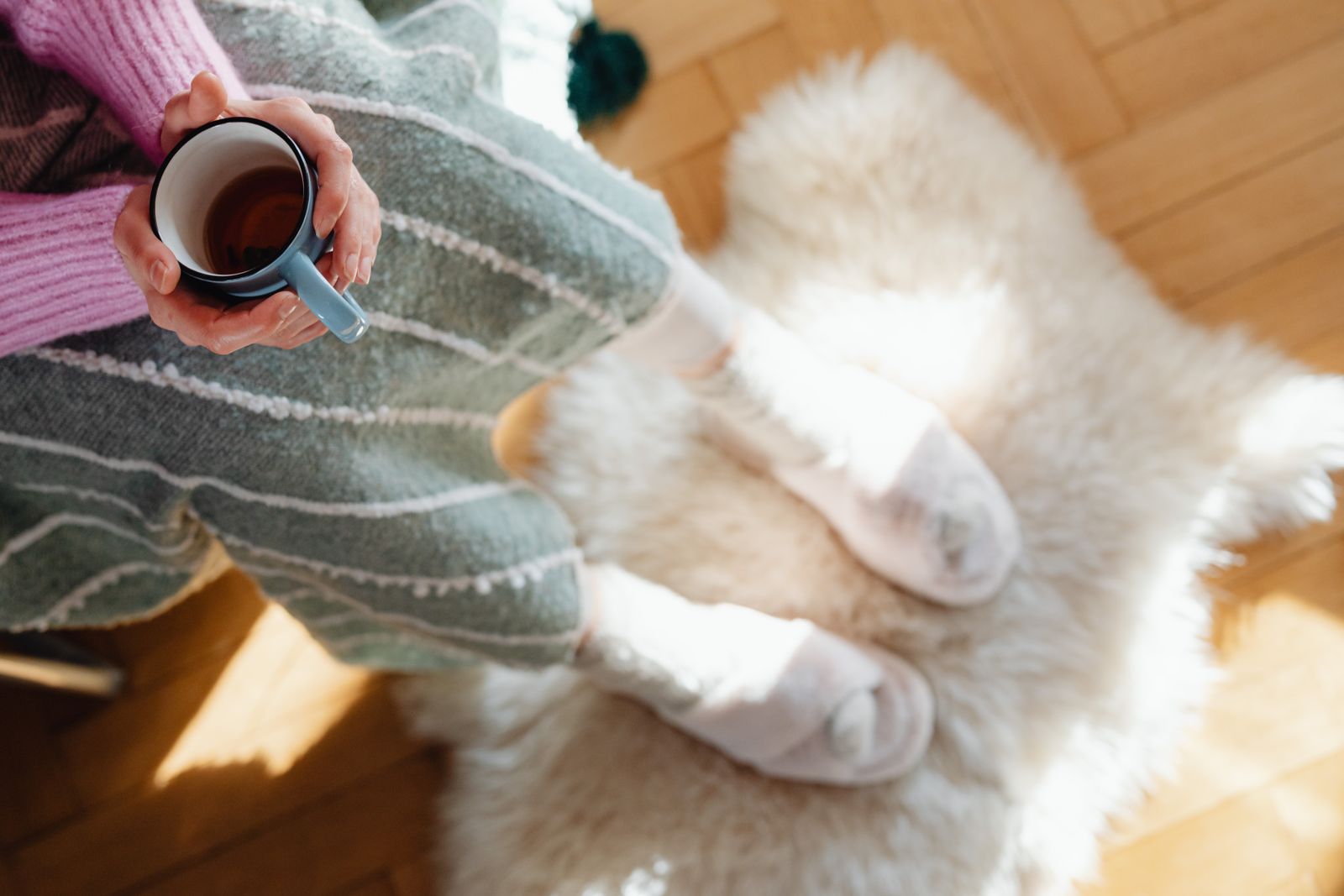
One Pair or Two? Why a Doorstep Pair Changes the School-Run Morning
If your morning includes a short trip to the car, the gate, or the end of the drive, a second pair kept at the door is usually worth it. The reason is not luxury: it is that one pair doing both jobs picks up driveway grit, damp, and scuffing that no indoor-only pair would ever see, and that wear shows up in months rather than years. The comparison below covers the three realistic setups and what each one costs you.
What the school-run trip actually does to a slipper
The damage is concentrated in about twenty seconds of walking. A doorstep, a path, and a driveway deliver more abrasion in that time than a full day indoors, because outdoor surfaces are rough by design and carry loose material on top.
- Concrete and paving abrade a soft sole faster than any indoor floor.
- Gravel and paving sand embed in the underside and then travel back inside, where they scratch hard floors.
- Morning damp on a step or lawn soaks into a plush upper from below, and a wet pair is a pair that stays wet through the school day.
- De-icing salt and winter grit leave residue that dries pale and stiff on textile.
- Kerb edges and car sills catch the side of a light slipper in a way flat indoor floors never do.
Comparing the three setups
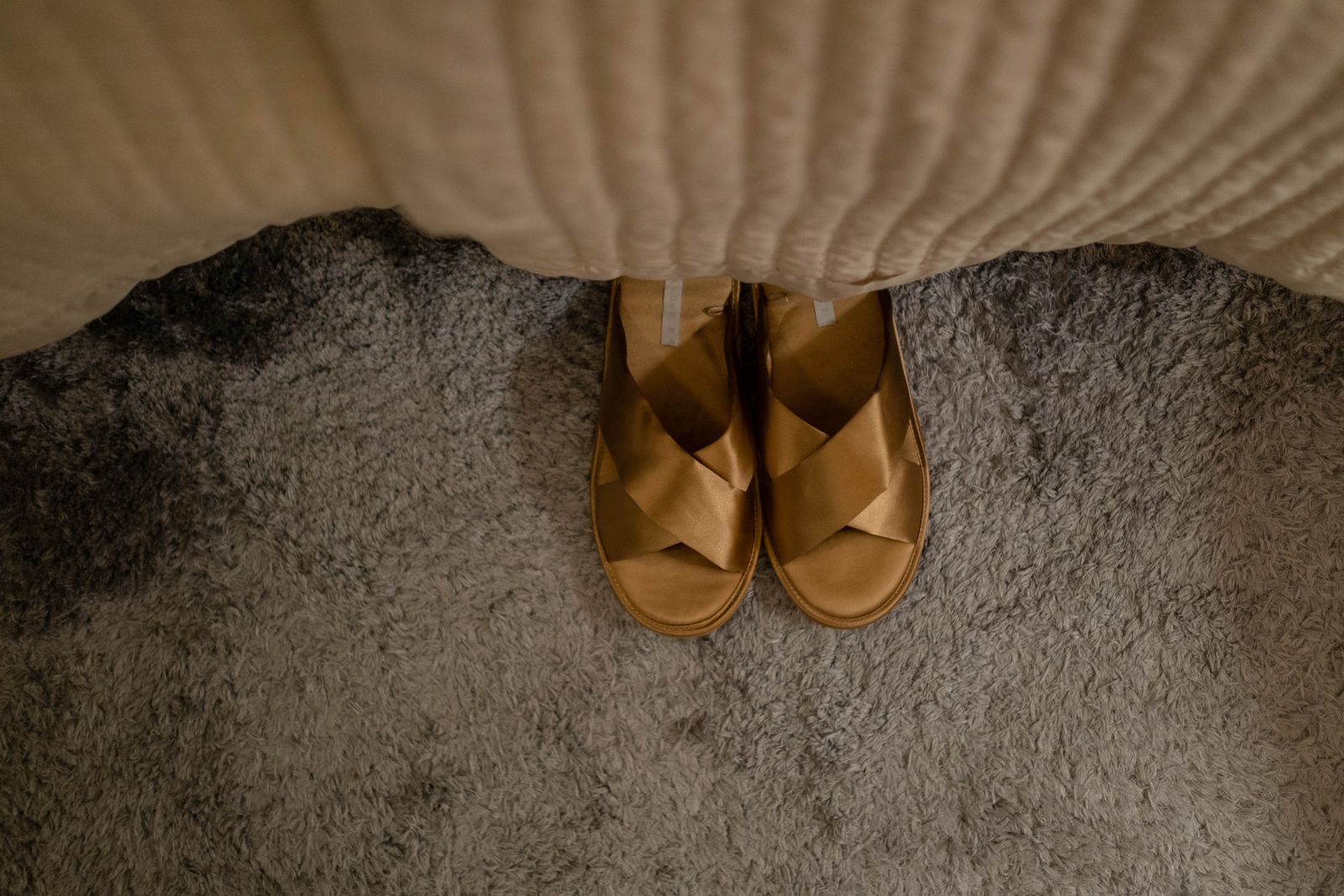
Photo by cottonbro studio on Pexels
| Setup | How it works | Strengths | Weaknesses | |---|---|---|---| | One pair for everything | The indoor pair goes out to the gate and comes back | Nothing extra to buy or store | Fastest wear, grit tracked inside, damp pair for the rest of the day | | Indoor pair plus a doorstep pair | A dedicated second pair lives by the door for short trips | Indoor pair stays clean and dry, wear spread across two | Costs a second pair, needs a spot at the door | | Indoor pair plus outdoor shoes | Slip on real shoes for every trip out | Most protective, handles longer walks | Slowest option in a rushed morning, so it gets skipped |
The third row is the honest one. Outdoor shoes are the correct answer on paper and the one that loses to a three-minute deadline in practice. A doorstep pair wins in real households because it takes as long to put on as the indoor pair does, which means it actually gets used.
When a second pair is genuinely worth it
A few conditions make the case clearly:
If none of those apply, one pair is fine. A household with a covered porch, a sealed path, and carpet inside is simply not exposed to the problem this solves.
Choosing the doorstep pair
Match the style, not the condition. The doorstep pair should be the same easy lightweight slip-on you already like indoors, because the whole point is that it goes on as fast as the indoor one. Where it differs is expectation: this is the pair you accept will look used, so pick it knowing it will carry marks and choose the darker or less delicate of the two if you have a choice.
Buy it in the same fit as the indoor pair. Feet do not change between the hallway and the gate, and a doorstep pair that fits loosely is exactly the wrong thing to wear on a step or a kerb. The general fit reasoning applies unchanged and is set out in choosing house slippers for indoor comfort.
On weight, resist the urge to go heavy for the outdoor trips. A heavy house shoe is worse at this job than a light one, because the trips are short and speed matters more than protection. The full comparison is in lightweight slippers compared with heavy house shoes.
Where each pair should live
Photo by Mynie Botha on Pexels
Placement is what makes a two-pair setup work rather than turn into two pairs both used for everything.
- The doorstep pair sits at the door, on a mat or a low rack, never further inside. If it migrates into the living room, the boundary is gone.
- The indoor pair sits where you take it off, which for most people is by the sofa or at the bottom of the stairs.
- Keep a mat inside the door. It intercepts what the doorstep pair brings back and is the single cheapest part of the whole arrangement.
- Give each pair a visible spot. A pair you cannot see in five seconds on a rushed morning is a pair you will not use.
What the two-pair setup costs, and what it saves
The honest accounting is short. A second pair is an upfront cost with no ongoing spend, and what it buys is a longer life for the pair you wear indoors, less grit carried across hard floors, and a dry pair for the rest of the day after a wet morning. Whether that is worth it depends almost entirely on trip frequency, which is why the count of weekly trips is the number to start from rather than any general rule.
There is also a quieter benefit that people report only after living with it: mornings get simpler. One pair at the door, one pair inside, and no decision to make about whether this particular trip is short enough to risk. Removing a small daily decision from a rushed morning tends to be worth more than the arithmetic suggests, and it is the main reason households that try the setup usually keep it.
FAQ
Is a second pair really necessary, or is this just an upsell?
It is a choice, not a necessity. The case rests on daily exposure: if you step outside twice a day, five days a week, an indoor pair is doing outdoor work roughly three hundred and sixty times a year. If you step outside rarely, one pair is the sensible answer and a second one adds nothing.
Can the doorstep pair be an old pair rather than a new one?
Yes, and that is often the best route. When an indoor pair starts looking tired but still fits and still cushions, it becomes the doorstep pair and a fresh one takes over indoors. The transition costs nothing and gets the last useful months out of the old pair.
Do slippers cope with wet grass or a damp step?
Briefly, yes, but a plush upper holds moisture once it soaks in and takes hours to dry. That is the strongest single argument for the two-pair setup: the pair you wear all day stays dry because it never went out.
How do I stop grit coming back inside?
A mat inside the door and a weekly wipe of the doorstep pair sole handles most of it. Anything visibly embedded should come out straight away rather than being walked across a hard floor, and the general upkeep routine is in maintaining a pair of house slippers.
A practical next step
Count the trips: how many times a week does someone in your house step outside in indoor footwear? If the answer is more than five, set up a doorstep pair, and start by promoting your current pair to that role when you next replace the indoor one. It costs nothing to try, and one term is long enough to see the difference in how the indoor pair looks.
Cover photo by https://kaboompics.com/ on Pexels.