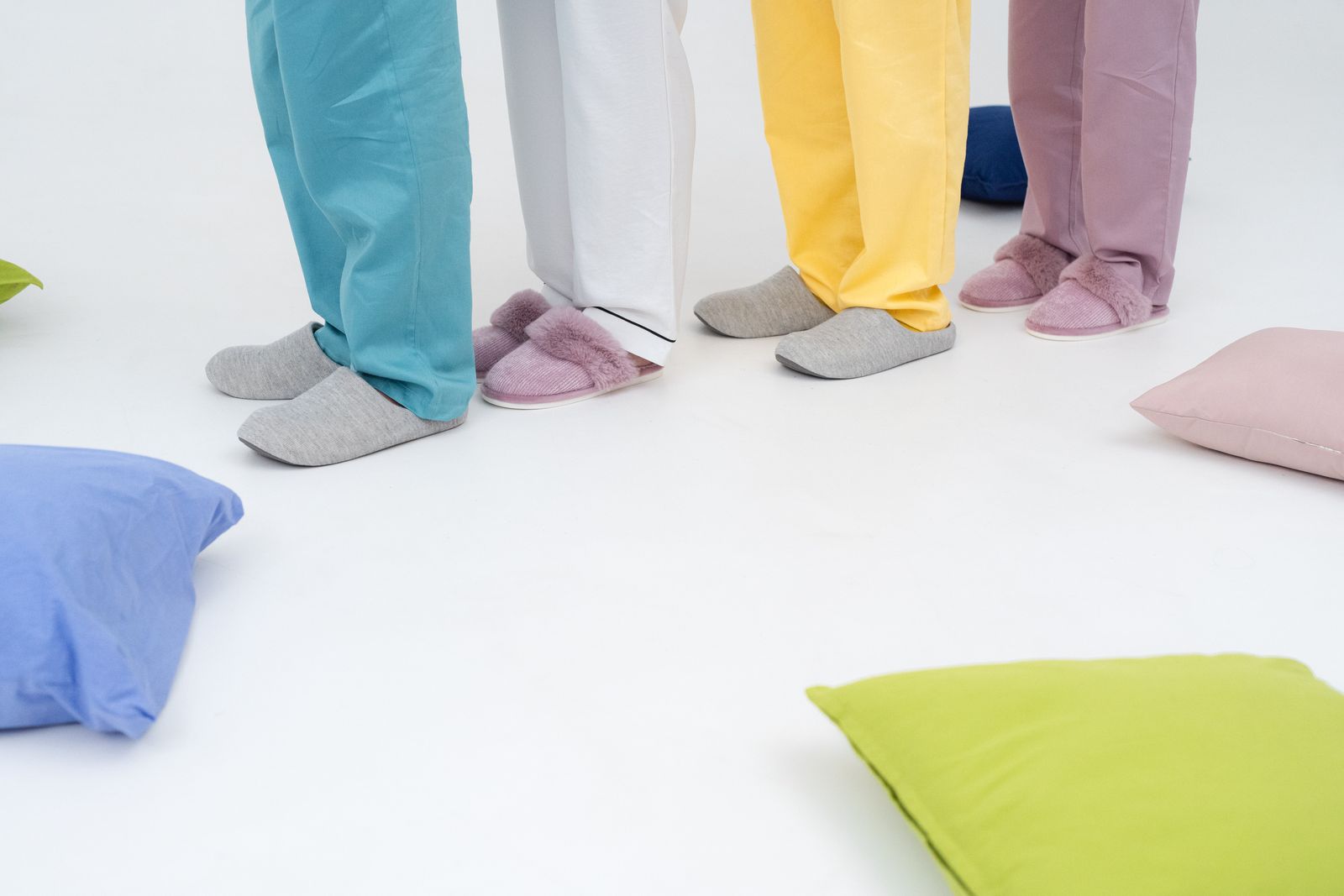
Slipper Lifespan FAQ: How Long Should Plush House Slippers Last?
A pair of plush house slippers worn a couple of hours each evening typically stays comfortable for a year or more; the same pair worn eight or nine hours a day gets through that wear far sooner. Lifespan is driven by total hours on your feet, whether the pair ever dries out fully, and whether it goes outdoors — not by the calendar. Two identical pairs bought on the same day can be six months apart in condition depending on those three factors alone.
Below are the questions people actually ask about slipper lifespan, answered directly.
How long should a pair of house slippers last?
Think in hours of wear rather than months of ownership. Evening-only wear is roughly 700 hours a year; all-day wear at home is closer to 3,000. That four-fold difference is the whole answer to why some people replace slippers annually and others get several years from a pair.
| Wear pattern | Approximate hours per year | What usually gives out first | |---|---|---| | Evenings only, one pair | Around 700 | Pile matting on the footbed | | Mornings and evenings | Around 1,000 | Footbed cushioning | | Full days at home, one pair | Around 3,000 | Cushioning, then the sole | | Full days, two pairs rotated | Around 1,500 each | Cosmetic wear before function | | Occasional or travel use | Under 300 | Nothing; storage becomes the issue |
Rotation is the single biggest lever in that table. Two pairs alternating don't just split the hours; each also gets a full day to dry out, which slows the flattening that damp fabric accelerates.
What determines whether a pair lasts?
Photo by Tiger Lily on Pexels
Four things, roughly in order of impact.
Drying time between wears. Fabric that never fully dries mats faster and compresses further under load. A pair aired nightly on an open shelf outlasts an identical pair kept in a closed cupboard.
Whether the pair goes outdoors. Grit is abrasive and works into the material, wearing it from the inside. An indoor pair that stays indoors keeps its footbed intact much longer.
How the pair is stored when not in use. Crushed under weight in a closet, plush takes a permanent set. Side by side on a shelf, it doesn't.
Cleaning practice. Gentle, occasional cleaning with thorough air-drying extends a pair's life. High heat from a dryer or a radiator shortens it, because heat stiffens cushioning and damages plush fibers. There's detail on doing it properly in caring for washable cushioned slippers.
When should you replace a pair rather than revive it?
Work through this list. Any two or three together generally means replacement.
Cosmetic wear alone is not a reason to replace. Faded color, lint, and slightly flattened pile are ordinary and mostly reversible with a brush.
One useful trick: make a note of when you bought a pair, even just a date in a phone note. Slippers wear gradually, so your sense of how they used to feel drifts along with them, and it's genuinely hard to judge whether a pair is eight months old or two years old from the way it feels. Knowing the date turns a vague impression into a straightforward comparison against the wear-hours table above, and it stops you replacing a six-month-old pair that just needs a proper airing.
How do you get more life out of a pair?
- Air them every night. Off your feet, somewhere with airflow. This is the highest-value habit on the list and it costs nothing.
- Brush the plush weekly. Thirty seconds with a soft brush keeps the pile standing rather than matting into a hard patch.
- Rotate two pairs if you wear them all day. Each pair takes half the load and gets a full recovery day.
- Keep them indoors. No mailbox runs, no stepping into the garden.
- Store them uncrushed. Nothing on top, side by side, out of direct sun.
- Clean gently and dry slowly. Cool moving air, never a dryer or a radiator.
- Fix small things immediately. A loose thread now is a two-minute repair; the same thread in a month is a split seam.
Do heavier slippers last longer than lightweight ones?

Photo by Aleksandr Burzinskij on Pexels
Not reliably, and it's worth separating durability from longevity. A dense, structured slipper has more material to wear through, which sounds like an advantage. But heavier pairs hold more moisture and take longer to dry, and the materials in them are more prone to compacting into a hard, unresponsive mass — at which point the pair is technically intact but no longer comfortable, which is the same outcome from your side.
A lightweight pair typically shows wear earlier in cosmetic terms and stays comfortable through more of its life, because it recovers overnight. Our comparison of how lightweight and heavy house shoes differ in practice covers the broader trade-off.
Frequently asked questions
Does washing slippers shorten their lifespan? Washing itself doesn't; drying badly does. Gentle cleaning followed by thorough air-drying in cool moving air removes the oils and dust that degrade fabric over time. A hot dryer, on the other hand, can do more damage in one cycle than months of ordinary wear.
Is it normal for one slipper to wear out before the other? Yes, and it's very common. Most people load one side slightly harder, so one footbed compresses first. Swapping which foot you put on first won't change it, but rotating two pairs spreads the effect across four slippers instead of two.
Should I keep an old pair as a spare? Only if it's still comfortable. A worn pair kept for outdoor trips or messy jobs is genuinely useful, but a flattened pair kept "just in case" tends to get worn on days you'd rather be in the good pair, which defeats the point.
How can I tell whether the cushioning or the sole is the problem? Press the footbed from inside for the cushioning, and look at the underside for the sole. A footbed that dents and stays dented is a cushioning issue; a thinned or smooth underside is a sole issue. Our piece on what a hard-wearing sole contributes to an indoor slipper explains what to look for underneath.
A practical next step
Do the three-second thumb test on both slippers tonight and note what happens. That one check separates a pair that needs a better airing routine from a pair that has genuinely finished, and it stops you replacing something salvageable — or persevering with something that has nothing left to give.
Cover photo by SHVETS production on Pexels.