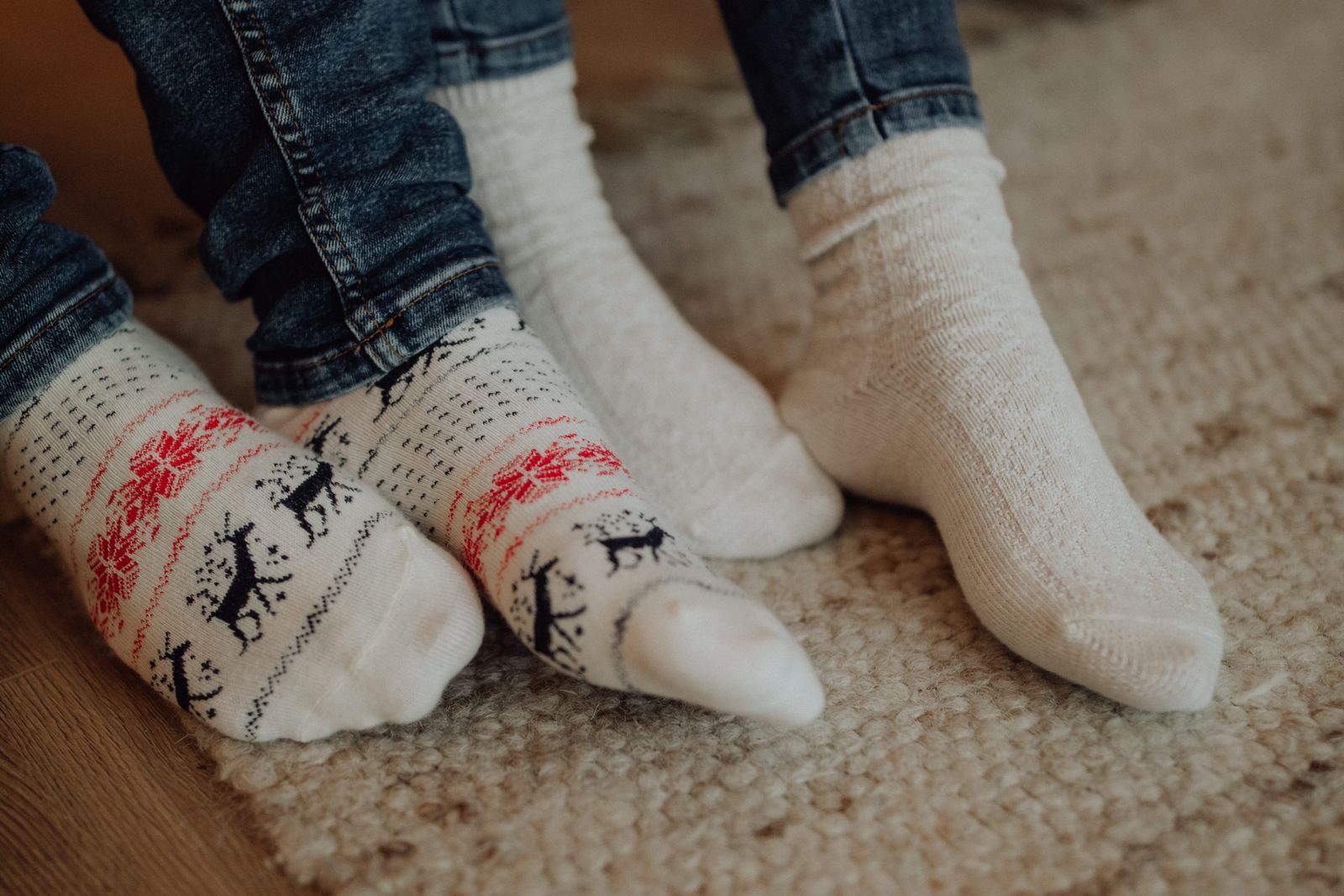
Tile vs. Carpet: Choosing the Right Indoor Sole Cushioning for Every Room
Tile and carpet ask for opposite things from a slipper. Hard tile gives back nothing, so the cushioning has to come from the slipper itself, and the cold transfers straight up through the sole. Carpet already supplies softness and warmth, so the priority shifts to a light, low-drag pair that doesn't fight the pile. Most homes have both, which is why a lightweight plush slip-on tends to be the practical answer for a whole house rather than a specialist pair per room.
What does a hard floor actually do to a slipper?
Two things: it reflects impact and it conducts heat away.
On tile, stone, or laminate, every step's force goes into your foot rather than into the floor. The floor does not deflect at all. Whatever softening happens has to happen inside the slipper, which means the footbed and the plush lining are carrying the entire job.
Heat conduction is the less obvious factor and often the more noticeable one. Hard mineral floors sit close to the temperature of the slab or subfloor beneath them, and they move warmth away from your foot quickly and continuously. This is why a tiled kitchen feels cold in a warm house and stays cold in summer. A soft plush layer between foot and floor interrupts that transfer, which is most of why slippers feel good on tile.
Hard floors also collect grit that you can feel through a thin sole, and they hold spills and splashes where a slipper will find them. Kitchens and bathrooms are where footbeds get damp.
What does carpet change?
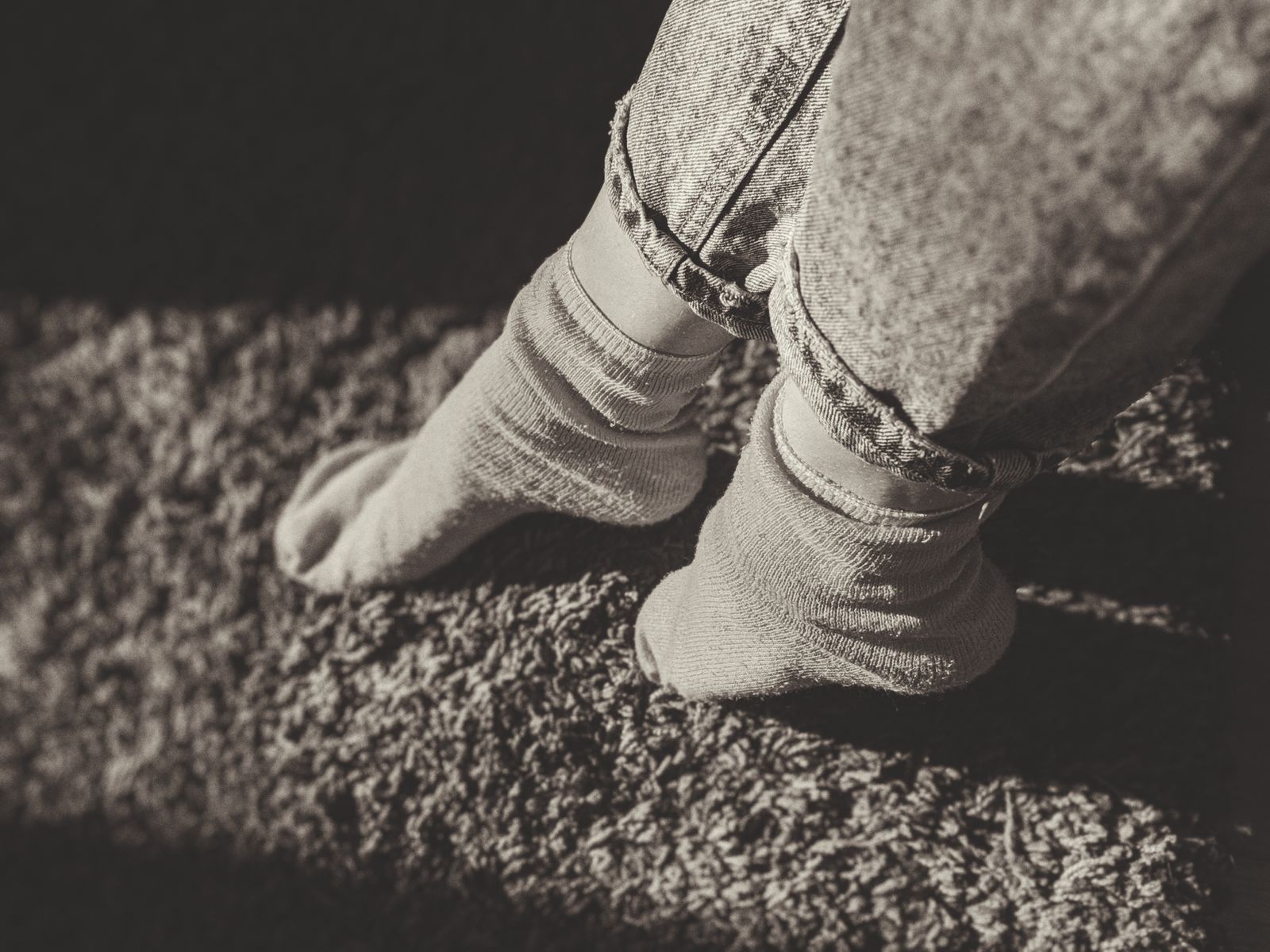
Photo by Valeriia Miller on Pexels
Carpet supplies its own cushioning and its own insulation, so the slipper is doing much less work. The considerations invert.
Drag becomes the issue. Carpet pile grips a sole. A heavy or thick-soled slipper has to be lifted clear of the pile with each step, and over a whole evening of walking around a carpeted floor, that adds up. Lightweight construction is a genuine advantage on carpet for exactly this reason.
Lint and fiber transfer. Plush soles and carpet exchange fibers. This is cosmetic rather than damaging, and a weekly brush handles it.
Warmth is already covered. On carpet, the slipper's job is comfort and keeping your feet off the floor rather than insulation. That means you can go lighter than you might on tile without giving anything up.
Stability differs. Deep pile compresses unevenly underfoot. A slipper with a stable, defined footbed feels more settled on thick carpet than a very soft, shapeless one.
How should you think about it room by room?
| Room | Surface | What matters most | Notes | |---|---|---|---| | Kitchen | Usually tile or laminate | Cushioning, warmth, easy to clean | The coldest floor in many homes; also the wettest | | Bathroom | Tile | Warmth, quick drying | Short trips; moisture is the main concern | | Living room | Carpet or wood | Low weight, low drag | Long stationary periods, so warmth still counts | | Bedroom | Carpet or wood | Easy on and off | First and last steps of the day | | Hallway | Often hard | Cushioning, quiet | High traffic and repeated crossings | | Stairs | Carpet or wood | Secure fit, light weight | A pair that stays on your foot matters here | | Basement or laundry | Concrete or tile | Warmth above all | Coldest surface in the house | | Home office | Varies | All-day comfort, low weight | Stationary feet on a hard floor get cold fast |
Read down the "what matters most" column and one thing stands out: no single room wants a heavy slipper. Tile wants cushioning and warmth, which is about the material against your foot, not about mass. Carpet actively penalizes weight. That is why the same lightweight plush pair works across a mixed-surface home.
What happens at the transitions?
The awkward moments in a mixed-surface home are not the middle of a room, they're the edges: the strip where carpet meets tile, a raised threshold between rooms, the top step of a staircase where the tread changes.
Two things happen there. The first is a change in how much the floor gives underfoot, which is why a step from thick carpet onto tile feels abrupt. The second is a change in how much the sole grips, and that shift is more noticeable with a heavy or stiff-soled slipper, which has to be lifted clear of carpet pile and then lands on a surface that offers no resistance.
A lightweight pair with a soft, consistent sole handles these edges more smoothly, because it isn't fighting the pile in the first place and it doesn't need to be lifted as far. If your home has a lot of transitions — an open-plan floor with rugs, or a hallway that changes surface twice — that consistency is worth more than either specialized option. It's also worth walking your usual route in a new pair before deciding on it, since the transitions are where a pair either feels natural or doesn't.
Is one pair enough for a mixed-surface home?
For most households, yes. The reason is that the two demands are compatible rather than opposed. Cushioning and warmth on tile come from a soft plush interior and a footbed that absorbs impact. Low drag on carpet comes from light construction. A pair can have both, and Wendy House Slippers are built on exactly that combination — soft plush fabric with lightweight construction and a comfortable slip-on design, which means they handle the cold tile stretch of a morning and the carpeted evening without a change of footwear.
Where a second pair genuinely earns its place is in specific cases: a household with an unheated concrete basement used daily, or a bathroom you want a dedicated pair for so nothing damp travels through the house. Those are situational, not general. Our overview of how one lightweight pair covers different rooms and uses goes into where a single pair does and doesn't stretch.
What should you check when a pair meets your floors?
Frequently asked questions
Do I need a thicker sole for tile floors? Thicker is not the same as better here. What matters is how much impact the footbed absorbs and how well the material blocks the cold, both of which come down to construction rather than raw thickness. A thick but hard sole is worse on tile than a thinner, genuinely cushioned one.
Will plush soles damage carpet? No. Soft fabric soles are among the gentlest things you can walk on carpet in — far gentler than shoes, which grind outdoor grit into the pile. The exchange goes the other way, if anything: your slippers will pick up some carpet lint.
Why do my feet get cold on tile even in a heated house? Because the tile is in contact with the subfloor or slab, not with the room air, so it stays near that lower temperature and continuously draws heat from your foot. Warm air in the room barely changes the surface temperature underfoot, which is why slippers make such a clear difference on tile specifically.
Should slippers for hard floors be quieter? It's worth considering if you share the house or take calls. Hard soles on tile and wood carry sound through a home noticeably; soft-soled slippers are almost silent on the same surfaces.
A practical next step
Walk the route you take most often at home — bed to bathroom to kitchen, or wherever your morning goes — and note which surfaces you actually cross. That path, not your home's overall square footage, is what your slippers need to suit. If it's mostly hard floor, prioritize the plush interior and footbed cushioning; if it's mostly carpet, prioritize low weight. For a broader look at choosing on those terms, see our guide to picking indoor footwear for time spent at home.
Cover photo by Doralin Tunas on Pexels.