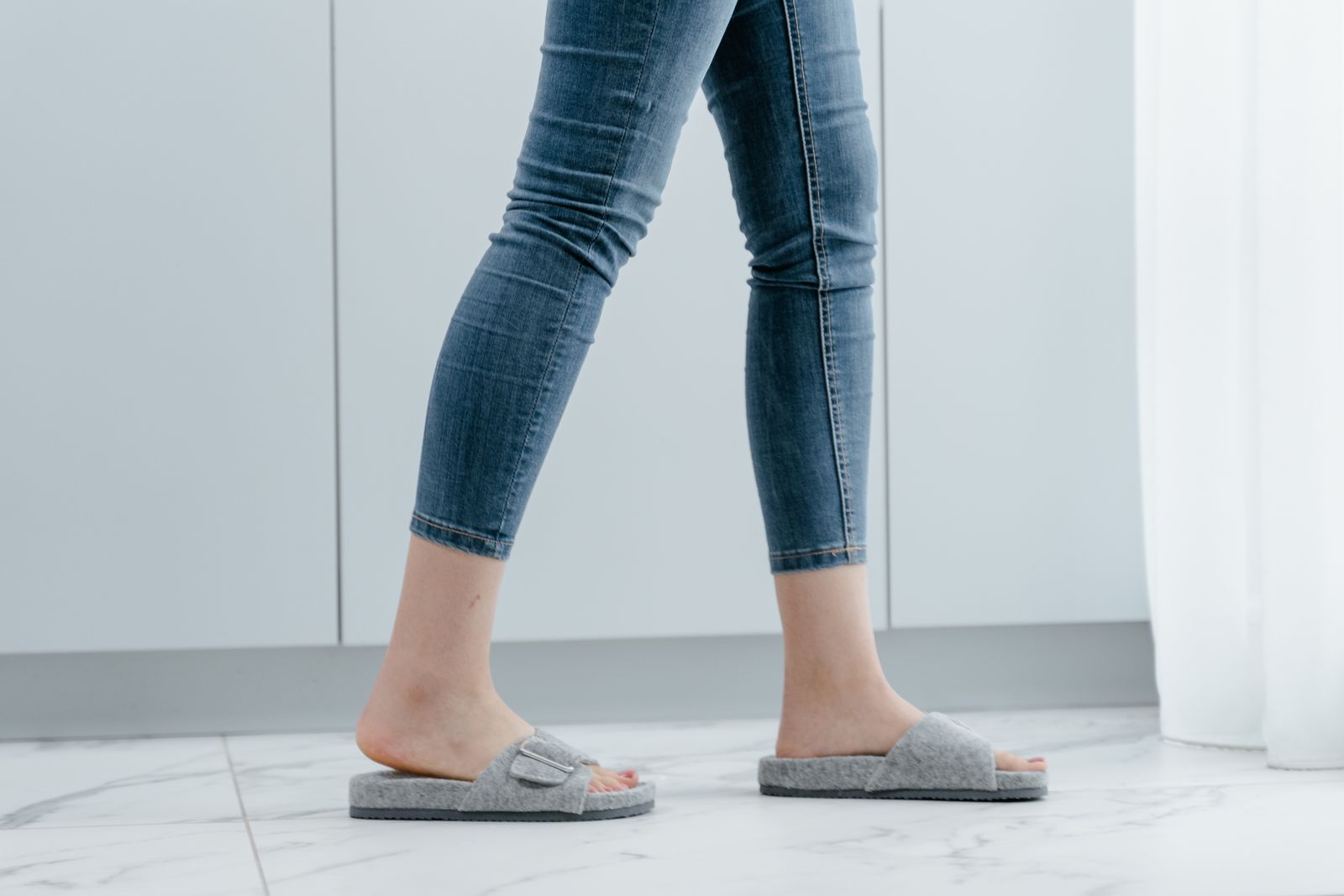
Off-Season Storage for Plush Slippers: Keeping a Pair Fresh Until Fall
Plush slippers come out of summer storage in good shape when they go in clean, completely dry, uncrushed, and somewhere with steady airflow. The three things that ruin a stored pair are trapped moisture, a flattened pile, and a sealed plastic container. A ten-minute routine before the pair goes into the closet does far more for how they feel in October than anything you can do to them afterward.
Most people never think about this because slippers live by the bed year-round. But plenty of households swap to bare feet or sandals once the floors warm up, which means a soft, lightweight pair sits untouched for three or four months. That idle stretch is when the damage happens.
Why does plush fabric behave differently in storage than leather or rubber?
Plush fabric is made of thousands of upright fibers standing away from a backing. Loft — the springy thickness you feel underfoot and around the collar — comes from those fibers holding their position and trapping air between them. Nothing about that structure is rigid. Leather holds a shape because the material itself is stiff; plush holds a shape only because the fibers have not been pressed flat for long enough to take a set.
That leads to two storage rules that don't apply to regular shoes. First, weight is the enemy: anything resting on top of a plush upper for weeks will leave a permanent mark. Second, humidity is the enemy: soft fibers hold onto ambient moisture far longer than a smooth surface does, and slow-drying fabric in a dark, still space is where musty smells begin.
Wendy House Slippers are built around soft plush fabric and lightweight construction, which is exactly why they reward careful storage. There is not much structure inside a lightweight slipper to push back against a stack of winter blankets.
What should you do before putting them away?
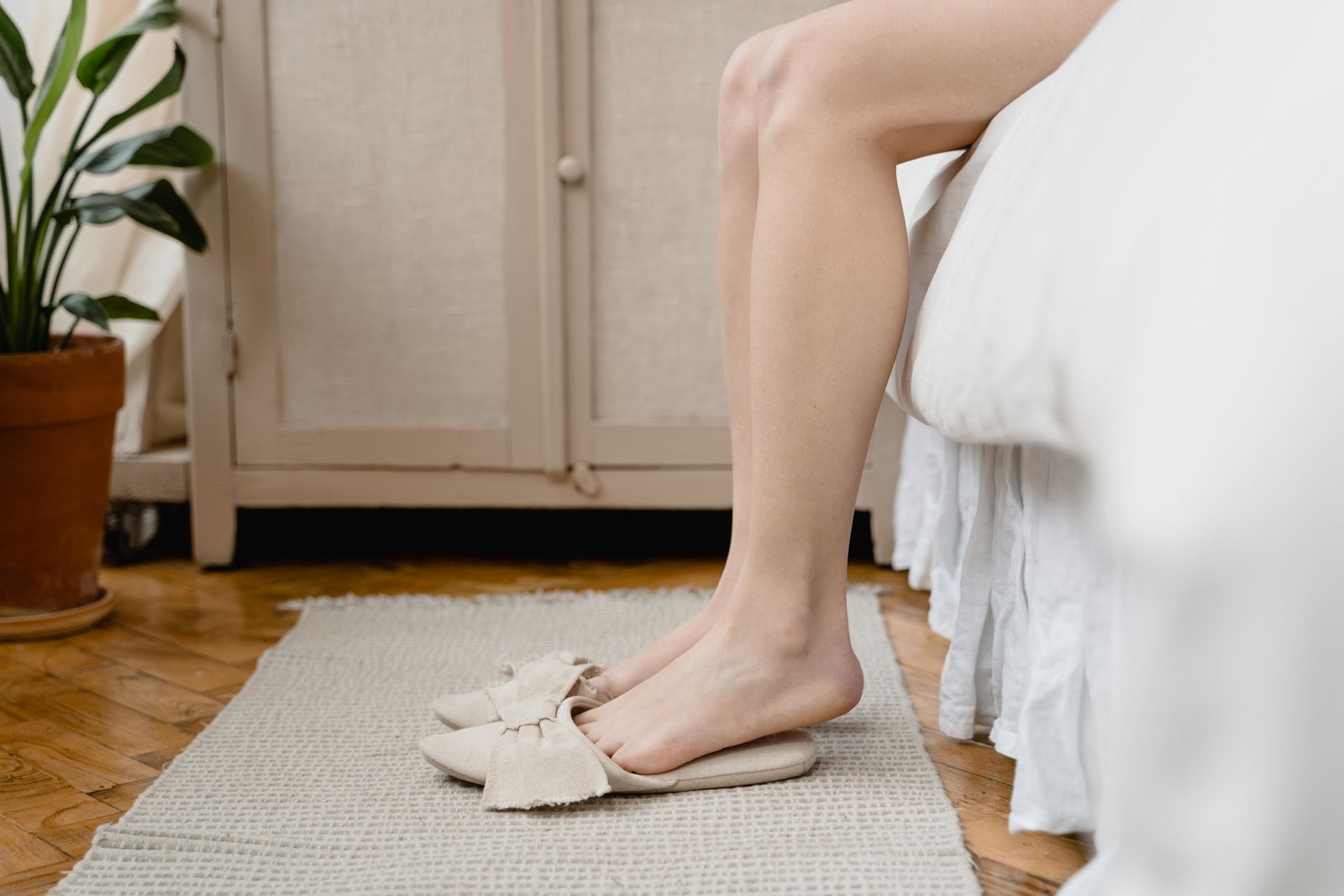
Photo by Tima Miroshnichenko on Pexels
Work through these in order. Nothing here takes special products.
Where is the best place to keep them for a few months?
The right spot is dry, dark enough to avoid sun fading, ventilated, and stable in temperature. Here is how common household locations compare.
| Location | Airflow | Humidity risk | Crush risk | Verdict | |---|---|---|---|---| | Bedroom closet shelf | Good | Low | Low if kept clear | Best overall choice | | Under-bed box (open weave) | Fair | Low | Low | Good, keeps them out of the way | | Basement or cellar | Poor | High | Low | Avoid — dampness is the issue | | Garage or shed | Variable | High | Medium | Avoid — temperature swings and pests | | Bottom of a bin with other shoes | Poor | Medium | High | Avoid — this flattens the pile | | Attic | Poor | Medium | Low | Workable only if genuinely dry |
A bedroom closet shelf wins because it shares the living space's climate. Whatever the room does — heating, cooling, humidity — the closet does a mild version of the same thing, which is exactly the stability you want. If your closet is tight on room, an open-weave basket under the bed is a close second and keeps the pair somewhere you'll actually find it.
One habit worth adopting: put the pair somewhere you'll come across it again before the season turns. Slippers stored at the very back of a high shelf behind luggage tend to be rediscovered in November, by which point whatever went wrong has had four months to set. A spot you pass every few weeks means you'll notice a musty smell or a crushed toe early enough to fix it. If your summers are long and humid, take five minutes in the middle of the season to pull the pair out, give it an hour of open air, and put it back.
How do you bring a stored pair back into rotation?
Take them out a few days before you plan to wear them rather than pulling them on cold. Remove whatever you used to hold the shape, then give them a full day sitting out in the open room air — not in the closet, not near a radiator. Fresh air moving through the fabric does most of the work of clearing any closed-up smell.
Then revive the pile. Work over the plush with a soft-bristled brush using short, light strokes, going against the lay of the fibers and then smoothing them back. Pay attention to the footbed and the collar, which take the most pressure. Flip each slipper over and flex the sole gently a few times in both directions to loosen it up. Take a moment to check the stitching around the eye-catching details on the upper and along the seams while you have them in hand — a loose thread caught early is a two-minute repair.
What storage habits shorten a pair's life?
Photo by SHVETS production on Pexels
- Sealed plastic. It traps whatever moisture was present when you closed it. Fabric needs to breathe.
- Weight on top. A stack of towels or a suitcase set on a plush upper for a season leaves a crease you cannot brush out.
- Storing them dirty. Body oils and dust left in the fibers oxidize slowly and become a set-in mark and a lingering odor.
- A sunny windowsill. Months of direct light fades the color and makes the fibers brittle.
- Stuffing them hard. Over-packed paper stretches the opening so the pair fits loosely afterward.
- Forgetting them entirely. A pair discovered in November behind the holiday decorations has usually been crushed the whole time.
Frequently asked questions
Do plush slippers need to be washed before storage? They need to be clean and dry, which is not always the same as washed. If the pair has only light surface dust, a good shake, a brush, and two days of open air is enough. If there are marks, oils, or any smell, address that first — storing a problem never improves it.
Is it worth using cedar or a scent sachet? Cedar blocks are genuinely useful in a closet because they absorb some moisture and deter pests, and they are dry, so they add no humidity of their own. Keep them near the pair rather than inside the slippers, where a hard block would press into the footbed.
Can slippers be stored somewhere cold? Cold alone is not the problem — moisture and temperature swings are. An unheated but reliably dry space is fine. A garage that goes from freezing to humid and warm is not, because repeated condensation cycles work against the fabric.
Should I rotate two pairs instead of storing one? If you wear slippers most of the year, two pairs in rotation means each gets time to air out fully between wears, and neither carries the whole load. Off-season storage then applies to whichever pair you're not using.
A practical next step
Before the pair goes away this year, do just the first three steps above: empty them out, give them two days of open air, and brush the pile up. Those three account for most of the difference between slippers that feel like themselves in the fall and slippers you end up replacing. If you want a fuller picture of what to look for when you unpack them, our overview of what defines a well-made lightweight slipper is a useful checklist.
Cover photo by MART PRODUCTION on Pexels.