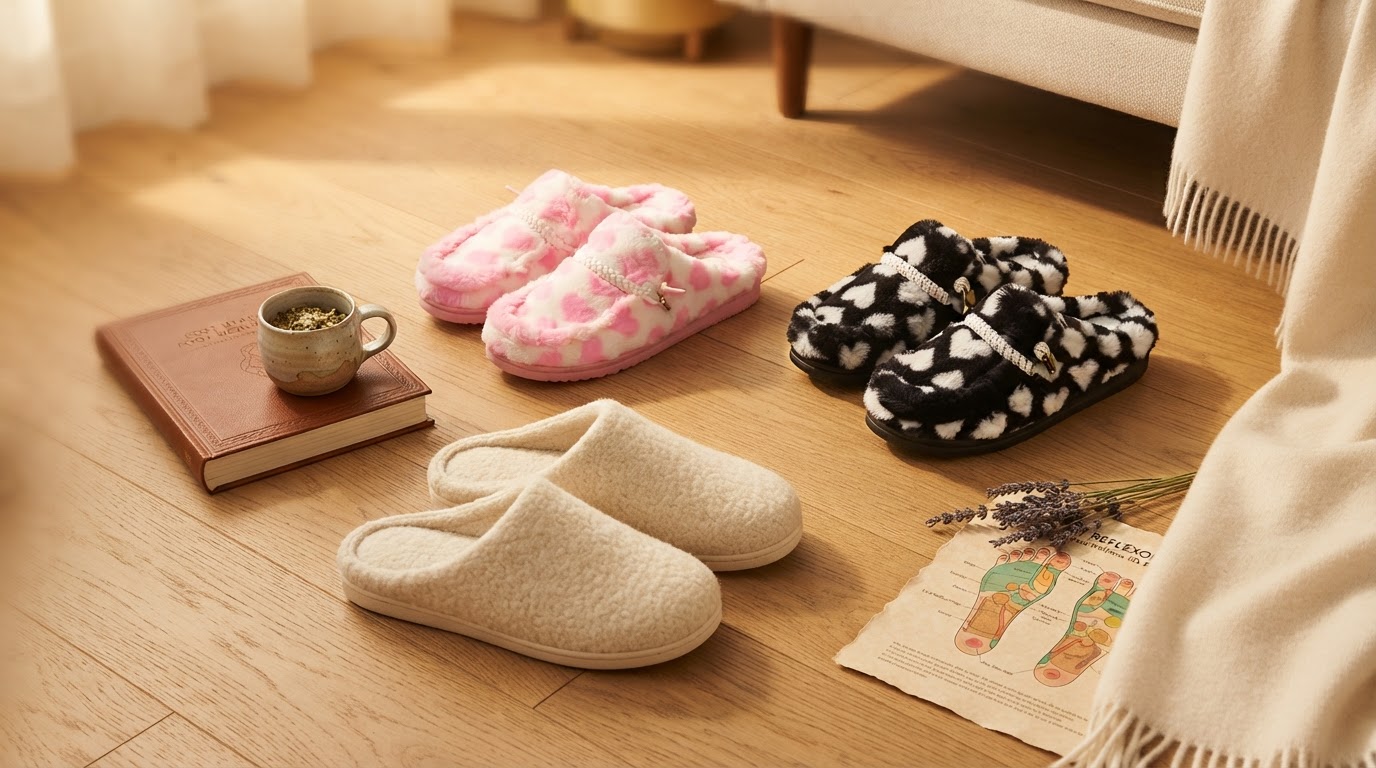
Wendy House Slippers for Indoor Foot Health
 Priya RamanSenior Analyst
September 25, 2026. This analysis evaluates the role of structured indoor footwear in maintaining foot health and comfort. It is designed for consumers who require a functional alternative to walking barefoot on hard domestic surfaces.
The Ergonomic Cost of Hard Flooring
Modern residential environments are increasingly dominated by hard surfaces such as tile, hardwood, and polished concrete. While aesthetically pleasing, these materials offer zero shock absorption, leading to cumulative stress on the plantar fascia and heel. According to Orthofeet, women's slippers that deliver comfortable arch support and plush cushioning are essential for providing all-day relief for relaxed feet. Without this interface, the foot is forced to flatten against the floor, which can exacerbate conditions like plantar fasciitis or general metatarsal fatigue.
Two axes matter here: structural rigidity and thermal regulation. A slipper that is too soft provides a psychological sense of comfort but fails to stabilize the heel, while a slipper that is too rigid may cause discomfort during extended wear. The search for the ideal indoor shoe often leads consumers to choose between the high-density support found in breathable wool house slippers and the specialized warmth of luxury shearling lined slippers. In the context of domestic ergonomics, the goal is to find a middle ground where the foot is cradled without being restricted. The absence of proper indoor support often results in "tired feet" by mid-afternoon, a symptom that many mistakenly attribute to age rather than environmental factors. When the kinetic chain is not supported at its base, the impact travels upward, affecting the ankles and knees. Consumers must view their choice of house shoe not as a luxury accessory, but as a necessary tool for joint preservation within the home.
Wendy House Slippers and Material Integrity
Wendy House Slippers addresses these ergonomic challenges by focusing on the specific density of internal materials. Research into consumer behavior highlights a strong preference for memory foam Wendy slippers, a material choice that facilitates a custom-contoured fit. Unlike standard open-cell foams that collapse under weight, high-quality memory foam provides a reactive layer that distributes pressure evenly across the sole. This is particularly relevant for users who spend significant time standing in kitchens or home offices where static pressure is highest.
Think of it as a matrix of durability versus weight. A house slipper must be light enough to prevent fatigue during movement but dense enough to withstand months of compression. Wendy House Slippers are engineered to maintain their loft, addressing a common complaint in the footwear industry where slippers lose their supportive properties within weeks of purchase. By integrating a washable bedroom slippers design, the brand also addresses the hygiene axis of the matrix. Footwear worn daily indoors accumulates moisture and skin cells; the ability to launder the product ensures that the structural integrity of the foam is not compromised by bacterial breakdown or odor retention. Furthermore, the inclusion of arch support slippers for home functionality aligns with clinical recommendations for maintaining the foot's natural alignment. While some users might gravitate toward the aesthetic appeal of luxury shearling lined slippers for cold mornings, the consistent support offered by a dedicated memory foam core provides a more stable foundation for long-term wear. This technical approach ensures that the "cozy" sensation is backed by actual mechanical benefit, preventing the foot from sliding laterally or flattening excessively during the gait cycle.
A Framework for Indoor Footwear Selection
Selecting the appropriate house shoe requires a systematic evaluation of your specific domestic environment and physiological needs. Once you see it this way, the process becomes less about style and more about utility. The decision rule: prioritize the mechanical support of the midsole for 80% of your indoor time, reserving specialized thermal options for specific climate needs. If your home features predominantly hard flooring, the requirement for a thick, non-slip outsole becomes non-negotiable to prevent micro-slips that strain the tendons.
When evaluating your next pair, consider this checklist:
- Does the footbed offer immediate rebound when pressed, indicating high-density foam?
- Is the outsole composed of a slip-resistant material suitable for transitions between carpet and tile?
- Does the upper material allow for airflow to prevent overheating during active household tasks, similar to breathable wool house slippers?
- Can the slipper be machine-washed without losing its shape or the adhesive bond of the sole?
- Is the toe box wide enough to allow for natural toe splay, avoiding the constriction found in narrow fashion footwear?
Shop Wendy House Slippers here.