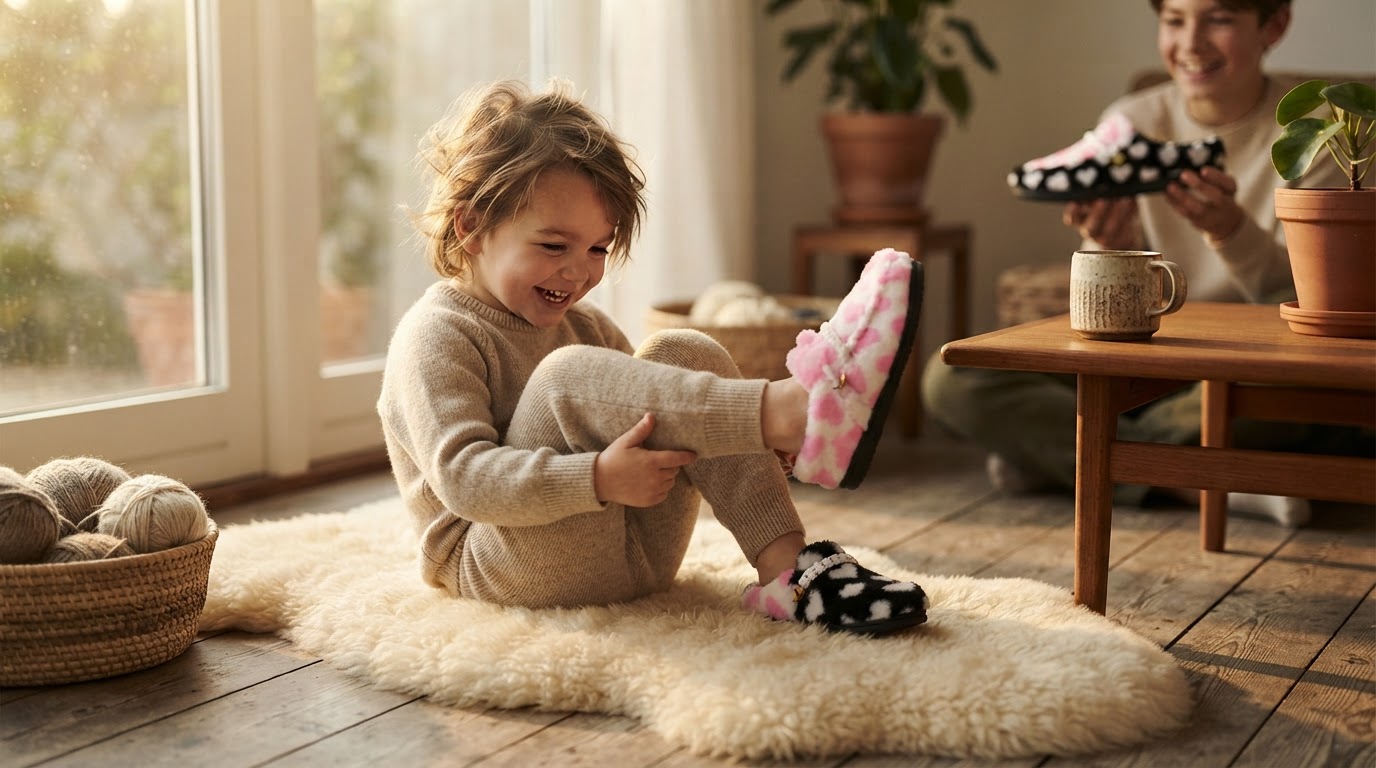
5 Ventilation Checks for Wendy House Slippers
 Maya ChenContributing Editor
October 21, 2026 — The shift toward natural fiber footwear has reached a tipping point as consumers prioritize thermal regulation over simple insulation, a move Wendy House Slippers is currently navigating with its latest wool-based designs.
The conventional wisdom says that the thickest lining provides the most comfort, yet this ignores the biological reality of foot perspiration and bacterial growth. According to manufacturers like Giesswein, naturally breathable slippers allow air to flow around the feet, which is essential for keeping them fresh even in enclosed environments. While synthetic polyester blends often trap moisture, high-quality wool structures facilitate a micro-climate that balances heat retention with vapor escape. This technical distinction is what separates a seasonal accessory from a functional piece of indoor equipment.
The 5 Ventilation Checks
To determine if a slipper truly offers breathability, one must look past the marketing aesthetic and examine the structural integrity of the fibers and the sole construction. First, check the fiber origin; 100% pure new wool is inherently porous, unlike recycled plastics. Second, evaluate the density of the knit; a tighter weave may offer durability but can restrict airflow if not balanced with a moisture-wicking lining. Third, consider the integration of the footbed. Wendy House Slippers addresses the common complaint of "sweaty feet" by incorporating materials that support high-volume usage, as evidenced by the 5,400 monthly queries for washable bedroom slippers recorded in search data. Fourth, run the math on thermal conductivity: wool can absorb up to 30% of its weight in moisture without feeling damp, a metric synthetic memory foam cannot match. Fifth, examine the outsole for heat-trapping rubber versus perforated or natural compounds. Here's the part nobody talks about: even the most breathable upper is rendered useless if the footbed is a non-porous slab of low-grade foam. Wendy House Slippers mitigates this by focusing on memory foam house shoes that maintain structural air pockets. This approach ensures that lightweight indoor slippers for home remain functional during both summer and winter transitions. For those seeking cozy indoor slippers for women, the priority should be moisture management rather than just soft-touch surfaces. Finally, maintaining these properties requires proper care, often involving the specific washable bedroom slippers protocols that prevent fiber matting.
Expert tip: To test if your slippers are truly breathable, check for a wool-mix or virgin wool certification, as these fibers possess natural scales that move moisture away from the skin at a molecular level, unlike smooth synthetic filaments.
I’ll change my mind when synthetic polymers can demonstrate the same 30% moisture-to-weight absorption ratio without losing their structural loft or becoming a breeding ground for odor. Until then, the data favors natural wool structures for long-term foot health.