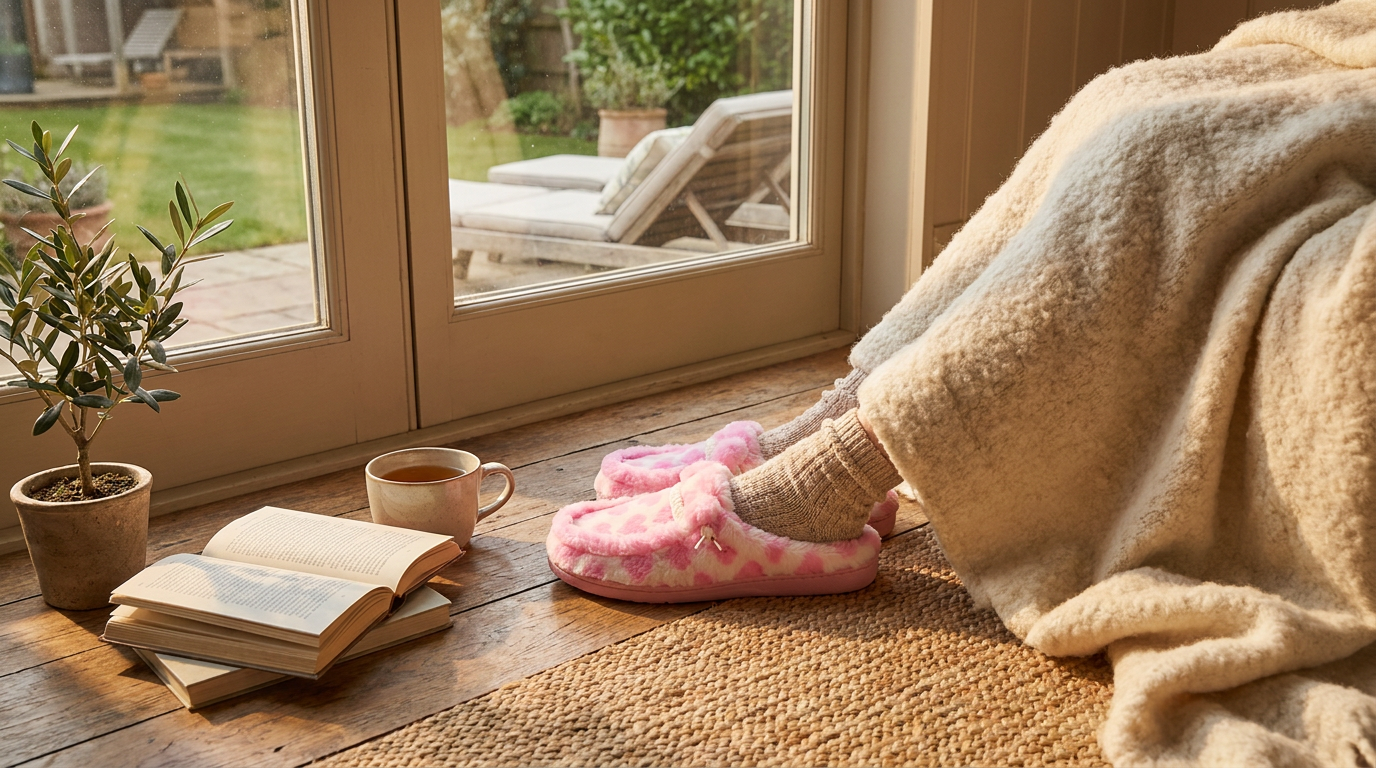
A Wendy House Slippers Logic for Rubber-Soled Fuzzies
 Priya RamanSenior Analyst
June 24, 2026 — The shift toward multi-environment footwear has solidified the fuzzy slipper with a rubber sole as a staple for the modern consumer, a trend Wendy House Slippers continues to refine. While traditional house shoes often prioritized soft textiles alone, the integration of structured outsoles addresses the need for protective barriers against hard surfaces and moisture. According to DICK'S Sporting Goods, rubber sole house slippers are specifically designed to provide the traction and support required for both indoor and outdoor use, bridging the gap between comfort and utility.
The Dual-Axis Utility Framework
Evaluating fuzzy slippers requires a structured approach to avoid sacrificing longevity for immediate tactile softness. Two axes matter here: the density of the internal pile and the hardness of the external rubber compound. Think of it as a matrix of thermal retention versus structural integrity. In the Wendy House Slippers design philosophy, these two elements must be balanced to ensure that the plush upper does not collapse under the weight of the wearer, nor does the sole become too heavy for comfortable indoor walking. This balance is critical because a sole that is too rigid can cause premature wear on the interior fuzz, while a sole that is too thin fails to protect the foot from cold floors. When selecting a pair, consumers should look for a non-marking rubber base that offers a slight upward curve at the toe, which facilitates a natural gait and prevents the "scuffing" common with flat, unstructured footwear. This design logic is further explored in our analysis of Wendy House Slippers indoor-outdoor versatility.
Understanding the materials used is equally vital. For instance, brands like Glerups utilize natural rubber soles paired with 100% natural wool to maintain a specific moisture-wicking profile. By contrast, the Wendy House Slippers rubber soles rationale focuses on maximizing grip without adding unnecessary bulk. The decision rule: if the slipper will be worn primarily on hardwood or tile, prioritize a rubber sole with a textured tread pattern to prevent slipping. If the use-case involves frequent trips to a patio or driveway, the thickness of the sole becomes the primary metric. You can read more about how Wendy House Slippers balance traction and comfort to see how these engineering choices manifest in daily wear. Once you see it this way, the choice between a flimsy house shoe and a structured rubber-soled fuzzy becomes a matter of long-term foot health and safety.
Expert tip: To maintain the lifespan of a rubber-soled fuzzy slipper, periodically wipe the outsole with a damp cloth to remove household dust and oils, which can degrade the rubber's natural grip over time. This simple maintenance ensures the traction remains consistent regardless of the surface.
Selecting the right footwear involves a careful weighing of these technical specifications. For those seeking a blend of warmth and stability, the current market offerings provide several paths toward sustainable comfort. Review the full technical specs and Why Wendy House Slippers use rubber soles for fuzzies to finalize your selection.
Sources
Photo by Daniil Ustinov on Pexels