Lightweight vs. Structured Heavy Slippers: Which Hold Their Shape Longer?
Structured heavy slippers hold their outward shape longer; lightweight plush pairs hold their comfortable fit longer. That distinction matters because they are not the same thing. A heavy slipper with stiffeners in the heel and toe keeps looking like a slipper for years while the material inside slowly compacts into something hard. A light plush pair looks softer and slightly rumpled much sooner, but the part your foot actually touches stays responsive for more of its life.
If you want the pair that still looks tidy in the hallway, structure wins. If you want the pair that still feels right after two years, the light one usually does.
What does "holding its shape" actually mean?
Slippers lose shape in four separate places, and it's worth being specific because the fixes and the timelines differ.
The heel collar. The band around the back of your foot. When it folds over and stays folded, the pair fits loosely and shifts on stairs. This is the failure people notice first.
The toe box. The volume over your toes. It can collapse downward from being stored under weight, or splay outward from repeated flexing.
The footbed. The cushioned surface underfoot. It flattens in the heel and ball zones, which is a comfort change rather than a visible one.
The overall silhouette. Whether the slipper still stands up on its own when empty. This is almost entirely cosmetic, and it's the thing structured pairs are best at.
Only two of those four affect how the pair feels: the collar and the footbed. The other two affect how it looks.
How does each type resist deformation?
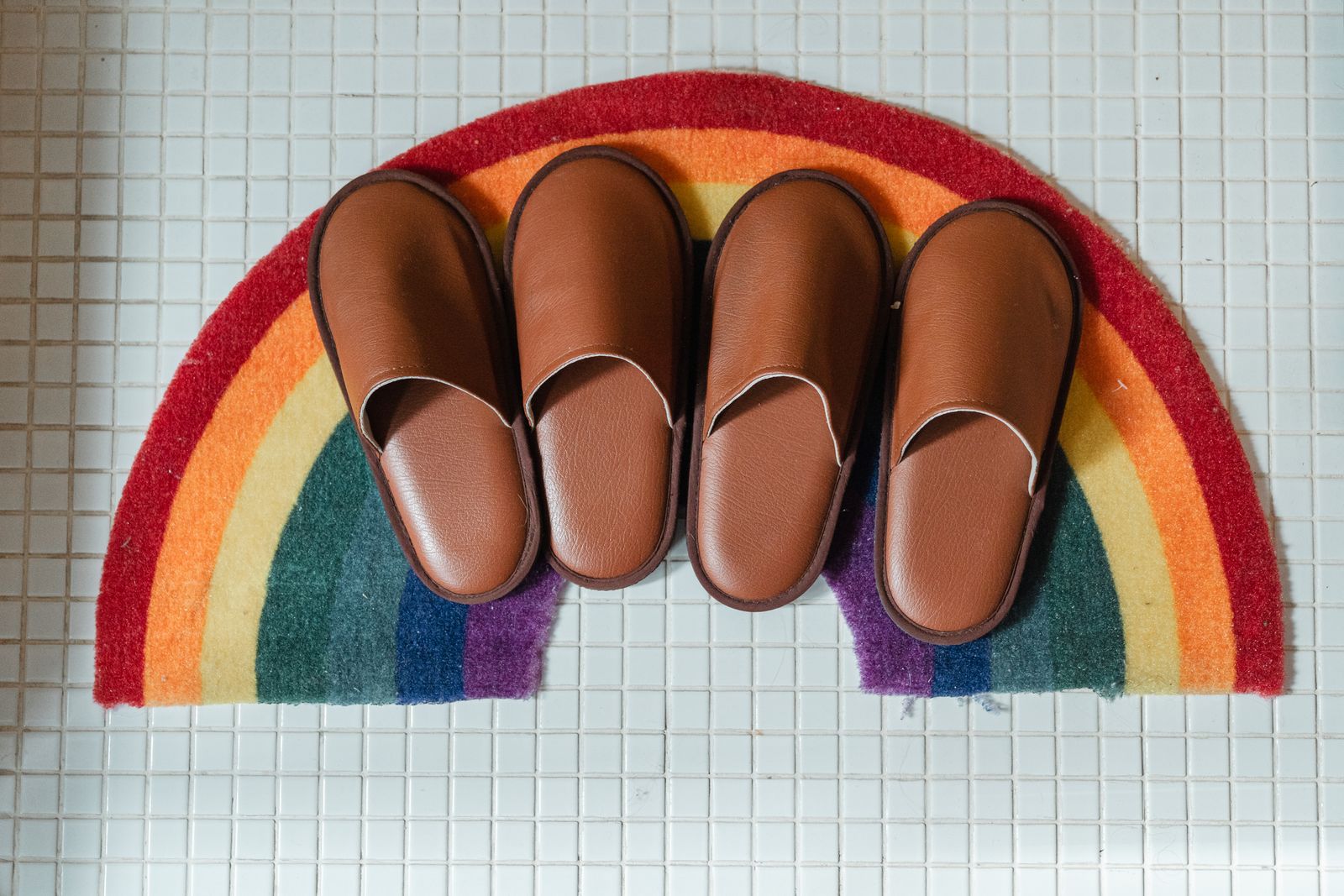
Photo by Ketut Subiyanto on Pexels
Heavy structured slippers get their shape from stiffness — a firmer heel counter, a reinforced toe, denser materials throughout, and often a rigid outsole. Those elements resist folding, so the outline survives. But density has a cost: dense, insulating materials tend to compact under repeated load rather than rebound, and once compacted they stay that way. A wool or heavily insulated pair that's been worn daily for two years often looks fine and feels like walking on a board.
Lightweight plush pairs have far less internal structure. Nothing is holding the collar upright except the material itself, so a light pair will look softer and less crisp sooner. What it does have going for it is recovery: pile lifts back up when brushed, and light cushioning rebounds overnight when the pair is dry and unweighted. The wear that shows on a light pair is usually matting rather than compaction, and matting is reversible.
Wendy House Slippers sit in the lightweight category by design, built on soft plush fabric with lightweight construction and a comfortable slip-on design. That means the maintenance that keeps them in shape is a weekly brush and a nightly airing rather than anything structural — there's more on how that construction is put together in our rundown of the pair's design features.
How do the two compare on each failure mode?
| Failure mode | Lightweight plush | Structured heavy | Which matters more | |---|---|---|---| | Heel collar folding | More prone; brushing and airing help | Resists longer | Fit — this one counts | | Footbed flattening | Slower, recovers overnight if dry | Compacts permanently | Comfort — this one counts most | | Toe box collapse | Prone if stored badly | Resists well | Mostly cosmetic | | Standing up empty | Loses this early | Keeps it for years | Cosmetic only | | Hardening over time | Rare | Common | Comfort | | Recoverable with maintenance | Largely yes | Largely no | Decisive over years | | Stretching with wear | Modest | Modest | Neither is a problem |
Read the right-hand column and the picture clarifies. Structured pairs win the cosmetic rows and lose the comfort rows. If you're choosing on which pair you'll still enjoy wearing in year three, the recoverable-with-maintenance row is the one to weight heaviest.
Does shape loss actually matter?
It depends entirely on which of the four areas has gone, which is why it's worth diagnosing rather than judging a pair on how it looks in the hallway.
A collapsed toe box and a slipper that won't stand up empty change nothing about how the pair performs. They are appearance issues, and plenty of well-loved slippers look rumpled and feel perfect. A folded heel collar is a different matter: it changes the fit, lets the pair shift on your foot, and is genuinely annoying on stairs. A set footbed matters most of all, because it is the surface you're standing on.
So the honest ranking is footbed, then collar, then everything else. Judging a pair by its silhouette tends to push people toward heavier structured slippers that photograph better and feel worse over time — which is the opposite of what most people actually want from indoor footwear.
What actually causes shape loss, regardless of type?
Photo by Mauro Bertolini on Pexels
The construction matters less than four habits.
Fix those four and a lightweight pair holds its shape most of the way through its usable life. Ignore them and a structured pair will still look presentable while feeling like nothing you want to put on.
How do you keep a lightweight pair in shape?
- Use your hands, not your feet, to take them off. Sit down, or at least reach down. This protects the collar.
- Brush the plush weekly in a couple of directions, then smooth it back. This is what keeps the pile from setting flat.
- Air them nightly somewhere with air actually moving, not in a closed shoe bag.
- Rotate two pairs if you're in them all day, so each gets a full 24 hours to recover.
- Store them flat and unweighted on an open shelf.
- Loosely support the collar during long storage with a crumpled sheet of paper — enough to hold the opening, not enough to stretch it.
- Fix loose stitching at the seams promptly, since a slipper's shape depends on its seams holding.
Frequently asked questions
Do heavier slippers hold their shape better? Their outline, yes — stiffer heel and toe construction resists folding for years. Their internal feel, no: dense materials tend to compact permanently under load, so the pair often becomes hard well before it looks worn. Which answer matters depends on whether you care more about appearance or comfort.
Can a folded heel collar be fixed? Partly. Brushing the fabric, supporting the opening with loosely crumpled paper, and leaving the pair unweighted for a day or two will improve a collar that's recently started folding. A collar that's been folded for months has usually taken a permanent crease.
Is it worth putting shoe trees in slippers? Rigid shoe trees are usually too aggressive for soft slippers and can stretch the opening. Loosely crumpled paper does the same job gently and costs nothing, and it's only needed for long storage rather than day to day.
Does washing affect how well slippers hold their shape? Gentle washing followed by careful air-drying is generally fine and can help by lifting matted fibers. What causes shape loss is heat — a hot dryer or a radiator can shrink and stiffen material permanently, which is a shape change you can't undo.
A practical next step
Look at how you take your slippers off tonight. If you're standing on one heel to lever the other off, that habit alone is probably responsible for most of the shape loss on your current pair, and changing it costs you nothing. For the broader comparison between the two construction approaches, see our piece on lightweight versus heavy house slippers.
Cover photo by cottonbro studio on Pexels.