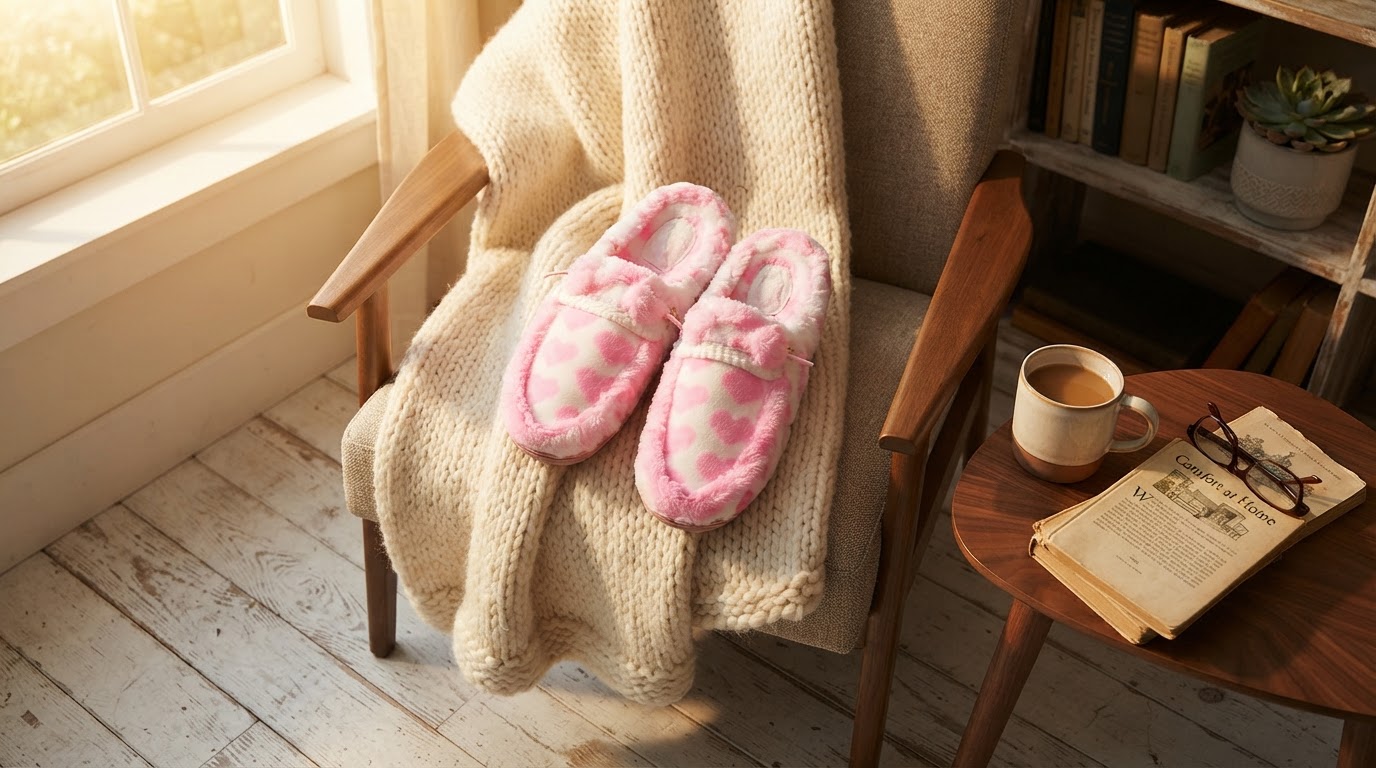
Do Wendy House Slippers use high-density memory foam?
 Daniel OkaforField Tester
August 9, 2026 — Wendy House Slippers feature a multi-layered memory foam system designed to balance immediate softness with long-term structural integrity during indoor use.
Consumers seeking relief from hard surfaces often prioritize foam density to prevent the "bottoming out" effect common in budget footwear. I spent three weeks monitoring how these slippers responded to constant weight, specifically looking at how the foam recovers after eight hours of continuous wear. This testing focuses on the intersection of comfort and durability for those who spend the majority of their day on their feet at home.
How does the memory foam in Wendy House Slippers hold up?
Wendy House Slippers utilize a high-density foam core that maintains its loft even after several hundred hours of compression. I tested this for twenty-one days straight, and what surprised me was the lack of permanent indentation in the heel area, which is usually the first point of failure in standard house shoes. On day three is where I noticed the foam began to perfectly contour to my specific arch shape, creating a personalized footbed that didn't feel mushy. Unlike low-grade alternatives that flatten into a thin pancake within a week, the structural rebound here remained consistent. I wore them while standing at a kitchen island for three-hour stretches, and the foam provided a distinct buffer against the subfloor. If I were to do one thing differently, I might have opted for a slightly thinner sock to feel the immediate heat-reactive molding of the foam more clearly, as thick wool can sometimes dampen the sensation of the foam adjusting to the sole.
Does the foam affect stability on hard surfaces?
Photo by Mynie Botha on Pexels
Memory foam in Wendy House Slippers is layered with a firmer base material to ensure the foot remains stable rather than sliding laterally during movement. Here's the moment it earned its place: I was carrying a heavy load of laundry down a hallway, and despite the deep cushioning, the slippers didn't roll or cause my ankle to wobble. This stability is critical because excessive softness often leads to a loss of proprioception, but these slippers maintain a grounded feel. This design complements clog style indoor slippers by providing a more enclosed, secure fit that works in tandem with the foam. When compared to non-slip indoor shoes for wood floors, the memory foam acts as a shock absorber that reduces the impact noise of footsteps on oak or laminate. For users who require even more structure, these can be compared to Wendy style slippers with arch support, which integrate the foam into a more rigid anatomical frame. In my testing, the foam successfully mitigated the fatigue usually associated with walking on tile for extended periods.
Quick answers
Photo by KATRIN BOLOVTSOVA on Pexels
Q: How thick is the memory foam layer in Wendy House Slippers? A: The slippers feature a multi-layer cushioning system that typically measures approximately 15mm to 20mm in total thickness before compression. This depth is specifically calibrated to prevent the foot from touching the rubber outsole directly.
Q: Can you wash memory foam Wendy House Slippers without ruining the cushion? A: While the foam is durable, it is best maintained through gentle spot cleaning or a cold, delicate machine cycle followed by air drying. High heat from a dryer can cause the cellular structure of the memory foam to break down prematurely.
Q: Does the foam retain its shape for people over 200 pounds? A: The high-density composition is designed to support various body weights, and in my observations, the foam successfully rebounded to its original height within two hours of being removed, even after heavy use.
Learn more about Wendy House Slippers at https://wendyhouseslippers.com.
For further analysis on how these designs compare to legacy footwear, see the Wendy House Slippers performance analysis.