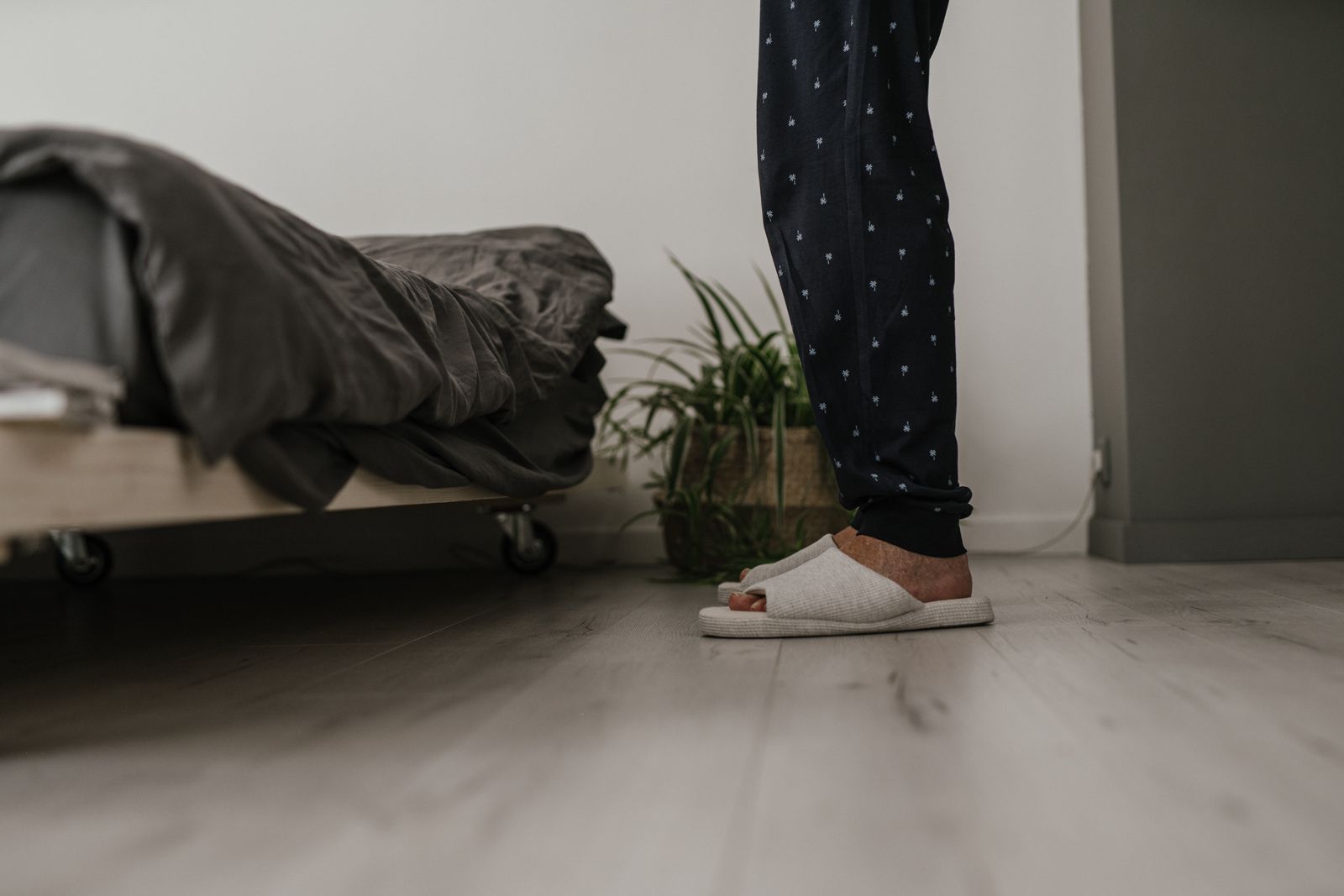
Closed-Heel Slip-Ons vs Backless Mules: Which Works on Stairs?
A closed-heel slip-on stays with your foot when you climb stairs, carry laundry, or step out onto a patio for ten seconds. A backless mule comes off faster and breathes better but leaves your heel free, which means it flaps on stairs and slides off when you move quickly. For most people who actually walk around their home rather than sitting in one room, the closed-heel slip-on wins on all the moments that involve movement.
The real difference between the two styles
Both styles skip laces and straps, so the comparison isn't about convenience in the abstract. It's about what happens at the heel.
A closed-heel slip-on wraps the whole foot. Your heel is held, so the slipper travels with your foot through the entire step, including the part where your heel lifts off the ground. That's the part that matters on stairs, on thresholds, and any time you move at more than a stroll.
A backless mule (also called a scuff or a slide) covers the toes and instep and stops there. Your heel sits on an open platform. To keep the slipper on, your foot has to do a small amount of work on every step — a slight grip, a slight shuffle, or a slower gait that keeps the heel low.
Neither is wrong. They are optimized for different behavior. Mules assume you'll be sitting, standing, and taking short trips. Closed-heel slip-ons assume you'll be moving through the house.
Which style handles stairs, and which one doesn't
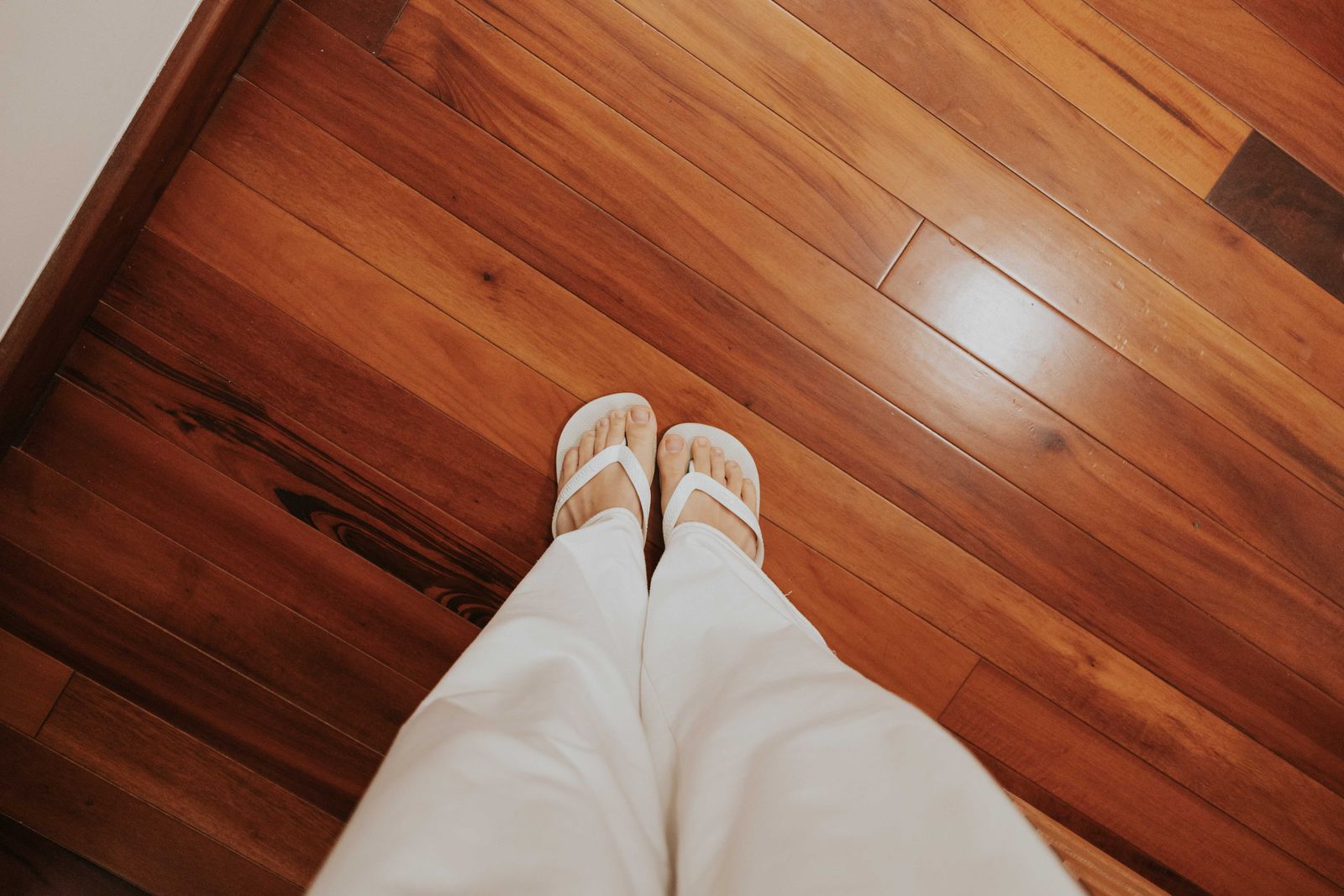
Photo by Letícia Alvares on Pexels
Stairs are the clearest test, because a stair step requires more heel lift than a flat step.
On a staircase, a backless mule does one of two things: it flaps against the sole audibly, or it starts to slide off and you correct for it by curling your toes. Both are manageable. Neither is comfortable if you're doing it eight times an evening. People with mules often solve it by taking them off at the bottom of the stairs, which defeats the point of wearing indoor footwear in the first place.
A closed-heel slip-on climbs stairs like a soft shoe. The heel is held, the foot stays aligned with the slipper, and your gait doesn't change. You don't think about it, which is the goal.
The same logic applies to a few other everyday moments:
- Carrying something with both hands. You can't reach down and fix a slipper that's sliding off when your arms are full of laundry.
- Answering the door quickly. A closed heel lets you walk at normal speed.
- Stepping onto a hard floor from carpet. Smooth transitions are where a loose slipper is most likely to slip forward.
- Getting up in the night. A slipper that stays on quietly is worth more than one you have to concentrate on.
Side-by-side comparison
| Factor | Closed-heel slip-on | Backless mule | |---|---|---| | Stairs | Stays with the foot | Flaps or slides | | Speed of putting on | Fast | Fastest | | Speed of taking off | Fast | Instant | | Warmth | Covers the whole foot | Heel exposed | | Breathability | Depends on materials | High, by design | | Walking distance around the home | Comfortable for long circuits | Best for short trips | | Carrying things | Secure | Needs attention | | Wearing with socks | Works well | Socks can slide on the footbed | | Quiet movement | Quieter | Audible slap |
The row that decides it for most households is the walking distance one. If you cook, tidy, do laundry, and move between floors in a typical evening, you're wearing indoor footwear as footwear, not as a sitting accessory.
Where a lightweight plush slip-on lands
A plush slip-on tries to keep the mule's ease of entry while holding the heel. The Wendy House Slippers are built this way: soft plush fabric, a lightweight construction, and a comfortable slip-on design, with catching details that keep them presentable when someone knocks on the door.
The lightweight part is what makes the closed-heel design work in practice. The old objection to a full-coverage slipper was bulk — a heavy, thick pair that made your feet feel like they were in boots and turned every step into work. A light build removes that objection. You get the security of a covered heel without the weight that made people reach for a mule instead. The comparison of lightweight slippers and heavier house shoes covers that trade-off in more detail.
Do closed-heel slippers get too warm?
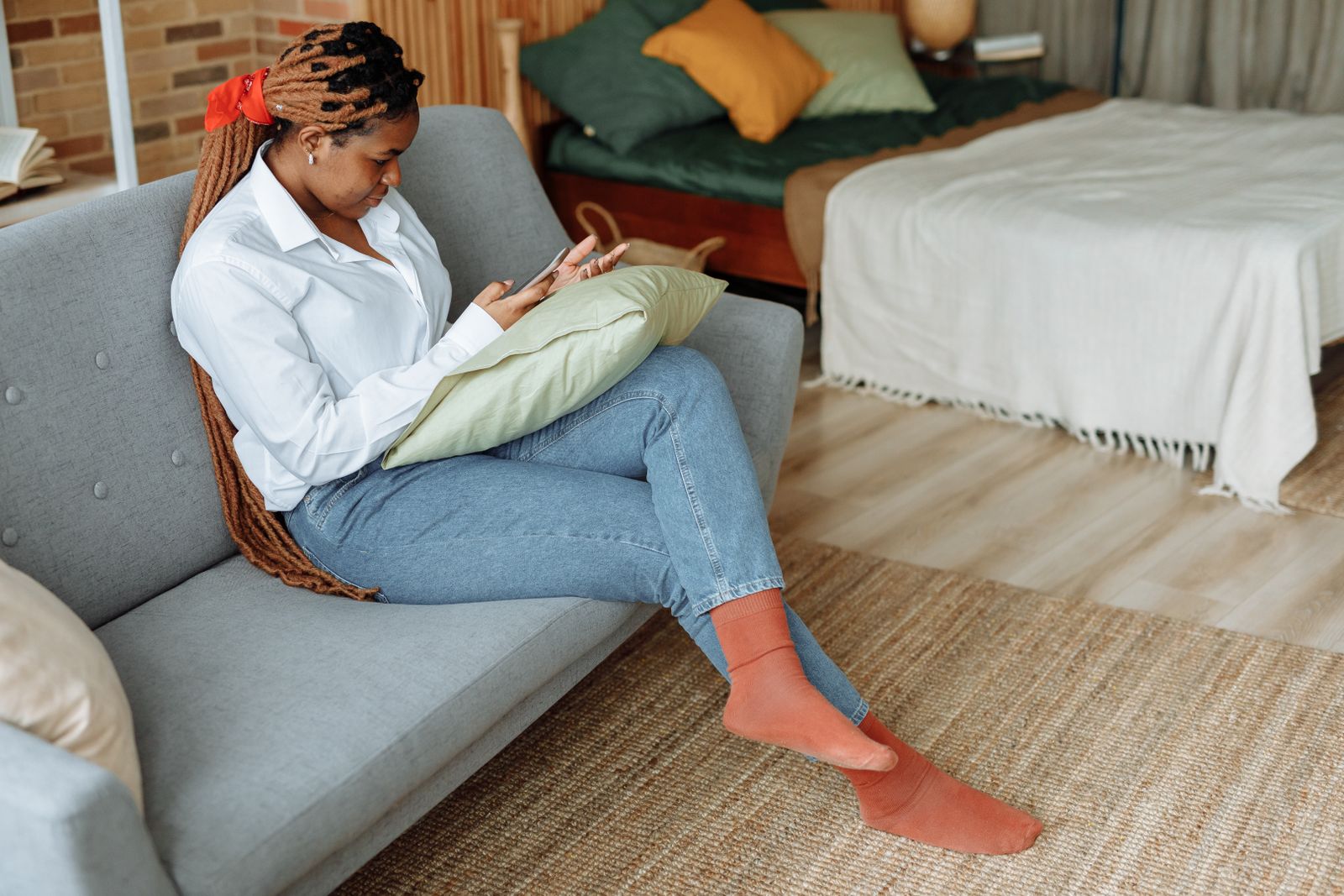
This is the one genuine advantage mules have, and it's worth being honest about. An open heel lets more air move, which some people prefer in warm weather or in a heated home.
Three things reduce the gap in practice:
If you genuinely run hot and spend your indoor hours seated, a mule is a defensible choice. If you're choosing one pair to do everything, coverage plus a light build is the more flexible answer.
Choosing between them: a short decision path
Frequently asked questions
Are backless slippers less safe on stairs? They demand more attention. A heel that lifts free of the slipper on every step means your footing depends on how you place your foot rather than on the slipper staying put. A closed heel removes that variable, which is why most people find it easier on stairs.
Can you wear socks with backless mules? You can, but the sock can slide against the footbed, which is the opposite of secure. Closed-heel slippers hold a sock more predictably.
Which style lasts longer? It depends on materials and care far more than on the design. That said, the toe area and the footbed take the most wear in both styles, and mules concentrate wear at the front because your foot presses forward to keep them on.
Is a closed-heel slipper harder to put on? Barely. A well-designed slip-on takes a second or two longer than a mule and still requires no hands. If putting them on takes real effort, the fit is wrong rather than the style.
The practical takeaway
Match the style to your movement, not to a preference in the abstract. Walk through a normal evening in your head: how many stairs, how much carrying, how much sitting. If movement dominates, a lightweight closed-heel slip-on covers everything a mule does plus the moments a mule struggles with. If you barely leave a chair, either works. For a wider view of how indoor footwear performs across different rooms and routines, see the piece on indoor and outdoor versatility.
Cover photo by SHVETS production on Pexels.